Currency:

USD
HKD
GBP
EUR
CAD
AUD
CHF
INR
USD
sign in · join Free · My account
Home | Sale | Customer Service | Info Tech | Delivery and Payment | Buyer Protection | Policy Information | PC Niche
Your Position: Home > Book > eBooks > THE KUNOICHI'S AWAKENING
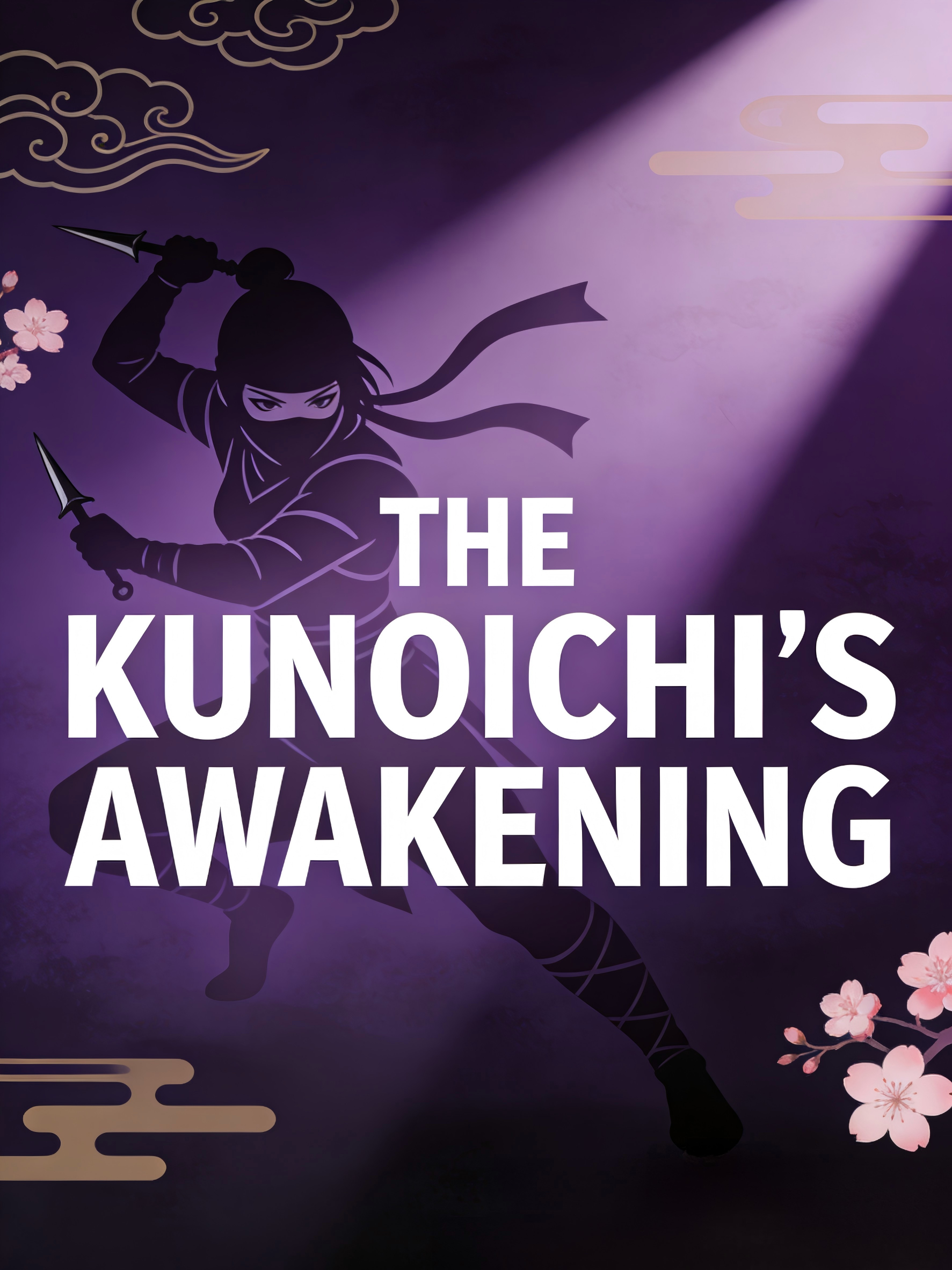
THE KUNOICHI'S AWAKENING
prev zoom next
THE KUNOICHI'S AWAKENING
  • Buyer protection: Returns accpeted. Paypal accepeted.
  • Item location: Oxford, United Kingdom
  • Posts to: Worldwide
  • Brand:Nokia
  • Weight:0gram
  • Recently sold:20
  • Market price:$2.99
    Sale price:$1.29
  • User reviews: comment rank 5
  • Total:
  • Quantity:

Goods Brief:

Attribute

THE KUNOICHI'S AWAKENING  ———  ✦  ——— A Tale of the Sengoku Period PART ONE: THE MOUNTAIN'S SHADOW Chapter One: The Abduction The year was the first of Eiroku, though such designations meant little to the common folk who measured time by the planting and harvesting of rice. In the province of Kai, nestled beneath the shadow of Mount Fuji, the castle town of the Takeda clan bustled with the nervous energy that precedes great change. Lord Takeda Shingen, the Tiger of Kai, had not yet revealed his full ambitions to the world, but those who watched carefully could see the gathering storm. It was on a night in late autumn, when the maple leaves burned crimson against the darkening slopes, that the wandering nun appeared at the gates of the samurai residence belonging to Kira Moritaka. She was not an ordinary mendicant—this much was clear from the manner in which she carried herself, straight as a blade despite her coarse hemp robes, and from the piercing quality of her gaze that seemed to look through walls and into the very souls of those she encountered. The nun asked for nothing but water and a place to rest beneath the eaves. The servants, moved by her ascetic appearance and the spiritual authority that radiated from her like heat from a furnace, brought her into the courtyard and offered her rice as well. She accepted these offerings with the gravity of a priestess receiving sacred tribute, and as she ate, her eyes—dark as pools of ink—roamed the compound with the calculating precision of a general surveying a battlefield. It was then that she saw the child. Kira Yukiko was ten years old that autumn, the only daughter of a minor retainer whose fortunes had risen and fallen with the shifting alliances of the Takeda clan. She was a pretty child, though not remarkably so, with the soft features that promised beauty in womanhood and eyes that held perhaps too much curiosity for a world that preferred women to be demure. She had been playing with a wooden doll in the garden, hiding from her tutor and the endless lessons in calligraphy that seemed to her young mind the very definition of suffering. The nun set down her bowl of rice and beckoned to the child. "Come here, little one," she said, and her voice was like wind through bamboo—soft yet carrying an unmistakable command. "Let me look upon your face." Yukiko, raised to obey her elders without question, approached the strange nun. Something in the woman's presence both frightened and fascinated her—a sense of power barely contained, like a sword still in its scabbard but clearly sharp enough to cut through bone. The nun reached out and took Yukiko's chin in her calloused fingers, turning her face this way and that as a merchant might examine a horse at market. Her touch was cold, impersonal, yet not unkind. "Good bones," the nun murmured, more to herself than to the child. "Flexible wrists. The eyes—yes, the eyes see too much, feel too much. This can be trained away, or trained to become a weapon." She released the girl and turned to the servant who had brought the food. "I would speak with this child's father." Kira Moritaka was a proud man, as all samurai must be, but he was also a practical one. When the wandering nun announced that she wished to take his daughter for training—to make of her something greater than a mere wife or concubine, to grant her skills that would ensure her survival in the turbulent age to come—his first instinct was refusal. What need had a daughter of such training? She would marry well, bear sons, secure the family's future through alliance. This was the way of things. But the nun's eyes held secrets that Moritaka could not fathom, and her words carried the weight of prophecy. "The age of the sword is ending," she said, her voice low so that only Moritaka could hear. "The age of shadows is beginning. In the years to come, it will not be the mightiest warrior who survives, but the one who sees without being seen, who strikes without warning, who serves the right master at the right time. Your daughter has the gift. Deny her this training, and you condemn her to be nothing but chattel in a world that devours the weak." Moritaka hesitated. The nun's words resonated with something in his heart—a fear he had not acknowledged even to himself, that the Takeda clan's rise might falter, that his family's small holding might be swept away in the tide of war that seemed to grow larger with each passing year. "I will consider your words," he said finally. "Return in three days, and I will give you my answer." The nun smiled, and there was something in that smile that made Moritaka's blood run cold. "Three days," she agreed. "But know this, Kira-sama—the decision has already been made. The mountain does not ask permission before it casts its shadow." That night, Kira Yukiko vanished from her bed. When the servants discovered her absence in the morning, there was no sign of forced entry, no disturbance in the garden where she had played, no trail to follow. The child had simply disappeared, as if the earth itself had opened to swallow her. Only her wooden doll remained, lying in the courtyard where she had left it when the nun called to her. Kira Moritaka searched for three days, sending riders to every village within a day's journey, offering rewards for any information about his daughter's whereabouts. But the wandering nun had left no trace, and no one in the castle town could remember seeing her depart. It was as if both woman and child had dissolved into the morning mist that rose from the Katsura River. On the fourth day, Moritaka found a scroll pinned to his door with a dagger—a dagger whose blade was no longer than his thumb, curved like a crescent moon and sharp enough to shave the hair from his arm. The scroll bore only a few characters, written in elegant brushstrokes that seemed to pulse with hidden meaning: "Five years. Do not search. She will return, or she will not. This is the way of the shadow." Moritaka stared at the scroll for a long time, his hand trembling on the hilt of his sword. In his heart, he knew that his daughter was lost to him, that she had been claimed by forces beyond his understanding or control. He could only pray—to Amaterasu, to the Buddha, to any power that might listen—that the wandering nun's intentions were not malign, and that his daughter might one day return to the world of daylight and duty. But in the darkest hours of the night, when sleep would not come and the wind whispered secrets through the pines, Moritaka wondered if he had made a terrible mistake. He wondered if he should have refused the nun outright, if he should have driven her from his gate with blows and curses rather than entertaining her strange proposal even for a moment. It was too late for such regrets. The mountain had cast its shadow, and his daughter was gone. --- ## Chapter Two: The Stone Cavern Yukiko woke to darkness. Not the comfortable darkness of her room at home, where the paper screens filtered moonlight into soft grey shadows, but a profound and absolute blackness that seemed to press against her eyeballs like a physical weight. She could not see her hand when she held it before her face. She could not tell if her eyes were open or closed. For a moment, panic overwhelmed her. She screamed, but the sound seemed to die in her throat, absorbed by the stone that surrounded her on all sides. She thrashed, striking out at empty air, and her hands encountered rough walls that were cold and damp to the touch. "Be still, child." The voice came from nowhere and everywhere, echoing slightly in the confined space. It was the nun's voice—Yukiko recognized it immediately, though it seemed different here in the darkness, stripped of the warmth it had held in the garden and reduced to something purely functional, like the sound of water dripping in a cave. "Where am I?" Yukiko's voice trembled, but she forced herself to stop struggling. "Why have you brought me here? I want to go home." "Home." The nun's voice held something that might have been amusement, or might have been contempt. "What is home, child? A roof over your head? People who feed you and clothe you and tell you what to think? Home is an illusion, a story we tell ourselves to keep the darkness at bay. You are here to learn the truth—that darkness is our natural state, that light is temporary and deceptive, that only those who embrace the shadow can truly see." A spark flared in the blackness, and Yukiko blinked against the sudden brightness. The nun held a small oil lamp, its flame dancing in the draft that came from somewhere above. By its light, Yukiko could see that she was in a cavern of some kind, a natural hollow in the rock whose walls were slick with moisture and covered in strange patterns that might have been ancient carvings or merely the result of water's patient erosion. The nun herself looked different in the lamplight. Her coarse robes seemed less like the garb of a mendicant and more like a costume, a disguise that she wore to move unnoticed through the world of men. Her face, illuminated from below, appeared almost demonic, the shadows carving deep lines where none had been visible in daylight. "You are here," the nun said, "because I have chosen you. From among hundreds of children I have seen in my travels, you alone possessed the qualities I require. You are young enough to be molded, old enough to understand instruction. You are neither too beautiful nor too plain—you will be able to move through the world without drawing attention to yourself. And most importantly, you have the gift." "What gift?" Yukiko asked, though some part of her already knew the answer. "The gift of emptiness." The nun set down the lamp and reached into the folds of her robe, withdrawing something that gleamed in the flickering light. It was a sword—not a full-sized blade, but a short sword, a wakizashi, its hilt wrapped in worn leather and its guard simple iron. "Most children are full of themselves—their desires, their fears, their petty concerns. They cannot be taught, only trained, and training produces animals, not warriors. But you... when I looked into your eyes in that garden, I saw a void. A space waiting to be filled. This is the gift, child. This is what makes you worthy of the art I will teach you." She held out the sword, and Yukiko took it with trembling hands. It was heavier than she expected, the weight of it pulling her arms down until the tip touched the stone floor. "From this day forward," the nun said, "you are no longer Kira Yukiko. That name, that identity, that life—all of it is gone. You are a shadow without a name, a tool without a purpose, a vessel waiting to be filled. When I have finished with you, you will be able to strike down the mightiest warrior before he knows you are there. You will be able to walk through a crowded market in broad daylight and take a man's life without anyone seeing your face. You will be able to scale walls that seem impossible to climb, to move in silence through the darkest night, to become anyone you choose to be and no one at all." She paused, and her eyes—dark and bottomless as the cavern itself—fixed on Yukiko's face with an intensity that made the child want to look away. "But first," the nun said, "you must learn to see in the darkness. You must learn to love the silence. You must learn to kill." The training began the next morning, though "morning" was a meaningless concept in the cavern where no sunlight penetrated. The nun woke Yukiko by dousing her with icy water from an underground stream, and before the child had fully recovered her breath, she was put to work. The first task was simple: climb. The cavern had many levels, the nun explained, connected by narrow fissures in the rock that required both strength and flexibility to navigate. Yukiko was shown the first such fissure—a vertical crack in the cavern wall that seemed to extend upward into darkness—and told to climb it. "There is a ledge ten body-lengths above," the nun said. "Reach it, and you may rest. Fail, and you will fall. The stone is unforgiving." Yukiko looked at the crack, then at the nun, then back at the crack. She had never climbed anything more challenging than the garden wall at home, and that had been in daylight, with soft earth waiting below if she fell. Here, the stone was slick with moisture, and the darkness below seemed to promise only pain. "I can't," she whispered. The nun's hand moved faster than Yukiko's eye could follow, striking her across the face with enough force to snap her head around. The blow was not cruel—there was no malice in it—but it was precise, calculated to shock rather than injure. "You can," the nun said. "You simply choose not to. In the world you have left, such choices are permitted. In my world, they are not. Climb." Yukiko climbed. The first attempt ended after three body-lengths, when her fingers slipped on the wet stone and she tumbled back to the cavern floor, bruising her hip and scraping her palms. The nun said nothing, merely watched with those dark eyes as Yukiko picked herself up and tried again. The second attempt reached five body-lengths before Yukiko's arms, trembling with exhaustion, gave out and she fell again. This time she cut her forehead on a protruding rock, and blood flowed into her eyes, turning the darkness red. "Clean yourself," the nun said, tossing her a cloth. "Then climb again." The third attempt succeeded. When Yukiko finally dragged herself onto the ledge, her fingers bleeding and her muscles screaming in protest, she found that she could not stand. She lay on the cold stone, gasping for breath, and waited for the nun to tell her what to do next. But the nun did not follow. Instead, her voice came echoing up from below: "Rest. When you have recovered, climb down and begin again. You will do this fifty times before you eat." Fifty times. The number seemed impossible, a sentence of torture rather than training. But Yukiko had learned something in those three attempts—she had learned that her body was capable of more than she had believed, that the limits she perceived were not real limits but merely the boundaries of her own fear. She had learned that the stone, while unforgiving, was not malicious. It simply was, and her task was to understand it, to work with it, to find the paths that her hands and feet could follow. She climbed down, more carefully than she had gone up, and began again. By the time she had completed the fiftieth ascent, Yukiko no longer thought of herself as Kira Yukiko, daughter of a minor samurai. She no longer thought of her home, her parents, the life she had left behind. There was only the stone, the darkness, and the endless rhythm of climb and descend, climb and descend. When the nun finally allowed her to eat—a bowl of cold rice and a few pickles—Yukiko consumed it without tasting it, her mind still focused on the patterns of the rock, the placement of her fingers, the distribution of her weight. "Good," the nun said, and for the first time, there was something like approval in her voice. "You begin to understand. The body is a tool, nothing more. Pain is information, not punishment. Fear is a distraction, not a warning. Tomorrow, we begin the true training." That night, Yukiko slept on the ledge she had climbed to, wrapped in a thin blanket that the nun provided. The darkness was no longer frightening—it was a comfort, a blanket of its own that hid her from the world and from herself. In the darkness, she did not have to remember who she had been. She did not have to wonder who she would become. She simply was. And in that simple existence, she found a peace she had never known in the world of daylight. --- ## Chapter Three: The First Kill The seasons turned, though in the cavern the only evidence of their passing was the gradual change in the temperature of the underground streams and the nun's occasional absences, when she would leave Yukiko alone for days at a time with only a store of dried food and the endless exercises to keep her company. The first year was devoted to the body—to making it strong, flexible, and obedient. Yukiko climbed until she could scale the cavern walls as easily as she had once walked the corridors of her father's house. She learned to hold positions that seemed impossible, balancing on one hand or hanging by her fingertips from ledges no wider than a finger. She ran in place for hours, her feet pounding a rhythm against the stone floor until she could run all night without tiring. She also learned to be still. This was harder than the physical training, the nun explained, because stillness was not merely the absence of movement. True stillness was a state of mind, a complete emptying of thought and desire that made the practitioner invisible not just to the eye but to the intuition. A warrior who had mastered stillness could stand in plain sight and not be seen, could breathe in a silent room without being heard, could think in the presence of mind-readers without revealing a thing. "The mind is like a pool of water," the nun taught. "When it is disturbed by wind or movement, it reflects nothing clearly. But when it is perfectly still, it becomes a mirror, showing everything while revealing nothing of itself." Yukiko practiced this stillness for hours each day, sitting in the darkness with her eyes closed, her breathing slowed to the point where she seemed almost dead. At first, her mind rebelled, filling the silence with memories and fantasies and fears. But gradually, with the nun's guidance, she learned to let these thoughts pass through her without engaging with them, like clouds moving across an empty sky. By the end of the first year, Yukiko could sit motionless for an entire day, her heart rate slowed to a crawl, her body temperature dropped to match the surrounding stone. She could open her eyes and see in the darkness—not clearly, not as she saw in daylight, but enough to navigate the cavern without stumbling. She could hear the faintest sounds—the drip of water from a distant stalactite, the scurrying of a rat in the depths, the nun's almost silent footsteps when she returned from her mysterious errands. "You have learned to be empty," the nun said, on the anniversary of Yukiko's abduction. "Now you must learn to be full. Now you must learn to kill." The second year began with weapons. The nun had an arsenal hidden in the depths of the cavern—swords of various lengths, daggers, throwing stars, chains, garrotes, and stranger devices whose purposes Yukiko could not immediately discern. Each weapon was introduced with a history lesson, a story of its use in some famous assassination or battle, and a demonstration of the techniques that had been developed over generations to maximize its effectiveness. "Every weapon has a personality," the nun explained. "The long sword is proud and noble—it demands space to wield, and it announces its presence with the sound of its blade cutting air. The dagger is humble and patient—it waits for its moment, then strikes without warning. The throwing star is treacherous—it seems harmless until it is too late to dodge. The garrote is intimate—it requires you to be close enough to smell your victim's fear." She placed a short sword in Yukiko's hands—a different blade from the one she had been given on her first night, this one lighter and better balanced, with a hilt wrapped in silk that had once been white but was now stained with the oils of countless hands. "This was my first blade," the nun said, and for the first time, Yukiko heard something like emotion in her voice. "I was younger than you when I received it. I have killed forty-seven men and women with this sword, each death serving a purpose greater than my own desires. It is not a tool for murder, child. It is a tool for justice, for order, for the transformation of chaos into meaning." She taught Yukiko the basic cuts—kesagiri, a downward diagonal slash; gyakukesa, its upward counterpart; munetsuki, the thrust to the chest; kiriage, the rising cut that could disembowel an opponent. Each cut was practiced a thousand times, then ten thousand, until Yukiko's arms moved through the patterns without conscious thought, her body knowing the motions better than her mind. But the nun was not satisfied with mere technique. "A monkey can be trained to swing a sword," she said. "What separates the warrior from the animal is understanding. You must understand why you kill, and when, and whom. You must understand that every death sends ripples through the world, that the man you strike down has parents, perhaps children, certainly debts and obligations that will go unfulfilled. You must understand that to take a life is to take responsibility for all that life might have accomplished, all the good and evil it might have done." "Then why kill at all?" Yukiko asked, genuinely curious. "If death causes so much harm, why not find another way?" The nun smiled, and there was something almost sad in the expression. "Because sometimes the alternative is worse. Because sometimes a single death prevents a hundred. Because sometimes the world needs those who are willing to bear the burden of bloodshed so that others may sleep peacefully. This is the way of the shadow warrior, child—not to glory in death, but to accept it as a necessary evil, to wield it with precision and regret, never with joy." The first living creature Yukiko killed was a monkey. It had wandered into the cavern through some entrance that Yukiko had never found, drawn by the smell of food or perhaps by simple curiosity. It was a small creature, no larger than a cat, with bright eyes and clever fingers that it used to investigate everything within reach. The nun pointed to it and said, "Kill it." Yukiko hesitated. She had killed animals before, of course—fish from the stream, birds that she had snared with traps—but this was different. The monkey was looking at her with something like recognition, something like trust. It did not understand that she was a predator, that its life was forfeit simply because it had wandered into the wrong place at the wrong time. "I can't," she said. The nun's hand moved, and Yukiko felt the familiar sting of a blow across her face. But this time, there was something else in the nun's eyes—not anger, but disappointment. "You can," the nun said. "You simply choose not to. And in choosing, you fail. The monkey will die anyway—it is too tame to survive in the wild, too wild to live among men. By refusing to kill it, you do not save its life. You merely postpone its death, and in doing so, you deny yourself the lesson that its death could teach you." She placed the short sword in Yukiko's hand and closed the girl's fingers around the hilt. "Kill it," she said again. "Not because I command you, but because you must understand what it means to take a life that does not wish to be taken. You must understand the weight of it, the cost of it. You must understand that mercy is sometimes cruelty, and that cruelty is sometimes mercy." Yukiko looked at the monkey, which was now watching her with wide, innocent eyes. She thought of her home, her parents, the life she had left behind. She thought of the nun's words, of the burden of bloodshed, of the necessity of accepting death as a tool rather than a tragedy. She struck. The cut was clean, a single stroke that severed the monkey's head from its body before the creature could even cry out. Blood sprayed across Yukiko's hands, warm and sticky, and she watched without emotion as the small body twitched and then went still. "Good," the nun said. "Now clean your blade, and we will eat." That night, Yukiko dreamed of the monkey. In her dream, it spoke to her, asking why she had killed it, what purpose its death had served. She tried to explain the nun's teachings, the necessity of understanding death, the burden of responsibility that came with taking a life. But the monkey only looked at her with sad eyes and said, "You have become what she wanted you to become. You have become empty." She woke with tears on her face, though she did not know why she was crying. --- ## Chapter Four: The World Above The third year brought new lessons, new challenges, new horrors. Yukiko was taken from the cavern for the first time since her abduction, led through a maze of tunnels that the nun navigated with the ease of long familiarity. They emerged on a mountainside, high above the valley where Yukiko had been born, and the sudden brightness of daylight made her cry out and cover her eyes. "You have been in darkness too long," the nun said, not unkindly. "Your eyes must readjust to the world of the living. Sit, and let the sun warm your bones." They sat on a rocky outcropping overlooking a vast landscape of forest and farmland, with distant mountains rising like waves in a frozen sea. Yukiko could see a castle in the distance—she did not recognize it, but its banners bore the mon of the Takeda clan, the four diamonds arranged in a pattern that she had known since childhood. "That is where you came from," the nun said, following her gaze. "The castle town of Kofu, where your father still serves his lord and wonders what became of his daughter. He believes you dead, I imagine. Or worse than dead—taken by demons, transformed into something unnatural." "Will I ever see him again?" Yukiko asked, surprised by the sudden ache in her chest. The nun was silent for a long moment. "Perhaps," she said finally. "If you survive your training. If you prove worthy of the purpose I have chosen for you. If the world does not change too much in the years to come." "What purpose?" Yukiko turned to look at her teacher, shading her eyes against the sun. "What am I being trained for?" The nun's expression was unreadable. "For the age that is coming," she said. "An age of chaos and bloodshed, when the old order will crumble and new powers will rise from the ashes. In such an age, those who can move unseen, strike without warning, serve the right master at the right time—they will be more valuable than any army, any castle, any treasure. You are being forged into a weapon, child. A weapon that will shape the future of this land." She stood, brushing dirt from her robes. "But first, you must complete your training. And that means learning to kill not just animals, but men." The lessons that followed were the most brutal Yukiko had yet endured. She was taught to hunt—not deer or boar, but human prey. The nun had arrangements with certain parties, she explained, people who owed her favors or feared her wrath. These people would provide information about criminals, bandits, men whose deaths would not be mourned and whose absence would improve the world. "You will kill them," the nun said. "Not in the heat of battle, not in self-defense, but in cold blood, with planning and precision. You will learn to stalk your prey, to study their habits, to find the moment when they are most vulnerable. You will learn to strike in daylight, in crowded places, where no one expects death to come. And you will learn to vanish, to become invisible, to leave no trace that could lead back to you." The first man Yukiko killed was a bandit who had been preying on travelers along the mountain roads. He was a large man, heavily muscled and armed with a sword that he wore openly, flaunting his defiance of the law. Yukiko tracked him for three days, learning his routines—the tavern where he drank, the gambling den where he squandered his loot, the abandoned shrine where he slept. She killed him on the fourth day, as he stumbled drunk from the tavern in the hour before dawn. She emerged from the shadows behind him, her footsteps silent on the dirt road, and drove her dagger into the base of his skull before he could turn around. He died without a sound, collapsing in a heap like a puppet with its strings cut. Yukiko dragged his body into the bushes and searched it, finding a pouch of coins and a knife that she kept as trophies. Then she walked away, her heart beating steadily, her breathing calm and regular. She felt nothing—not guilt, not triumph, not even the satisfaction of a task well done. She simply felt empty, a vessel that had been filled with a purpose and then emptied again. "Good," the nun said when Yukiko reported her success. "You begin to understand. The kill is not the point. The point is the perfection of the technique, the purity of the action, the alignment of intent and result. You killed that man not because he deserved to die, but because I commanded it, because you needed to learn, because the world is made of such transactions—life for life, death for death, action and consequence in endless chain." The fourth year brought the most difficult lesson of all: killing in daylight, in the midst of crowds, where the risk of discovery was greatest and the need for absolute precision was paramount. "The shadow warrior does not fear the light," the nun taught. "The shadow warrior uses the light, becomes part of it, hides in the brightness that blinds others to subtlety. In darkness, everyone is alert. In daylight, everyone is complacent. The best kills are those that happen in plain sight, where hundreds of witnesses see nothing because they are not looking for what is right in front of them." She took Yukiko to a market town, a bustling place where farmers sold their produce and merchants hawked their wares and thieves moved through the crowds like fish through water. They stood on a corner, watching the ebb and flow of humanity, and the nun pointed to a man in the crowd—a well-dressed merchant with a fat purse and a retinue of servants. "That man," she said, "is a slaver. He buys children from desperate parents and sells them to brothels in the cities. He has destroyed hundreds of lives, enriched himself on the suffering of the innocent. He deserves to die." "Will you kill him?" Yukiko asked. "No," the nun said. "You will. And you will do it here, in this crowd, where a hundred people will see you and yet no one will remember your face." She pressed something into Yukiko's hand—a small dagger, no longer than her palm, with a blade curved like a crescent moon. It was the same dagger that had pinned the scroll to her father's door, Yukiko realized, the same blade that had marked the beginning of her transformation. "His name is Hachiro," the nun said. "He will leave the market in one hour, returning to his estate on the eastern road. You will intercept him at the bridge, where the crowd is thickest. You will strike once, here"—she touched Yukiko's side, just below the ribs—"and then you will vanish. Do you understand?" Yukiko nodded. She understood. She understood that this was a test, that her future depended on her success, that failure would mean death—or worse, dismissal, abandonment, a return to the world she had left behind with no skills but those of a killer. She waited. The hour passed slowly, each minute stretching into an eternity of anticipation. Yukiko moved through the crowd, practicing the techniques the nun had taught her—how to walk without drawing attention, how to position herself so that she was always in someone's blind spot, how to become part of the background noise of life. When Hachiro emerged from the market, she was ready. She followed him at a distance, matching his pace, waiting for the moment when he would reach the bridge. The crowd thickened as they approached the narrow crossing, and Yukiko used the press of bodies to close the distance between them. She could smell him now—sweat and expensive perfume, the scent of corruption that she had learned to recognize. At the center of the bridge, she struck. The dagger went in smoothly, finding the gap between his ribs with the precision of long practice. Hachiro gasped, his eyes widening in surprise, but before he could cry out, Yukiko had already moved past him, already blending back into the crowd, already becoming invisible. She did not look back. She did not need to. She knew that he was dead, that the blade had pierced his heart, that he would collapse in moments and be found by his servants with no idea who had killed him or why. She walked to the end of the bridge and turned down a side street, then another, then a third, following a route that she had planned in advance to avoid any possible pursuit. After an hour of wandering, she found herself at the edge of town, where the nun was waiting beneath a tree. "Well done," the nun said. "You have learned the most important lesson of all—that the perfect kill is the one that no one sees, the one that leaves no trace, the one that might as well have been an act of nature rather than a human hand. You are ready, child. You are ready for the final test." --- ## Chapter Five: The Final Test The fifth year was different from the four that had preceded it. The physical training continued, of course—Yukiko ran, climbed, practiced her forms, maintained the body that had become such a precise instrument. But the focus of the nun's instruction shifted from technique to philosophy, from the how of killing to the why. "You have learned to take life," the nun said one evening, as they sat in the cavern that had become Yukiko's home. "But you have not yet learned to choose when to take it. You have been my instrument, my tool, striking where I pointed without question or hesitation. This was necessary for your training—you could not learn to kill while also learning to judge. But now you must learn the harder lesson. You must learn to decide." "Decide what?" Yukiko asked. "Decide whether to kill at all." The nun's voice was soft, almost gentle. "In the years to come, you will be given missions. You will be ordered to take lives by those who have authority over you. And you must learn to evaluate those orders, to determine whether they serve a purpose greater than the death they demand. This is the difference between an assassin and a warrior, between a murderer and a servant of justice. The assassin kills for money. The warrior kills for principle." "What principle?" Yukiko asked. "Whose principle?" "That," the nun said, "is for you to determine. I can teach you technique, but I cannot teach you wisdom. Wisdom comes from experience, from making choices and living with their consequences. You must find your own path, your own code, your own reason for being." She reached into her robes and withdrew a small scroll, sealed with wax that bore no mark. "This," she said, "is your final test. A man who has committed great crimes, who has caused the deaths of hundreds through his greed and cruelty. You are to kill him, but not immediately. You are to observe him first, to learn his ways, to understand who he is and what he has done. And then you are to decide whether he deserves to die." "And if I decide he does not?" Yukiko asked. The nun smiled. "Then you will have learned the most important lesson of all—that the power to kill is meaningless without the wisdom to know when to spare. But be warned, child—if you choose mercy, there will be consequences. I do not give second chances. Fail this test, and you will not become what I have trained you to be." She handed Yukiko the scroll. "The man's name is Takeda Nobushige. He is a cousin of the great lord Shingen, a commander of cavalry, a hero of many battles. He is also, according to my sources, a monster who delights in the suffering of the innocent. Go, observe, decide. And remember—whatever choice you make, you must live with it for the rest of your life." Yukiko took the scroll and bowed. When she looked up, the nun was gone, vanished into the shadows as she had so many times before. Yukiko was alone, with only the scroll and her own conscience to guide her. She opened the scroll and read the details of her target's location and habits. Then she burned it, watching the paper turn to ash in the flame of her oil lamp. She did not need to carry written evidence of her mission. She had memorized everything. She set out the next morning, emerging from the mountain for what she knew might be the last time. The world had changed in the five years since she had been taken—she could see it in the faces of the people she passed, in the tension that hung over the land like a storm about to break. The Takeda clan was at war, she learned from snippets of conversation in the villages she passed through. The Tiger of Kai had turned his eyes westward, toward the rich provinces that lay beyond the mountains, and his armies were marching. Takeda Nobushige was not difficult to find. He commanded a garrison in a fortified manor on the border between Kai and Shinano, a place where the Takeda presence was still new and resented by the local population. Yukiko approached cautiously, using the skills the nun had taught her to move unseen through the countryside, to gather information without revealing her presence. What she learned disturbed her. Nobushige was indeed a warrior of great renown, a general who had led cavalry charges against impossible odds and emerged victorious. But he was also something else—a man who took pleasure in cruelty, who used his position to indulge his darkest appetites. The villagers spoke of him in whispers, afraid to be overheard, telling stories of daughters taken and never returned, of farmers tortured for failing to pay impossible taxes, of entire villages burned for the crime of harboring "spies." Yukiko watched him for three days, hiding in the shadows of his estate, observing his routines. She saw him beat a servant for bringing cold tea. She saw him order the execution of a prisoner whose only crime was being in the wrong place at the wrong time. She saw him laugh as his men tormented a dog that had wandered into the courtyard. On the fourth night, she entered his chamber. He was asleep when she arrived, sprawled on a futon in a room that smelled of sake and sweat. Yukiko moved silently across the floorboards, her dagger in her hand, her heart beating steadily. This would be an easy kill—a single stroke while he slept, and she would be gone before anyone knew he was dead. But as she raised her blade, something made her pause. There was a screen in the corner of the room, painted with scenes of mountains and rivers. And from behind that screen, she heard a sound—a small sound, like a mouse scurrying, but too rhythmic, too regular. Breathing. She moved to the screen and looked behind it. A child was there, a girl no more than five years old, curled up on a pile of cushions with a doll clutched in her arms. She was Nobushige's daughter, Yukiko realized—she had seen the girl earlier that day, playing in the garden while her father reviewed his troops. She had been laughing then, a bright sound that had seemed out of place in that house of cruelty. Now she was asleep, her face peaceful, innocent of the monster who had sired her. Yukiko looked from the child to the sleeping man, and then back to the child. She thought of the nun's words, of the principle that must guide her actions, of the consequences that would follow whatever choice she made. If she killed Nobushige now, the child would wake to find her father dead. She would scream, bring the guards, and Yukiko would have to kill them too—or flee, leaving witnesses who might identify her. Even if she escaped, the child's life would be destroyed. She would be sent away, perhaps sold, certainly stripped of the privilege that her father's position had provided. She would suffer for Yukiko's choice. But if she spared Nobushige, she would fail her test. She would prove herself unworthy of the nun's training, unable to make the hard choices that the world demanded. She would be cast out, returned to a life she no longer remembered how to live, wasted and useless. She stood there for a long time, the dagger heavy in her hand, the child sleeping peacefully behind the screen. Then she made her choice. She sheathed the dagger and slipped out of the room, moving through the darkness like a ghost. She left the estate without being seen, without leaving a trace, and made her way back to the mountain cavern where the nun waited. "You did not kill him," the nun said. It was not a question. "No," Yukiko replied. "Why?" Yukiko told her about the child, about the innocence that would be destroyed by her father's death, about the principle that had guided her decision. "To kill him would have been easy," she said. "But it would have been wrong. Not because he did not deserve to die—he deserved it a hundred times over. But because the cost of his death was too high. Because killing him would have made me something worse than he was." The nun was silent for a long time. When she spoke, her voice was strange—thick, as if with emotion that she had long suppressed. "You have failed," she said. "I told you that mercy would have consequences, and now you face them. You are not what I trained you to be. You are something else, something I do not understand." She reached into her robes and withdrew a small object—a dagger, no larger than Yukiko's palm, with a blade of some pale material that gleamed like bone in the lamplight. "This is yours," she said. "A gift, of sorts. It is made from the horn of a mountain goat, harder than steel and sharper than any blade you have known. Hide it in your hair, and no one will find it. Use it when you have no other weapon, when all else has failed." She pressed the dagger into Yukiko's hand, and for a moment, their fingers touched. The nun's skin was cold, dry, the skin of a corpse. "Go," the nun said. "Return to your father's house. Tell him whatever story you wish. In twenty years, perhaps, we will meet again, and I will see what you have become. Until then, you are no longer my student. You are... whatever you choose to be." She turned away, and Yukiko knew that the interview was over. She bowed, though the nun could not see her, and walked out of the cavern into the light of a new day. Behind her, in the darkness, she thought she heard a sound that might have been weeping. But when she paused to listen, there was only silence. --- # PART TWO: THE TIGER'S SERVICE ## Chapter Six: Return to the World Kira Moritaka did not recognize his daughter when she appeared at his gate. It was not surprising—five years had passed since her disappearance, and the child he remembered had been soft, round-faced, full of laughter and questions. The young woman who stood before him now was lean as a blade, her face sharp with the angles of privation and discipline, her eyes dark and unreadable as the caverns where she had been forged. "I am Yukiko," she said, and her voice was different too—lower, more controlled, with none of the childish music he remembered. "Your daughter. I have returned." Moritaka stared at her, his mind struggling to reconcile this stranger with his memories. He had mourned her, he realized—had accepted her loss as one of the many tragedies that the age inflicted upon its children. To have her returned, transformed into something he did not understand, was almost more painful than her absence had been. "Where have you been?" he asked, his voice rough with emotion he could not name. "What has been done to you?" Yukiko told him a version of the truth—that she had been taken by a wandering nun, trained in secret arts, released when her training was complete. She did not tell him about the killing, about the monkey and the bandit and the merchant, about the final test that she had failed. Some things were hers alone, burdens that she would carry without sharing. "The nun," Moritaka said, when she had finished. "The one who left the scroll. She never told us what she wanted with you. She never asked permission." "She did not need permission," Yukiko said. "The mountain does not ask before it casts its shadow." The words were the nun's, and speaking them made Yukiko feel her absence like a phantom limb. She had spent five years in that woman's company, had learned to read her moods and anticipate her commands, had built her entire identity around being the nun's student. Now that structure was gone, and she found herself adrift in a world that expected her to be something she no longer knew how to be. Moritaka took her in, of course—she was his daughter, his only child, and the shame of her disappearance had stained his honor long enough. But their relationship was strained, built on memories that no longer matched reality. He tried to treat her as the girl she had been, offering her pretty clothes and sweets and the company of other young women her age. She accepted these offerings with the patience of one who has learned to endure discomfort, but she did not want them. She wanted the darkness, the silence, the clarity of purpose that her training had provided. She tried to adapt. She learned to wear the elaborate kimonos that her station required, to walk in the restrictive footwear that made silence impossible, to speak in the indirect, euphemistic language that women of her class were expected to use. She attended tea ceremonies and flower-arranging classes, she smiled at the daughters of other retainers, she pretended to be interested in the gossip that passed for conversation among women who had never known hunger or fear. But at night, she practiced. In the small garden behind her father's house, she ran through her forms, her body remembering what her mind tried to forget. She climbed the walls that surrounded the compound, moving from shadow to shadow, testing the skills that the nun had drilled into her. She sat in meditation, seeking the emptiness that had been her refuge in the cavern. And she waited. She did not know what she was waiting for. The nun had spoken of a purpose, of a role that she was meant to play in the age that was coming. But the nun was gone, and with her had gone the certainty that had guided Yukiko's every action for five years. She was free now—free to choose her own path, to find her own purpose, to become whatever she wished to be. The freedom was terrifying. --- ## Chapter Seven: The Tiger's Eye It was Lord Takeda Shingen himself who provided the answer. The great daimyo had heard rumors of Kira Moritaka's daughter—stories of a girl who had vanished for five years and returned with strange skills, who moved like a ghost and spoke like a man. Such stories were common in times of war, when superstition flourished and every village had its tales of demons and spirits. But Shingen was not a man to dismiss such stories out of hand. He had built his power on information, on the careful cultivation of spies and informants who kept him apprised of everything that happened in his domain. He summoned Yukiko to his castle. She went dressed as a proper samurai's daughter, her hair arranged in the elaborate style of a young woman of marriageable age, her face painted white to hide the tan that her outdoor training had given her. She walked through the great gates of Tsutsujigasaki Castle with her head bowed, her steps measured, her demeanor that of a modest and obedient girl. But her eyes were busy. She noted the placement of the guards, the strength of the walls, the patterns of patrol that would allow an infiltrator to know when the watch was most vulnerable. She noted the faces of the retainers who passed her in the corridors, reading in their expressions their ambitions, their fears, their loyalties. She noted everything, because the nun had trained her to note everything, to treat every environment as a potential battlefield. Shingen received her in his private chambers, a sign of favor that made his retainers whisper behind their hands. He was a large man, the lord of Kai, with a face that had grown heavy with age and responsibility but eyes that still burned with the intelligence that had made him one of the most feared warriors in the land. "So," he said, studying her with a gaze that seemed to strip away her disguise. "You are the ghost girl. The one who was taken by demons and returned with unnatural powers." "I am Kira Yukiko, my lord," she said, keeping her eyes lowered. "I was trained by a wandering nun in certain arts. I am no ghost, and my powers are merely the result of discipline and practice." "Discipline and practice." Shingen laughed, a sound like gravel rolling in a drum. "I have men who have trained since childhood to be warriors, who have known nothing but discipline and practice. None of them can do what you are said to be able to do. None of them can climb walls like a spider, move through darkness like a shadow, kill without being seen." "I do not know what you have heard, my lord." "I have heard enough." Shingen leaned forward, his elbows on his knees, his eyes fixed on her face with an intensity that reminded her uncomfortably of the nun. "I am a practical man, Kira Yukiko. I do not care where your skills come from—demons, gods, or merely a particularly effective training regimen. What I care about is whether those skills can serve me." "My lord?" "War is coming," Shingen said. "Not the petty skirmishes that have plagued this land for generations, but true war—war that will reshape the order of things, that will determine who rules and who serves for the next hundred years. In such a war, the old ways of fighting will not be enough. I need weapons that my enemies do not possess. I need... people like you." He stood and walked to the window, looking out over his domain. "I am offering you a position in my household. Not as a servant or a concubine—such roles would waste your talents. I am offering you a place as my shadow, my hidden blade, the weapon that I can deploy when all others have failed. In return, I will give you purpose, protection, and the resources to continue developing your skills." He turned back to face her. "What say you, Kira Yukiko? Will you serve the Tiger of Kai?" Yukiko considered. She thought of her father, who had tried so hard to return her to a life she no longer fit. She thought of the nun, who had cast her out for showing mercy. She thought of the emptiness that had consumed her since her return, the sense of drifting without anchor in a world that had no place for what she had become. Shingen was offering her that anchor. He was offering her a purpose, a role, a reason to exist. "I will serve," she said, and bowed low. "I am yours to command, my lord." --- ## Chapter Eight: The Shadow's Work The years that followed were the most fulfilling of Yukiko's life. She served Shingen faithfully, carrying out missions that ranged from the mundane gathering of intelligence to the assassination of enemy commanders. She became known among the Takeda clan's inner circle as the "shadow woman," a figure of mystery and fear who appeared and disappeared without warning, who knew secrets that no one had spoken, who could strike down the mightiest warrior with a touch. She did not enjoy the killing. That part of herself, the capacity for pleasure in death, had never developed during her training with the nun. But she took satisfaction in the precision of her work, in the knowledge that each death she caused served a larger purpose. Shingen was a hard man, a ruthless man, but he was also a just one—at least by the standards of the age. Under his rule, the province of Kai prospered. The peasants were protected from bandits, the merchants were allowed to trade without excessive taxation, the samurai were held to a code of honor that prevented the worst excesses of warfare. If the price of this peace was the occasional death of an enemy, Yukiko was willing to pay it. She married during this time—a young man named Shiro, a mirror-polisher by trade who had caught her eye with his gentleness and his skill. It was an unusual match for a samurai's daughter, but Yukiko no longer cared about the expectations of her class. She wanted someone who would not ask questions about her absences, who would accept her silences without demanding explanations, who would provide a refuge from the darkness that her work required. Shiro was all of these things. He was a simple man, content with his mirrors and his workshop, asking nothing more from life than a warm bed and a full belly. He did not understand what his wife did when she left their small house in the middle of the night, dressed in black and carrying weapons that he pretended not to see. But he loved her, in his quiet way, and his love was a balm to the wounds that her work inflicted on her soul. For seven years, this balance held. Yukiko served Shingen, Shiro served Yukiko, and the world turned in its accustomed orbit. Then everything changed. --- ## Chapter Nine: The Order It was in the spring of the seventh year of Eiroku that Shingen summoned Yukiko to his presence with a gravity that she had not seen since the early days of their association. The great lord was older now, his hair gone grey, his body thickened by age and the lingering effects of a wound that had nearly killed him the year before. But his eyes were as sharp as ever, and when he spoke, his voice carried the weight of command that had made him one of the most feared men in Japan. "There is a problem," he said, without preamble. "A man who must be removed." "Who, my lord?" "Uesugi Kenshin." Yukiko felt a chill run down her spine. Uesugi Kenshin was Shingen's greatest rival, the Dragon of Echigo, a daimyo whose military prowess was said to equal or exceed Shingen's own. For more than a decade, the two lords had contested control of the border provinces, fighting five major battles at a place called Kawanakajima without either gaining a decisive advantage. "You wish me to assassinate Uesugi Kenshin?" she asked, keeping her voice neutral. "No," Shingen said. "That would be impossible. Kenshin is too well protected, too paranoid, too skilled in his own right. To send you against him would be to waste your talents and lose your service. No, I have a different target in mind." He withdrew a scroll from his sleeve and handed it to her. "Naoe Kagetsuna. Kenshin's most trusted retainer, the commander of his vanguard, the man who has saved his life more times than can be counted. Without Kagetsuna, Kenshin's army loses its teeth. Without Kagetsuna, the next battle at Kawanakajima will be our last—and our victory." Yukiko unrolled the scroll and studied the information it contained. Naoe Kagetsuna was a formidable warrior, she saw, a man who had earned his reputation through countless battles and who was said to be as cunning as he was brave. He would not be an easy target. "He is currently in the castle town of Kasugayama," Shingen continued. "Preparing for the campaign season. His security is tight, but not impregnable. You will find a way." "Yes, my lord." "One more thing." Shingen's voice dropped, became almost gentle. "I know that you do not kill without reason. I know that you have... standards, let us say, that guide your actions. I am telling you now that this kill is necessary. Kagetsuna's death will save thousands of lives—our lives, the lives of our soldiers, the lives of the peasants who would be caught in the path of Kenshin's army if he were to break through our defenses. This is not murder, Kira Yukiko. This is war." Yukiko bowed. "I understand, my lord. I will not fail you." She left the castle that night, traveling alone and in secret, making her way toward the lands of the Uesugi clan. She did not tell Shiro where she was going or when she would return. Such conversations had become unnecessary between them—he knew that she would be gone until her task was complete, and he knew better than to ask what that task entailed. The journey took five days. Yukiko moved through the countryside like a ghost, avoiding the main roads, sleeping in abandoned shrines and haystacks, eating only what she could forage or steal. She crossed the border into Echigo on the sixth day, and by the seventh she was in sight of Kasugayama Castle, perched on its mountain like a bird of prey. She spent three days observing the castle and its inhabitants, learning the patterns of patrol, identifying the weaknesses in the defenses, studying the man she had been sent to kill. And in those three days, she discovered something that changed everything. --- ## Chapter Ten: The Target Naoe Kagetsuna was not what she had expected. From Shingen's description, she had imagined a brutal warrior, a man of violence and ambition who had clawed his way to power through the bodies of his enemies. Such men were common in the Sengoku period—lords and generals who measured their worth by the number of heads they had taken, who saw war as the natural state of humanity and peace as merely an opportunity to prepare for the next conflict. But Kagetsuna was different. She saw it in the way he treated his servants, with a courtesy that seemed genuine rather than performative. She saw it in the way he conducted the business of his domain, holding court in the castle courtyard where any peasant could bring a grievance and expect a fair hearing. She saw it in the way he trained his soldiers, emphasizing discipline and technique over brute strength, teaching them to see war as a necessary evil rather than a glorious pursuit. Most of all, she saw it in his treatment of the common people. On her second day of observation, a delegation of farmers came to the castle, seeking relief from a tax burden that had become unbearable after a poor harvest. Yukiko watched from the shadows as Kagetsuna received them, not from the height of his authority but sitting on the same level, listening to their complaints with the patience of a man who understood that his power depended on their labor. "I cannot eliminate the tax entirely," he told them. "The army must be fed, the defenses maintained. But I can reduce it by a third, and I can open the castle granaries to see you through the winter. Will this suffice?" The farmers wept with gratitude, pressing their foreheads to the ground in the deepest gesture of respect. Kagetsuna raised them up with his own hands, refusing their obeisance. "Do not thank me," he said. "It is my duty to protect those who serve me. If I fail in that duty, I am no better than a bandit." Yukiko felt something shift in her chest, a crack in the armor that the nun had built around her heart. She thought of Shingen, her own lord, who was not cruel but who was certainly hard, who would never have dreamed of reducing taxes or opening granaries without some strategic calculation. She thought of the other lords she had served, the other men she had killed, and she realized that Kagetsuna was different. He was good. Not perfect—no man was perfect, and Kagetsuna had certainly done his share of killing in the wars that had made him famous. But he was trying, in a way that few men of his station tried, to be worthy of the power he held. He was trying to use that power to make the world better, not just for himself and his immediate followers, but for everyone who lived under his protection. And Shingen wanted her to kill him. She continued her observation, hoping to find something that would justify the assassination. Perhaps Kagetsuna's public virtue was a mask, she told herself, hiding private vices that would make his death a service to the world. Perhaps he was secretly corrupt, secretly cruel, secretly the monster that Shingen's description had implied. But she found nothing. Day after day, she watched him, and day after day she saw only a man who was doing his best to be just in an unjust world, to be merciful in an age of cruelty, to be human in a time when humanity was a liability. On the fifth night, she made her decision. She would not kill him. The choice was not easy. To refuse Shingen's order was to betray the lord who had given her purpose, to throw away the position she had built through years of faithful service, to become an outcast once again. It might mean her death—Shingen did not tolerate disobedience, and he had other shadows who could be dispatched to eliminate a rogue agent. But to kill Kagetsuna would be worse. It would be to snuff out a light in the darkness, to destroy something good for the sake of something merely powerful. It would be to become the monster that the nun had tried to make her, a creature without conscience or principle, who killed because she was told to kill without regard for the consequences. She could not do it. She would not do it. Instead, she would do something far more dangerous. She would approach Kagetsuna and warn him. She would tell him about Shingen's plot, about the assassin who had been sent to kill him, about the vulnerability that had been identified in his defenses. She would offer him her services, betraying one master to serve another. It was treason. It was madness. It was exactly what the nun had warned her against, the kind of emotional decision that would destroy everything she had worked to become. But it was also, she knew with a certainty that transcended her training, the right thing to do. --- ## Chapter Eleven: The Approach Getting close to Naoe Kagetsuna was not difficult for one with Yukiko's skills. The castle's defenses were designed to stop armies, not individuals, and she had identified three separate routes that would allow her to reach his private chambers undetected. She chose the most direct one, scaling the outer wall in the hour before dawn when the guards were sleepiest and the shadows were deepest. She moved through the castle like a whisper, her feet finding the places where the floorboards would not creak, her body contorting to fit through spaces that seemed too small for a human being. She reached Kagetsuna's chamber and paused outside the door, listening. She could hear him breathing within, the slow rhythm of sleep. She could smell his scent—incense and sword oil, the markers of a warrior's life. She could feel the warmth of the room, the presence of another human being close enough to touch. She drew her dagger and slipped inside. Kagetsuna was awake before she reached his bedside, his hand closing around the sword that lay beside his futon. But he was not fast enough. Yukiko's blade was at his throat before he could raise his weapon, her knee on his chest pinning him to the bedding. "Be still," she said, her voice barely audible. "I am not here to kill you." Kagetsuna's eyes met hers, and she saw in them not fear but calculation, the mind of a warrior assessing his options even in the face of death. "Then why are you here?" he asked, equally quiet. "To warn you. Lord Takeda has sent me to assassinate you. I have chosen to disobey." The statement hung in the air between them, absurd and unprecedented. Assassins did not warn their targets. They did not explain themselves. They certainly did not offer to change sides in the middle of a mission. "Why?" Kagetsuna asked. "Because you are a good man," Yukiko said, and was surprised to find that her voice was steady, that she meant what she said. "Because killing you would serve no purpose but to strengthen the strong and weaken the weak. Because I have spent my life serving masters who valued power above justice, and I am tired of it." She removed her blade from his throat and stepped back, giving him room to rise. "I am Kira Yukiko," she said, "once called the shadow woman in service to Takeda Shingen. I am a traitor now, with no lord and no home. If you will have me, I will serve you. If you will not, I will leave and trouble you no more." Kagetsuna sat up slowly, his hand still on his sword but no longer gripping it with the intent to strike. He studied her face in the dim light, searching for deception or madness. "You are the one they speak of," he said finally. "The ghost who serves the Tiger. I had heard that you were a myth, a story told to frighten children." "I am real enough," Yukiko said. "And I am offering you my service. Will you accept it?" Kagetsuna was silent for a long moment. Then he laughed, a sound of genuine amusement that seemed out of place in the tense atmosphere. "This is madness," he said. "You break into my chamber, put a blade to my throat, and then ask to serve me? If this is a trick, it is the most elaborate one I have ever encountered." "It is no trick." "Perhaps not." He rose from his futon, wrapping a robe around his shoulders, and walked to the window. "Tell me, Kira Yukiko—if I accept your service, what do you expect from me?" "Nothing but what you would give any retainer. A purpose. A place. The chance to use my skills for something I believe in." "And if I order you to kill?" "

Goods Tag

User Comment(This product has 2 customer reviews)

  • No comment
Total 02 records, divided into15 pages. First Prev Next
Username: Anonymous user
E-mail:
Rank:
Content:
Verification code: captcha

KMALL360 Quick Order: Register and make your 1st order together

Fast & Easy! Registration will be done at the same time, and a confirmation will be sent by email.

  • Product:
  • Remark:
    Typically your order will ship within 24 hours.
  • Quantity:
  • Total Price:   (Returns Accepted within 30 Days; Dispatch from the UK)
  • Your name: *
  • Tel:*
  • Country: *
  • Province/State:
  • City:
  • Address: *
  • Your Email: *
  • Set Your Password: *
  • 备注信息:
  • Shipping:
  • Payment: Credit/Debit Cards, and PaypalPapipagoBoleto.DotpayQIWIWebMoneyMOLPayIndonesia BanksDragonpayPaytmCash on Delivery
  •