
Currency:

USD
HKD
GBP
EUR
CAD
AUD
CHF
INR
USD
sign in · join Free · My account
Home | Sale | Customer Service | Info Tech | Delivery and Payment | Buyer Protection | Policy Information | PC Niche
Your Position: Home > Book > eBooks > The Orphan of the House of Orléans

View History

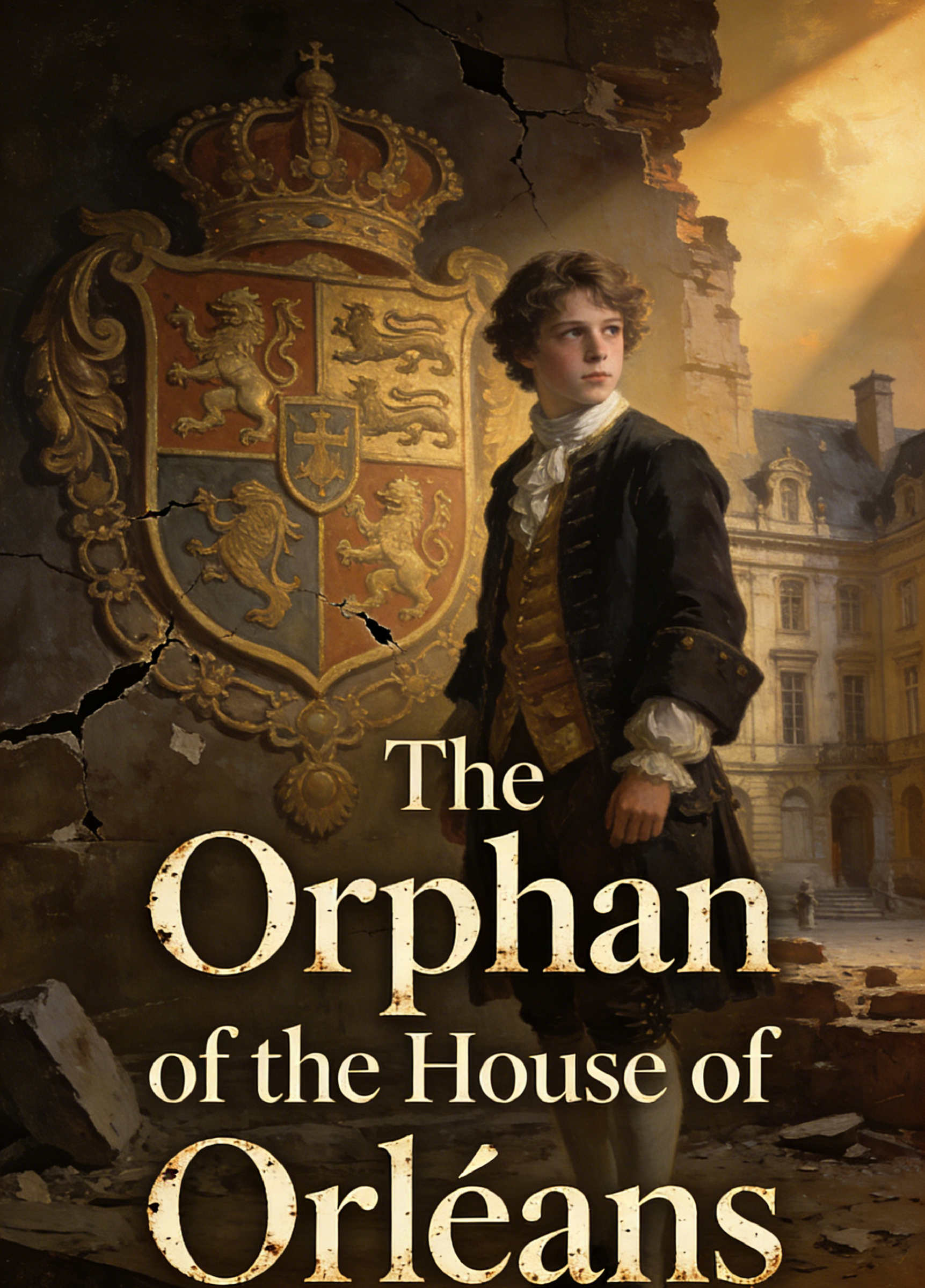
The Orphan of the House of Orléans
prev zoom next
The Orphan of the House of Orléans
  • Buyer protection: Returns accpeted. Paypal accepeted.
  • Item location: Oxford, United Kingdom
  • Posts to: Worldwide
  • Brand:Nokia
  • Weight:0gram
  • Recently sold:20
  • Market price:$2.99
    Sale price:$1.29
  • User reviews: comment rank 5
  • Total:
  • Quantity:

Goods Brief:

Attribute

The Orphan of the House of Orléans A Tale of Loyalty, Sacrifice, and Vengeance Part I: The Massacre and the Sacrifice Chapter I: The General's Fall Paris, November 1815. The autumn rain fell in sheets upon the cobblestones of the Rue Saint-Honoré, washing away the blood that had stained them for twenty-five years of revolution, terror, and war. The Congress of Vienna had ended, Napoleon Bonaparte was exiled to Saint Helena, and the Bourbons had returned to the throne of France. But peace, that elusive phantom, remained as distant as ever. General Étienne Moreau stood at the window of his modest townhouse, watching the rain transform the street into a river of mud and memories. At forty-five, he was still a formidable figure—tall, broad-shouldered, with the bearing of a man who had commanded armies across Europe. His dark hair, now streaked with silver, bore testament to twenty years of campaigning: the Italian campaigns beside Bonaparte, the Egyptian expedition, the glorious victories at Austerlitz and Jena, and finally, the disastrous retreat from Moscow that had claimed three hundred thousand French lives. But it was not the Russian winter that haunted General Moreau's dreams. It was the face of a young man—Louis-Philippe, Duke of Orléans—who had betrayed everything the Revolution had stood for. "My dear Étienne," said a voice from behind him. "You brood too much. The war is over. We have survived." General Moreau turned to face his wife, the beautiful and formidable Marguerite. She sat by the fire, her hands busy with needlework, though her eyes never left her husband's face. In her lap slept their infant son, Jean-Luc, barely three months old, his tiny chest rising and falling with each breath. "The war is never over, Marguerite," Moreau said quietly. "Not while men like the Duke of Orléans plot in the shadows. He speaks of liberty while hoarding his family's stolen wealth. He speaks of the people while conspiring with foreign powers. And now—" He paused, his jaw tightening. "Now he moves against those of us who served the Emperor." Marguerite set aside her needlework and rose, crossing the room to stand beside her husband. Together they watched the rain, two veterans of a war that had consumed a generation. "The Bourbons have returned," she said softly. "Louis XVIII sits on the throne. What can the Duke of Orléans do?" "Louis XVIII is old and sickly. His brother Charles is a fanatic who would restore the Ancien Régime tomorrow if he could." Moreau's voice dropped to a whisper. "But Louis-Philippe... he is young, ambitious, and cunning. He plays the liberal, the friend of the people, while building his own power. And he knows that I know the truth about him." "What truth?" Moreau turned to face his wife, his eyes burning with a fire she had not seen since the days of the Empire. "During the Hundred Days, when Napoleon returned from Elba, Louis-Philippe promised to support him. He swore allegiance to the Emperor, then betrayed him at the first opportunity. He sent secret letters to Wellington, informing him of French troop movements. How many good men died because of his treachery? How many widows and orphans curse the name of Moreau because I could not save their husbands, their fathers?" Marguerite placed her hand on her husband's arm. "You must be careful, Étienne. Words like these—" "Words like these are treason," Moreau finished. "I know. But I am a soldier, not a courtier. I cannot sit silent while a serpent coils around the throat of France." A knock at the door interrupted them. Moreau exchanged a glance with his wife, then strode to answer it himself. On the threshold stood a man in his thirties, dressed in the simple clothes of a craftsman—brown wool coat, leather apron, sturdy boots. But there was nothing simple about his eyes. They were the eyes of a man who had seen too much, loved too deeply, and would do anything for those he served. "Pierre," Moreau said, relief evident in his voice. "Come in, my friend. The weather is foul tonight." Pierre Dubois stepped inside, shaking the rain from his coat. He had been General Moreau's valet for fifteen years, following him from the sands of Egypt to the snows of Russia. But he was more than a servant—he was a confidant, a friend, a man who had saved Moreau's life on more than one occasion. "General," Pierre said, his voice low and urgent. "I bring grave news. The Duke of Orléans has moved against you. His agents are even now preparing charges—conspiracy against the Crown, they call it. They say you plot to restore Napoleon, that you harbor Bonapartist sympathies." Moreau laughed bitterly. "Sympathies? I am a Bonapartist, Pierre. I make no secret of it. Napoleon gave France glory when the Bourbons gave us only decay. But conspiracy? I am a soldier, not an assassin." "The Duke does not care for the truth," Pierre said. "He cares only for silencing those who know his secrets. You must flee, General. Tonight. Take Madame Moreau and the child and go to Switzerland, to England—anywhere but here." Moreau shook his head. "I will not run like a common criminal. I have served France with honor. If the Duke wishes to destroy me, let him do it openly, in the light of day." "Étienne," Marguerite said, her voice trembling. "Think of Jean-Luc. He is only a baby. If they arrest you—" "They will not arrest me," Moreau said firmly. "I am still a general of France. I still have friends in high places. The Duke of Orléans may hate me, but he cannot touch me without proof." But even as he spoke, they heard the sound of horses in the street below—the jingle of harness, the stamp of hooves on wet cobblestones. Moreau moved to the window and looked down. What he saw turned his blood to ice. A company of soldiers stood in the street, their uniforms gleaming in the rain. At their head rode a man in the blue and silver livery of the House of Orléans—a captain, by his insignia, with a face like carved stone and eyes that held no mercy. "The Duke's men," Moreau whispered. "They have come." Marguerite clutched her husband's arm, her face pale as death. "Étienne, what shall we do?" Moreau turned to Pierre. His eyes met those of his loyal servant, and in that moment, a silent understanding passed between them—two men who had faced death together on a hundred battlefields, who knew that some debts could never be repaid, some loyalties never broken. "Pierre," Moreau said quietly. "Will you do something for me? Something that may cost you everything?" Pierre did not hesitate. "Anything, General. You know that." Moreau took his wife's hand and led her to the nursery, where little Jean-Luc slept in his cradle. The baby stirred as they entered, his tiny fists waving in the air, his blue eyes—so like his father's—opening briefly before closing again in sleep. "Take him," Moreau said, his voice breaking. "Take my son and hide him. The Duke's men will search the house. If they find Jean-Luc..." He could not finish the sentence. Pierre understood. In the chaos of revolution and counter-revolution, children of condemned men often disappeared—sent to distant relatives, hidden in monasteries, or simply... lost. The House of Orléans had long memories and longer reaches. "But where shall I take him?" Pierre asked. "To my sister in Lyon," Marguerite said quickly. "Claire. She will hide him. She has no love for the Bourbons or the Orléans." Moreau nodded. "Go with God, Pierre. And know that whatever happens, you have my eternal gratitude." Pierre took the sleeping infant in his arms, wrapping him in a woolen blanket. The baby stirred but did not wake, his breath warm against Pierre's chest. "I will protect him with my life," Pierre swore. "On my honor, on my soul, I swear it." The pounding on the door below echoed through the house like the drums of doom. Moreau straightened his shoulders and adjusted his coat. He was a soldier of France, and he would meet his fate like one. "Go," he said to Pierre. "Through the servants' entrance. The alley behind the house leads to the Rue de Rivoli. From there, take a carriage to the Lyon gate. Do not stop until you are far from Paris." Pierre nodded. With one last look at the general and his wife, he slipped through the door and vanished into the shadows of the house. The pounding came again, louder this time. "Open in the name of the King!" General Moreau descended the stairs with measured steps, his head high, his bearing proud. When he opened the door, he found himself facing the captain of the Duke's guard—a young man with cold eyes and a cruel smile. "General Étienne Moreau?" the captain asked. "I am he." "You are under arrest for conspiracy against the Crown, treason, and sedition. You will come with us." Moreau did not resist as they bound his hands. He did not protest as they pushed him toward the waiting carriage. But as he was led away into the rain-swept night, he cast one final glance back at his home, at the window where his wife stood watching, her face pressed against the glass. "Marguerite," he whispered. "Forgive me." Behind him, in the darkness of the alley, Pierre Dubois ran with his precious burden, the future of the Moreau family cradled in his arms. He did not know what fate awaited his master and mistress. He knew only that he had made a promise, and that some promises were worth more than life itself. The rain fell harder, washing the blood from the cobblestones, hiding the tears of the innocent, and carrying away the cries of the betrayed into the endless night of history. Chapter II: The Judgment of Tyrants The Palais de Justice stood like a grim sentinel on the Île de la Cité, its Gothic towers reaching toward a gray and weeping sky. Within its ancient walls, the machinery of royal justice ground on—slow, implacable, and merciless. General Étienne Moreau sat in a cramped cell beneath the courthouse, his wrists chained, his uniform replaced by the rough garb of a common prisoner. For three weeks he had languished here, denied visitors, denied counsel, denied even the basic dignity due a man who had bled for his country on a dozen battlefields. The door of his cell creaked open, and a figure stepped inside—a man in the robes of a judge, his face hidden in shadow. "General Moreau," the man said. "You are summoned to appear before the tribunal." Moreau rose, his chains clanking. "What tribunal? I have not been charged. I have not been tried. By what right—" "By the right of the Crown," the judge interrupted. "The Duke of Orléans himself presides. You would do well to show respect." They led Moreau through winding corridors and up narrow stairs, emerging finally into a grand chamber that had witnessed the trials of a thousand years of French history. At the far end, seated on a raised dais, was the man who had orchestrated his downfall. Louis-Philippe, Duke of Orléans, was thirty-three years old, with the handsome features of his Bourbon ancestors and the calculating eyes of a politician. He wore neither crown nor ermine, preferring the simple dress of a bourgeois gentleman—dark coat, white cravat, modest pin. It was part of his carefully cultivated image: the Citizen Prince, the friend of the people, the liberal alternative to the reactionary Bourbons. But Moreau knew the truth. He had seen the letters, heard the whispered conversations, witnessed the betrayals that had cost so many good men their lives. "General Moreau," Louis-Philippe said, his voice smooth as silk. "You stand accused of conspiracy against the Crown, of plotting to restore the usurper Bonaparte, and of spreading seditious lies against the government of His Majesty Louis XVIII. How do you plead?" Moreau looked directly into the Duke's eyes. "I plead guilty to serving France. I plead guilty to fighting for the principles of the Revolution—liberty, equality, fraternity. And I plead guilty to despising traitors who wrap themselves in the flag while selling their country to foreign powers." A murmur ran through the chamber. Louis-Philippe's smile never wavered, but his eyes grew cold. "You speak of traitors, General? You, who served a Corsican adventurer who crowned himself Emperor and plunged Europe into twenty years of war? You, who helped destroy the legitimate monarchy and replace it with a military dictatorship?" "Napoleon gave France glory," Moreau said. "He gave us the Civil Code, the Legion of Honor, a place of respect among the nations. What have the Bourbons given us? Decay, corruption, and the return of the émigrés who fled while better men died defending the homeland." Louis-Philippe leaned forward, his voice dropping to a whisper that carried to every corner of the chamber. "You speak of glory, General. But I have heard other words from your lips. Words about me. About my... correspondence with certain foreign powers during the Hundred Days." Moreau felt a chill run down his spine. So that was it. The Duke was not content merely to destroy him—he wanted to ensure that the truth died with him. "I know what you did," Moreau said quietly. "I know about the letters to Wellington. I know how you betrayed Napoleon, betrayed France, betrayed every man who fought and died believing in the cause of liberty." For a moment, something flickered in Louis-Philippe's eyes—fear, perhaps, or rage. Then it was gone, replaced by the mask of the politician. "These are serious accusations," the Duke said. "Accusations that cannot be allowed to spread. You understand, General, that I cannot permit a man who spreads such... slander... to walk free." "You intend to silence me," Moreau said. "Very well. Do what you will with me. But know this: the truth cannot be buried forever. Sooner or later, it will emerge. And when it does, the name of Orléans will be cursed by every honest Frenchman." Louis-Philippe rose from his seat, his face impassive. "General Étienne Moreau, I find you guilty of all charges. You are sentenced to death by beheading. The sentence shall be carried out at dawn, three days hence." Moreau did not flinch. He had faced death a hundred times on the battlefield. He would face it now with the same courage. "And my wife?" he asked. "What of Marguerite?" The Duke's smile returned, colder than before. "Madame Moreau has been questioned regarding her knowledge of your conspiracy. Unfortunately, she proved... uncooperative. She has been sentenced to share your fate." The world seemed to tilt around Moreau. "You monster," he whispered. "She is innocent. She knows nothing of politics, of war—" "She is your wife," Louis-Philippe said. "That is crime enough. Take him away." As the guards dragged Moreau from the chamber, he heard the Duke's voice one last time, soft and deadly: "And find the child. The son of a traitor cannot be allowed to live." The news of General Moreau's condemnation spread through Paris like wildfire. In the cafés and salons, in the barracks and workshops, men whispered of injustice and tyranny. Moreau had been a hero of the Empire, a soldier's soldier who shared the hardships of his men and asked no privilege for himself. To see him condemned by a court of royalist lackeys was an insult to every veteran who had worn the uniform of France. But in the Hôtel de Orléans, the Duke's palace on the Rue de Rivoli, there was only satisfaction. "The General will trouble us no more," Louis-Philippe said to his advisor, the Comte de Vaudreuil. "His accusations will die with him." "And the child?" Vaudreuil asked. "Our agents have searched the city, but there is no sign of the infant." Louis-Philippe frowned. "Find him. The son of Moreau could become a rallying point for the Bonapartists, a symbol of martyred innocence. I want him found and... removed." "The servant," Vaudreuil said. "Pierre Dubois. He disappeared the same night as the arrest. He must have the child." "Then find Dubois. Offer a reward—a thousand francs for information, ten thousand for the child himself. There is no loyalty that cannot be bought, Vaudreuil. Remember that." The Comte bowed and withdrew. Louis-Philippe turned to the window, looking out over the gardens of the Tuileries. In three days, General Moreau would die. In three days, the last witness to his treachery would be silenced. And then—then he could turn his attention to greater things. The throne of France was not yet his. But it would be. Oh yes, it would be. In a small room above a baker's shop on the outskirts of Paris, Pierre Dubois held the infant Jean-Luc in his arms and listened to the rain. His own son, François, born just two days before Jean-Luc, slept in a cradle nearby, his tiny chest rising and falling with each breath. Pierre's wife, Marie, sat by the fire, her face pale and drawn. She had not asked where the child came from, had not questioned her husband's decision to bring him into their home. She knew only that Pierre had served General Moreau for fifteen years, that the General had saved Pierre's life at Austerlitz, and that some debts could never be repaid. "They are searching for him," Pierre said quietly. "The Duke's men. They offer a reward." Marie looked up, fear in her eyes. "Will they find us?" "Not if we are careful. I have arranged passage to Lyon. My cousin has a farm there, in the mountains. We can hide until... until it is safe." "And the General? Madame Moreau?" Pierre's jaw tightened. "They are to be executed. Three days from now." Marie gasped. "No. Pierre, we must do something. We cannot let them die—" "What can we do?" Pierre asked, his voice bitter. "I am one man, with a wife and two infants to protect. Against the power of the House of Orléans, I am nothing." He looked down at Jean-Luc, at the child's sleeping face, so peaceful, so innocent. This baby was the last hope of the Moreau family, the last witness to the Duke's treachery. If he died, the truth would die with him. "There must be a way," Pierre whispered. "There must be..." Then, suddenly, an idea came to him. A terrible, desperate idea that made his blood run cold. He looked at his own son, at François, sleeping so peacefully in his cradle. Two infants, born within days of each other. Two infants who could, with a little luck and a great deal of courage, change places. "Marie," he said, his voice barely audible. "I need you to listen to me. I have a plan. But it will require... a sacrifice." Marie looked at her husband, then at the two infants, and slowly, she understood. Her face went white as snow, and her hands began to tremble. "No," she whispered. "Pierre, no. Not our son. Not François." "If the Duke's men find Jean-Luc, they will kill him," Pierre said. "But if they find François instead... if they believe that François is the General's son..." "They will kill him," Marie finished, her voice breaking. "Our son will die in Jean-Luc's place." "Yes," Pierre said. "And Jean-Luc will live. He will grow up, learn the truth, and one day—one day, he will avenge his parents. He will bring down the House of Orléans and restore honor to the name of Moreau." Marie buried her face in her hands, her body shaking with silent sobs. Pierre knelt beside her, taking her hands in his. "I know what I ask," he said. "I know it is more than any mother should bear. But Marie, think of what the General has done for us. He saved my life at Austerlitz. He gave us this home, this security. He treated me not as a servant, but as a brother. Can we repay that debt with cowardice?" Marie looked up at her husband, tears streaming down her face. Then she looked at the two infants—her own son, and the son of the man who had been like a brother to Pierre. "Swear to me," she whispered. "Swear to me that Jean-Luc will know the truth. Swear to me that he will grow up to be a man worthy of his father's name." "I swear it," Pierre said. "On my life, on my soul, I swear it. François will not die in vain. His sacrifice will be remembered. And one day, the House of Orléans will pay for its crimes." They held each other then, two ordinary people caught in the machinery of history, making a choice that would echo through the decades to come. Outside, the rain continued to fall, washing the blood from the cobblestones, hiding the tears of the innocent, and carrying away the cries of the betrayed into the endless night of history. Chapter III: The Sacrifice The Place de Grève was packed with spectators, despite the cold November rain. The execution of General Étienne Moreau and his wife was to be the event of the season—a warning to all who would dare oppose the new order, a spectacle to satisfy the bloodlust of the mob. Pierre Dubois stood in the crowd, his face hidden beneath a broad-brimmed hat, his heart pounding in his chest. In his arms, wrapped in a blanket, he held an infant—not Jean-Luc, but his own son, François. The real Jean-Luc was safe, hidden with a trusted friend who would take him to Lyon in the morning. The scaffold stood in the center of the square, its wooden frame slick with rain, its blade gleaming in the gray light. Beside it, the executioner waited, a massive figure in black, his face concealed by a hood. A murmur ran through the crowd as the prisoners were brought forth. General Moreau walked with his head high, his chains clanking with each step. Beside him, Madame Marguerite Moreau moved like a ghost, her face pale, her eyes fixed on some distant horizon. They mounted the scaffold together, husband and wife, united in death as they had been in life. The crowd fell silent, the rain the only sound. "General Moreau," the executioner intoned. "You have been condemned by the Crown for treason and sedition. Do you have any last words?" Moreau looked out over the crowd, his gaze sweeping across the faces of the curious, the hostile, the indifferent. Then, for a brief moment, his eyes met Pierre's. "I have only this to say," Moreau declared, his voice carrying to every corner of the square. "I have served France with honor. I have fought for liberty, equality, and fraternity—the principles that gave birth to this nation. If that is treason, then let my blood water the tree of freedom. And know this: the tyrants who condemn me today will themselves be judged by history. Their crimes will not be forgotten. Their names will be cursed. And one day—one day, justice will be done." A ripple of applause ran through the crowd, quickly silenced by the guards. Louis-Philippe, watching from a window of the nearby Hôtel de Ville, frowned at the General's words. "Get on with it," he muttered. On the scaffold, Moreau turned to his wife and took her hands. "Marguerite," he whispered. "Forgive me." She smiled, a smile of such love and sorrow that even the hardened executioner looked away. "There is nothing to forgive, my love. We will meet again, in a better place." They kissed one last time, then knelt before the guillotine. The blade fell twice, and the crowd gasped at the efficiency of death. Pierre watched, his face expressionless, his heart a stone in his chest. He had seen death before—on the battlefield, in the hospital, in the streets of Paris. But this was different. This was the murder of innocence, the triumph of tyranny, the desecration of everything decent and good. And now, it was his turn to play his part. As the crowd began to disperse, Pierre pushed forward, crying out in a voice of theatrical despair: "My child! My child! They have killed his mother! They have killed his father! Oh, cruel world, what will become of this innocent orphan?" The guards turned, suspicious. "Who are you?" one demanded. "What child is this?" Pierre pulled back the blanket, revealing the infant François. "This is the son of General Moreau," he declared, his voice shaking with feigned grief. "Jean-Luc Moreau, not three months old. His parents are dead. What will become of him?" The guards exchanged glances. One of them—a corporal with a scar across his cheek—stepped forward. "The son of the traitor?" he asked. "Give him here." "No!" Pierre cried, clutching the baby to his chest. "He is innocent! He has done nothing wrong!" "Innocent?" the corporal sneered. "The spawn of a traitor is a traitor. Give him here, or you will share his fate." Pierre looked around desperately, as if seeking help from the crowd. But the spectators had already turned away, eager to escape the rain and the stench of death. No one would interfere. No one would save the child. "Very well," Pierre whispered, his voice breaking. "Take him. But know this: you murder an innocent. May God have mercy on your souls." He handed the baby to the corporal, who took him with a look of distaste. "What shall we do with him?" the corporal asked his superior. The officer—a captain in the Duke's guard—considered for a moment. "The Duke wants no martyrs," he said. "No symbols for the Bonapartists to rally around. Take the child to the foundling hospital. Let him disappear into the masses of Paris. In ten years, no one will remember his name." The corporal nodded and carried the baby away. Pierre watched him go, tears streaming down his face—tears of grief, yes, but also of relief. His plan had worked. The Duke's men believed they had captured Jean-Luc Moreau. They would never search for the real child now. But the cost... the cost was beyond measure. Pierre stumbled away from the square, his body shaking with sobs. He had sacrificed his own son, his flesh and blood, to save the child of his master. François would grow up in a foundling hospital, or perhaps die of neglect in some orphanage. He would never know his parents, never know the sacrifice that had been made for him. And Pierre would have to live with that knowledge for the rest of his life. The foundling hospital of Paris was a grim place, a warehouse of unwanted children where infants were deposited like parcels and forgotten like last year's fashion. Disease ran rampant, food was scarce, and the mortality rate was shocking. François Dubois, now registered as "Jean-Luc Moreau, son of condemned traitors," was placed in a ward with fifty other infants. He was given a number, not a name. He was fed watered-down milk twice a day. He was changed when the nurses remembered, which was not often. But François was strong, stronger than his father knew. He survived the first month, then the second. He grew, slowly, painfully, his tiny body fighting against the odds. And then, one cold February morning, a woman came to the hospital—a lady in a fine cloak, her face hidden by a veil. She walked through the wards, looking at the children with eyes that held both pity and purpose. "That one," she said, pointing to François. "The one they call Jean-Luc. I will take him." The matron of the hospital frowned. "He is the son of a traitor, my lady. The Duke of Orléans himself ordered that he be kept here." The lady reached into her purse and produced a bag of gold coins. "The Duke need not know. I am a distant cousin of the Moreau family. I wish to give the child a home. Surely, there is no harm in that?" The matron looked at the gold, then at the child. "Very well," she said. "But you must sign papers, my lady. You must take full responsibility." "I will sign whatever you require," the lady said. She took François in her arms, wrapped him in a warm blanket, and carried him out of the hospital into the cold winter air. A carriage waited nearby, its horses stamping against the frost. "Did you get him?" a voice asked from inside. "Yes," the lady said, climbing in. "I have him." She pulled back her veil, revealing the face of Claire Moreau, the General's sister. She looked down at the infant in her arms, at the face that was not her nephew's, and her heart broke a little. "Poor child," she whispered. "Poor, innocent child. You will never know who you truly are. But I will give you a home. I will give you love. And perhaps, in time, that will be enough." The carriage rattled away into the morning mist, carrying François Dubois toward a new life, a new identity, and a destiny he would never understand. Meanwhile, in Lyon, Pierre Dubois held the real Jean-Luc Moreau in his arms and swore a solemn oath. "I will raise you as my own," he whispered to the sleeping infant. "I will teach you to be strong, to be brave, to be honorable. And when the time comes—when you are old enough to understand—I will tell you the truth. I will tell you about your father, your mother, and the men who murdered them. I will tell you about François, my son, who died in your place. And then, Jean-Luc Moreau, you will have a choice. You can seek vengeance, or you can walk away. But whatever you choose, know this: you carry the hopes of two families, the dreams of the dead, and the promise of justice yet to come." Marie stood beside him, her hand on his shoulder. She had wept for François, would weep for him every day of her life. But she understood why Pierre had done what he did. She understood that some sacrifices were necessary, that some debts could never be repaid. "We will call him Jean," she said softly. "Jean Dubois. It is close enough to his true name to remind us, different enough to protect him." Pierre nodded. "Jean Dubois. A good name. A simple name. A name that will not attract attention." He looked out at the mountains rising in the distance, at the snow-capped peaks that seemed to touch the sky. "Grow strong, Jean," he whispered. "Grow strong, and wait. The House of Orléans has won today. But the wheel of fortune turns, my son. And one day—one day, it will turn against them." The sun broke through the clouds, casting a golden light over the valley. And in that light, Pierre Dubois made a silent vow: he would keep Jean-Luc safe, no matter the cost. He would raise him to be a man worthy of his father's legacy. And when the time came, he would help him claim the vengeance that was his birthright. For Pierre Dubois was not merely a servant. He was a soldier, a friend, a man of honor. And he had made a promise to a dying man—a promise that he would keep, even if it cost him everything. The game had begun. The pieces were in place. And the House of Orléans, for all its power and pride, did not know that the orphan they thought they had destroyed was alive, growing, and waiting. Waiting for the day of reckoning. Part II: The Hidden Years Chapter IV: The Mountains of Lyon The years passed like water through a millwheel, turning the wheel of destiny with inexorable force. In the mountains above Lyon, Pierre Dubois built a new life for himself and his family—a life of simplicity, obscurity, and secrets. He purchased a small farm with the money General Moreau had given him, a rocky plot of land where he raised goats and grew vegetables. The locals knew him as Pierre Dubois, a veteran of Napoleon's wars who had lost everything in the retreat from Moscow and sought only peace in his remaining years. They did not know that the boy who worked beside him—Jean, as he was called—was the son of a murdered hero. Jean grew tall and strong, with his father's dark hair and his mother's gentle eyes. He was a serious child, given more to reading than to play, more to questions than to answers. Pierre taught him to read and write, to calculate and reason, to speak proper French instead of the local patois. In the evenings, by the light of the fire, he told the boy stories—stories of ancient heroes, of noble sacrifices, of men who gave their lives for honor and justice. "Papa," Jean asked one night, when he was seven years old. "Why do you tell me these stories?" Pierre looked at the boy, at the face that was so like his father's, and felt the familiar ache in his heart. "Because, my son, the world is not always just. Good men suffer while evil men prosper. And sometimes—sometimes, the only thing that keeps us going is the knowledge that honor matters, that sacrifice has meaning, that the truth will eventually prevail." Jean frowned, trying to understand. "But if good men suffer, why be good?" Pierre smiled sadly. "Because being good is not about reward, Jean. It is about who we are. A man who compromises his honor has nothing left. He becomes a hollow shell, a puppet dancing on strings pulled by others. But a man who keeps his word, who stands by his principles, who is willing to sacrifice for what is right—he is free. No matter what happens to him, no matter how the world treats him, he remains true to himself." Jean nodded slowly, storing the words in his heart. He did not fully understand them, but he sensed their importance. There was something his father was not telling him, some secret that hung in the air between them like a ghost. "Papa," he asked, "what happened to my real parents?" The question hung in the air like smoke. Pierre had known this moment would come, had rehearsed his answer a thousand times. But now, facing the boy's innocent gaze, he found that the words would not come. "Your mother and father," he said carefully, "were good people. Brave people. They... they died when you were very young." "How did they die?" Pierre looked away, toward the fire. "They were killed," he said quietly. "Murdered by men who feared their courage, who hated their principles." "Who were these men?" "Powerful men," Pierre said. "Men who wear fine clothes and live in great houses. Men who think that their birth gives them the right to destroy those beneath them." Jean was silent for a moment, processing this information. Then he asked the question that would shape the rest of his life: "Will I ever avenge them?" Pierre turned to face the boy, his eyes burning with a fire that had not dimmed in seven years. "Yes," he said. "One day, you will. But not yet. You are too young, too weak. You must grow strong, Jean. You must learn to fight, to think, to survive. And when the time comes—when you are ready—I will tell you everything. I will give you the names of those who destroyed your family. And then, my son, the choice will be yours." Jean nodded, his young face set in lines of determination that were far too serious for his age. "I will be ready," he promised. "I will grow strong. And one day, I will make them pay." Pierre pulled the boy into his arms, holding him close. He thought of François, his own son, growing up in the foundling hospital—or perhaps dead by now, another victim of the Duke's cruelty. He thought of General Moreau and Marguerite, their heads rolling into the basket on that cold November day. He thought of the promise he had made, the burden he carried, the secret that would one day be revealed. "Sleep now," he whispered. "Tomorrow, we begin your training." The training was rigorous and relentless. Pierre taught Jean to ride, to shoot, to wield a sword with skill and precision. He taught him the arts of war—strategy, tactics, the principles of command that Napoleon himself had mastered. But he also taught him the arts of peace—history, philosophy, the classics of literature that shaped the minds of great men. "A soldier who cannot think is merely a weapon in another man's hand," Pierre said. "You must be more than that, Jean. You must be a leader, a thinker, a man who understands the world and can shape it to his will." Jean proved to be an apt pupil. He had his father's intelligence, his mother's grace, and a determination that seemed to come from some deep wellspring of rage that even he did not fully understand. By the time he was fifteen, he could outride, outshoot, and outfence most of the men in the district. By the time he was eighteen, he was known throughout the region as a young man of exceptional promise—a scholar, a athlete, and a gentleman. But there was a darkness in him, a cold fury that surfaced only in moments of stress. Pierre saw it sometimes, in the way Jean's jaw tightened when he heard the name of Orléans mentioned, in the way his eyes grew hard when he read about the excesses of the July Monarchy. For Louis-Philippe had indeed become king. In 1830, the July Revolution had overthrown Charles X and installed the Duke of Orléans on the throne. The Citizen King, they called him—the friend of the people, the liberal monarch who would guide France into a new era of prosperity and progress. But Pierre knew the truth. He read the newspapers, followed the political developments, watched as Louis-Philippe consolidated his power and crushed his enemies. The King of the French, he called himself—not King of France, as if that distinction made him somehow more democratic. But his policies were those of a tyrant: censorship of the press, restriction of voting rights, suppression of dissent. "He has not changed," Pierre told Jean one evening, as they sat by the fire reading the latest reports from Paris. "The same man who murdered your parents now sits on the throne, draped in the trappings of legitimacy. The world has forgotten his crimes. But we have not." Jean looked up from his book, his eyes burning with that cold fire. "Tell me," he said. "Tell me everything. I am old enough now. I am strong enough. Tell me who I am, what was done to my family, and who is responsible." Pierre set down the newspaper and looked at the young man before him. Jean was twenty now, tall and broad-shouldered, with the bearing of a soldier and the mind of a scholar. He was ready. The time had come. "Very well," Pierre said. "But what I tell you must never leave this room. The walls have ears, and the House of Orléans has long arms. If they knew you were alive—if they knew who you truly are—they would kill you without hesitation." "I understand," Jean said. "I am ready." Pierre took a deep breath and began the story he had kept buried for twenty years—the story of General Étienne Moreau, of Marguerite his wife, of the Duke of Orléans and his treachery. He spoke of the arrest, the trial, the execution. He spoke of his own desperate plan, of the sacrifice of François, of the years of hiding and waiting. And when he finished, Jean sat in silence, his face pale, his hands clenched into fists. "My name," he said slowly, "is Jean-Luc Moreau. My father was General Étienne Moreau, murdered by Louis-Philippe, Duke of Orléans. My mother was Marguerite Moreau, executed beside him. And I—" His voice broke, then steadied. "I am the last of my line. The last witness to the crimes of the House of Orléans." "Yes," Pierre said. "You are Jean-Luc Moreau. And you are my son, in every way that matters. I have raised you, loved you, trained you for this moment. The choice is yours now. You can remain Jean Dubois, live out your life in peace, and let the past remain buried. Or you can claim your true identity, seek justice for your parents, and bring down the tyrant who destroyed our families." Jean rose and walked to the window, looking out at the mountains that had been his home for twenty years. The moon was rising, casting silver light on the snow-capped peaks. "There is no choice," he said quietly. "There never was. I am my father's son. I am the heir of General Moreau. And I will have vengeance—or I will die trying." He turned to face Pierre, and in his eyes burned the same fire that had burned in General Moreau's eyes on the day of his execution—the fire of principle, of honor, of unyielding determination. "Tell me what I must do," Jean said. "Tell me how to destroy the House of Orléans." Pierre smiled—a smile of pride, of sorrow, of a promise fulfilled. "First," he said, "you must go to Paris. You must see the enemy in his lair, understand his strengths and weaknesses, find the cracks in his armor. And then—then, you will strike." "When do we leave?" "Not 'we,'" Pierre said. "You must go alone. I am too old, too well-known. If the Duke's agents recognized me, they would know you for who you are. But you—you are young, unknown, a blank slate upon which any identity can be written. You will go to Paris as Jean Dubois, a provincial gentleman seeking his fortune. And there, in the heart of the beast, you will prepare for the day of reckoning." Jean nodded, accepting the wisdom of his father's words. "And when that day comes," he asked, "will you be with me?" Pierre rose and placed his hand on Jean's shoulder. "I have waited twenty years for that day," he said. "I will not miss it for anything in the world." They stood together, father and son in spirit if not in blood, united by a bond stronger than any tie of flesh—a bond of loyalty, of sacrifice, of love that transcended death itself. Outside, the wind howled through the mountains, carrying with it the whisper of destiny, the promise of justice, and the cry of the orphan who would not be forgotten. Chapter V: The Streets of Paris Paris in 1835 was a city of contrasts—a place of glittering salons and squalid slums, of revolutionary fervor and royalist repression, of dreams and disillusionment. The July Monarchy had brought stability, but at the cost of liberty. The bourgeoisie prospered while the workers starved. And everywhere, in the cafés and the workshops, in the universities and the barracks, men whispered of change. Jean Dubois arrived in the city on a cold October morning, his meager possessions packed in a single trunk, his heart burning with a purpose he dared not speak aloud. He took lodgings in the Latin Quarter, in a modest pension frequented by students and young men of ambition. From his window, he could see the spires of Notre-Dame, the towers of the Palais de Justice, and—on clear days—the golden dome of the Invalides where Napoleon lay entombed. His first task was to establish his identity. He enrolled in the Faculty of Law at the University of Paris, not because he intended to practice, but because the law provided access to power. He attended lectures, debated with his fellow students, and slowly built a network of contacts—journalists, lawyers, minor officials who might one day prove useful. But his true education took place outside the classroom. In the evenings, Jean walked the streets of Paris, observing, listening, learning. He visited the Palais-Royal, where Louis-Philippe held court among the shops and cafés, playing the role of the citizen king while his secret police watched from the shadows. He attended the sessions of the Chamber of Deputies, watching the political theater unfold, noting who spoke for reform and who defended the status quo. And he studied the House of Orléans. The royal family was everywhere—at the opera, at the races, at the endless round of balls and receptions that marked the social season. The Duke of Orléans, the king's eldest son, was a handsome young man with his father's ambition and none of his cunning. The Princesses were married off to foreign princes, cementing alliances that would secure the dynasty. And at the center of it all was Louis-Philippe himself—aging now, his hair white, his face lined with the cares of kingship, but still sharp, still watchful, still dangerous. Jean watched him from a distance, studying his habits, his routines, his vulnerabilities. He learned that the king took a daily ride in the Bois de Boulogne, that he breakfasted every Sunday with his family at the Tuileries, that he kept a mistress in a house on the Rue de la Paix. He learned that the king feared assassination, that he never went anywhere without a bodyguard of Algerian veterans, that he slept in a different chamber every night. "He is afraid," Jean wrote to Pierre, in letters written in code and sent through intermediaries. "The tyrant knows that his throne rests on sand. One push, and it will all come tumbling down." But pushing was not so simple. The House of Orléans had spent fifteen years consolidating its power. The army was loyal, the police were efficient, and the press was muzzled. Dissidents disappeared into the prisons of the state, their voices silenced, their movements crushed. Jean needed allies. He needed a network of men who shared his hatred of the regime, who were willing to risk everything for the cause of justice. And he found them, in the most unlikely of places. The Café de la Régence was a dim, smoky establishment on the Rue Saint-Honoré, frequented by chess players, revolutionaries, and men who did not wish to be noticed. It was there, on a rainy November evening, that Jean met the man who would change his life. He was a small, wiry figure with piercing eyes and a beard that reached to his chest. He wore the rough clothes of a worker, but his hands were soft, his nails clean, his speech educated. He called himself Auguste, and he spoke of revolution with the passion of a prophet. "The July Monarchy is a lie," Auguste declared, his voice low but intense. "Louis-Philippe pretends to be a friend of the people, but he serves only the bourgeoisie. The workers starve while the rich grow fatter. The people demand bread, and he gives them bullets." Jean listened, saying little, observing everything. He had heard such talk before—in the Latin Quarter, in the workshops of the Faubourg Saint-Antoine, in the secret meetings of the republican societies. But there was something different about Auguste, a quality of conviction that went beyond mere rhetoric. "You speak of revolution," Jean said carefully. "But how? The army is loyal, the police are everywhere, and the people are divided." Auguste smiled, a smile of cunning and confidence. "The army is loyal to its paymaster, not to the king. The police are efficient, but they cannot be everywhere. And the people—" He leaned forward, his eyes burning. "The people are a sleeping giant. Wake them, and they will shake the foundations of the earth." "And who will wake them?" "Men like us," Auguste said. "Men who are willing to sacrifice everything for the cause of liberty. I have seen you, Jean Dubois. I have watched you at the university, in the cafés, in the streets. You have the fire of revolution in your eyes. You hate the tyrant as much as I do." Jean felt a chill run down his spine. Had he been so transparent? Had his disguise failed so quickly? "I am a student of the law," he said carefully. "I seek only knowledge." Auguste laughed, a harsh, barking sound. "Do not play games with me, young man. I know a revolutionary when I see one. You watch the king with the eyes of a hunter. You study his movements, his habits, his weaknesses. You are planning something. I do not know what, but I know the signs." Jean was silent for a moment, weighing his options. He could deny everything, walk away, find another café, another network. But something told him that Auguste was different, that he might be useful, that he might even be trusted. "Very well," Jean said. "I will be honest with you. I do hate the king. I have reasons—personal reasons—that I cannot share. But I am alone, without resources, without allies. If I am to accomplish what I have sworn to do, I need help." Auguste nodded, satisfied. "Then you shall have it. I am a member of the Society of the Rights of Man—a secret organization dedicated to the overthrow of the July Monarchy and the establishment of a republic. We have cells throughout Paris, throughout France. We have weapons, money, men who are willing to die for the cause. And we have a plan." "What plan?" Auguste looked around, ensuring that no one was listening. "The king is vulnerable," he whispered. "His bodyguards are fierce, but they cannot protect him from a determined assassin. We have men—good men, brave men—who are willing to strike the blow that will free France." "Assassination," Jean said, his voice flat. "Justice," Auguste corrected. "Louis-Philippe is a murderer. He has the blood of thousands on his hands—the victims of his repression, the martyrs of his prisons, the innocents crushed beneath the wheels of his tyranny. He deserves to die." Jean thought of his parents, of their heads rolling into the basket, of the Duke's cold smile as he pronounced their sentence. He thought of François, his surrogate brother, sacrificed in his place, growing up in a foundling hospital or dead in some unmarked grave. "Yes," he said quietly. "He deserves to die." Auguste smiled and extended his hand. "Then we are allies, Jean Dubois. Together, we will bring down the House of Orléans. Together, we will build a new France—a France of liberty, equality, and fraternity." Jean took the hand, feeling the calluses of a working man, the strength of a true believer. "Together," he agreed. But even as he spoke, he knew that his path was different from Auguste's. The republican sought to destroy the king for political reasons—for the cause of democracy, for the rights of the people. Jean sought something simpler, more personal, more ancient. He sought vengeance. And he would have it, no matter the cost. The months that followed were a blur of secret meetings, coded messages, and careful preparations. Jean rose through the ranks of the Society of the Rights of Man, proving his loyalty through small acts of defiance—distributing forbidden pamphlets, helping fugitives escape the police, organizing protests that were quickly suppressed. He learned the names of the other conspirators—men like Armand Barbès, a fiery orator who could move crowds to frenzy; François-Vincent Raspail, a doctor who used his medical practice as cover for revolutionary activities; and Louis Auguste Blanqui, a young radical whose devotion to the cause bordered on fanaticism. Together, they plotted the overthrow of the July Monarchy. They stockpiled weapons in secret locations throughout the city. They recruited soldiers from the disaffected regiments, workers from the factories, students from the universities. And they waited for the right moment to strike. But Jean had his own plans. While the republicans prepared for revolution, he prepared for something more personal, more precise. He studied the king's routines, identified his vulnerabilities, planned the moment when he would strike. It would be on a Sunday, he decided, when the king breakfasted with his family at the Tuileries. The palace was heavily guarded, but there was a servants' entrance, little used, poorly watched. A man who knew the layout, who moved with confidence, who looked like he belonged—such a man might slip through. And once inside, it would be simple. A knife, a pistol, a moment of opportunity. The king would die, and Jean would be killed in the attempt—or captured, tortured, executed. It did not matter. What mattered was that justice would be done, that his parents would be avenged, that the House of Orléans would fall. He wrote to Pierre, telling him of his plans. The reply came three weeks later, carried by a trusted messenger. "Do not be rash, my son. The time is not yet right. The House of Orléans is strong, but its foundations are rotting. Wait. Watch. Prepare. And when the moment comes—when the whole edifice begins to crumble—then you will strike. Not as an assassin, but as an avenger. Not for yourself, but for all those who have suffered at the hands of tyrants." Jean read the letter a dozen times, then burned it. His father was right. He had been impatient, reckless, driven by emotion rather than reason. The true revolutionary was patient, calculating, willing to wait years for the perfect moment. He would wait. He would watch. And when the time came, he would be ready. The years passed. Jean completed his studies, took his degree in law, and established a modest practice in the Marais. He became a respectable figure, a young lawyer with a promising future, a man who attended church on Sundays and paid his taxes on time. But beneath the mask of respectability, he remained what he had always been—a revolutionary, an avenger, the last son of a murdered family. He continued his work with the Society of the Rights of Man, rising to a position of leadership, helping to coordinate the network of cells that spread throughout France. And he watched the House of Orléans, waiting for the moment of weakness that would signal the end. It came in 1847, in the form of a scandal that shook the monarchy to its foundations. The king's son, the Duke of Orléans, was revealed to have embezzled vast sums from the public treasury. The revelation sparked outrage throughout France, fueling the fires of discontent that had been smoldering for years. "The end is near," Auguste told Jean, his eyes gleaming with excitement. "The people are waking up. The monarchy is discredited. One push, and it will all come tumbling down." "When?" Jean asked. "Soon," Auguste promised. "Very soon." Jean looked out at the streets of Paris, at the crowds gathering in the squares, at the barricades going up in the faubourgs. Twenty-two years he had waited. Twenty-two years of hiding, of planning, of nursing the flame of vengeance in his heart. The time had come. The orphan of the House of Orléans was ready to claim his birthright. And the House of Orléans, for all its power and pride, did not know that the hand that would destroy it was already raised against them. Part III: The Revelation Chapter VI: The Letter February 1848. The winter had been harsh, the harvests poor, the people hungry. In the factories of Lyon and the workshops of Paris, workers whispered of revolution. In the salons of the wealthy, the talk was of reform, of concessions, of measures to placate the mob. But for Jean Dubois, the talk was meaningless. He had spent thirteen years in Paris, building his network, preparing for the moment of vengeance. And now, at last, that moment was at hand. It began with a banquet. The government of François Guizot, the king's chief minister, had banned political gatherings, but the opposition had found a loophole. They would hold a banquet—a seemingly innocent celebration of reform—and use it as a platform to demand change. The banquet was scheduled for February 22nd, in the 12th arrondissement. Thousands were expected to attend—workers, students, bourgeois reformers, republican radicals. It would be the largest demonstration against the regime since the July Revolution of 1830. Jean was among the organizers, working alongside Auguste and the other leaders of the Society of the Rights of Man. They planned to use the banquet as the spark that would ignite the revolution—to turn a peaceful demonstration into an armed uprising that would sweep away the July Monarchy forever. But on the morning of February 21st, a messenger arrived at Jean's lodgings with a letter that would change everything. The letter was from Pierre, written in their private code, the words carefully chosen to conceal their true meaning from prying eyes. But the message was clear enough to Jean, who had spent years deciphering such communications. "Come at once," Pierre wrote. "I am dying. There are things you must know before the end." Jean read the letter three times, his heart pounding in his chest. Pierre—his father in all but blood, the man who had sacrificed everything to save him—was dying. And he had secrets to reveal, secrets that could not wait. He made his decision quickly. The banquet could proceed without him. Auguste and the others were capable organizers. But Pierre—Pierre was the only link to his past, the only one who knew the full truth of his identity. He packed a small bag, left a message for his revolutionary comrades, and caught the first coach to Lyon. The farm in the mountains had changed little in the years since Jean had left. The same stone house, the same goat pen, the same view of the snow-capped peaks. But the man who waited inside was not the vigorous father Jean remembered. Pierre lay in bed, his face gaunt, his skin pale as parchment. He was sixty-three years old, but he looked like a man of eighty. Disease—some wasting illness the doctors could not name—had consumed him from within, leaving only a shell of the man he had been. "Jean," he whispered, his voice barely audible. "You came." "Of course I came," Jean said, kneeling beside the bed and taking Pierre's hand. It was cold, the skin dry and papery. "I came as soon as I received your letter." "The revolution," Pierre said. "It is beginning?" "It will begin tomorrow. The banquet, the demonstrations—everything is in place." Pierre nodded, a faint smile crossing his lips. "Good. Good. I have waited so long to see the House of Orléans fall. And now, at last—" He broke off, coughing, a wet, racking sound that shook his frail body. "Rest," Jean said. "Do not tire yourself." "No," Pierre said, his grip tightening on Jean's hand. "There is no time for rest. I must tell you—there are things you do not know. Things I have kept secret all these years." Jean felt a chill run down his spine. "What things?" Pierre closed his eyes, gathering his strength. When he spoke again, his voice was stronger, clearer, as if the act of confession was giving him renewed energy. "You know that I saved you from the Duke's men," he began. "You know that I took you to Lyon, raised you as my own. But there is more to the story. Something I have never told you. Something that changes everything." "Tell me," Jean said. Pierre opened his eyes and looked directly at Jean, his gaze piercing despite his weakness. "When the Duke's men came for your parents," he said, "I knew they would search for you. They could not allow the son of General Moreau to live—he would be a symbol, a martyr, a rallying point for the enemies of the House of Orléans. So I made a decision. A terrible decision." He paused, his breath coming in shallow gasps. "I had a son," he continued. "François. Born two days before you. A healthy child, strong and beautiful. And I—" His voice broke. "I exchanged you for him. I took you to safety, and I gave François to the Duke's men. I told them he was Jean-Luc Moreau. I told them he was the son of the traitor." Jean stared at Pierre, unable to comprehend what he was hearing. "You... you sacrificed your own son? For me?" "Yes," Pierre whispered. "I sacrificed my son. My flesh and blood. The child I had dreamed of, hoped for, loved before he was even born. I gave him to the enemy, knowing that he would die—or worse, grow up in some orphanage, forgotten, abandoned, believing himself to be someone he was not." "But why?" Jean asked, his voice shaking. "Why would you do such a thing?" "Because I had sworn an oath," Pierre said. "An oath to your father, to protect you with my life. Because your father had saved my life at Austerlitz, had treated me as a brother, had given me everything I had. Because—" He paused, tears streaming down his face. "Because I believed that you were the future. That you would grow up to be a man worthy of your father's name. That you would one day avenge his death, and the deaths of all those who had suffered at the hands of the House of Orléans." Jean was silent, his mind reeling. All these years, he had believed that Pierre had simply hidden him, smuggled him away from Paris. He had never imagined—never dreamed—that such a sacrifice had been made. "Where is François now?" he asked. "I do not know," Pierre said. "He was taken to the foundling hospital. From there—" He shook his head. "He may be dead. He may be alive, somewhere in France, believing himself to be Jean-Luc Moreau, the son of a traitor. I have searched for him, over the years. Sent messengers, made inquiries. But the records of the foundling hospital are chaotic, and François—if he lives—may have taken another name, another identity." Jean rose and walked to the window, looking out at the mountains he had known as a child. His whole life, he had believed himself to be an orphan, the last of his line, alone in the world. Now he learned that he had a brother—a surrogate brother, a man who had taken his place, who had suffered in his stead. "I must find him," Jean said. "I must find François and tell him the truth." "You cannot," Pierre said. "Not now. The revolution is beginning. The House of Orléans is weak, vulnerable. This is your moment, Jean. Your chance to fulfill the destiny for which François sacrificed his life. You cannot throw it away on a search that may take years, that may end in disappointment." Jean turned to face Pierre, his face set in lines of determination. "I will not forget him," he said. "When the revolution is over, when the House of Orléans has fallen—I will find him. I will tell him who he is. And I will beg his forgiveness for the life that was stolen from him." Pierre smiled, a smile of pride and sorrow. "You are your father's son," he said. "A man of honor. A man who keeps his word. I knew, when I made my choice all those years ago, that I was not wrong. That you would be worthy of the sacrifice." He reached beneath his pillow and withdrew a small bundle wrapped in silk. "Take this," he said, pressing it into Jean's hands. "It is all that remains of your family. The sword your father carried at Austerlitz. The ring your mother wore on her wedding day. And—" He paused, his voice dropping to a whisper. "A letter. Written by your father, the night before his execution. He gave it to me, entrusted me to deliver it to you when the time was right." Jean unwrapped the bundle with trembling hands. Inside was a cavalry saber, its blade still sharp after thirty years; a gold ring set with a small diamond; and a folded sheet of paper, yellowed with age, covered in a handwriting he did not recognize. "Read it," Pierre said. "Read your father's last words." Jean unfolded the letter and began to read. "My son, If you are reading this, then I am dead, murdered by the tyrant Louis-Philippe, Duke of Orléans. And you, my beloved child, have been saved by the courage and loyalty of Pierre Dubois, the finest man I have ever known. I write these words in the darkness of my cell, on the eve of my execution. Tomorrow, I will die. Your mother will die beside me. We go to our deaths with courage, knowing that we have served France with honor, that we have stood for the principles of liberty and justice that gave birth to our nation. But I do not write to speak of my own fate. I write to speak of yours. You are the last of the Moreaus, the heir to a name that was once honored throughout France. You carry in your veins the blood of soldiers and statesmen, of men who fought for what was right, regardless of the cost. Louis-Philippe has murdered me. He has murdered your mother. He has sought to destroy our family, to erase our name from history. But he has failed. You live. And as long as you live, the House of Moreau is not extinguished. I do not ask you to seek vengeance. Vengeance is a poison that consumes the soul. But I do ask you to seek justice. Not for me, not for your mother, but for all those who have suffered at the hands of tyrants. For the widows and orphans of war, for the prisoners of conscience, for the voiceless masses who labor in darkness while the privileged few feast in the light. You are young now, too young to understand these words. But one day, you will be a man. And on that day, you will have a choice. You can live your life in peace, forgetting the past, building a future for yourself and your children. Or you can take up the burden of your heritage, and fight for the principles for which your parents died. The choice is yours, my son. Whatever you decide, know that I love you. That your mother loves you. That we will watch over you from whatever realm awaits us beyond this life. Be strong, Jean-Luc. Be brave. Be honorable. And remember: the truth cannot be buried forever. Sooner or later, it will emerge. And when it does, the name of Moreau will shine once more. Your loving father, Étienne Moreau November 27, 1815" Jean read the letter three times, tears streaming down his face. Then he folded it carefully and placed it in his breast pocket, next to his heart. "I will not fail you, Father," he whispered. "I will not fail any of you." He turned to Pierre, to the man who had given everything—his son, his life, his future—to save him. Pierre's eyes were closed, his breathing shallow and irregular. "Papa," Jean said, using the name he had called Pierre all his life. "Papa, can you hear me?" Pierre's eyes fluttered open. "Jean," he whispered. "My son. You have read the letter?" "Yes." "And you understand? You understand what you must do?" "I understand," Jean said. "I will finish what you began. I will destroy the House of Orléans. And I will find François, if he lives, and restore him to his rightful place." Pierre smiled, a smile of pure joy that transformed his wasted face. "Then I can die in peace," he said. "I have kept my promise. I have raised you to be a man worthy of your father. And now—now it is your turn to keep the promise. To honor the sacrifice. To—" He broke off, coughing, his body convulsing. Jean held him, cradling him like a child, until the fit passed. "Rest now," Jean said. "Save your strength." But Pierre shook h

Goods Tag

User Comment(This product has 2 customer reviews)

  • No comment
Total 02 records, divided into15 pages. First Prev Next
Username: Anonymous user
E-mail:
Rank:
Content:
Verification code: captcha

KMALL360 Quick Order: Register and make your 1st order together

Fast & Easy! Registration will be done at the same time, and a confirmation will be sent by email.

  • Product:
  • Remark:
    Typically your order will ship within 24 hours.
  • Quantity:
  • Total Price:   (Returns Accepted within 30 Days; Dispatch from the UK)
  • Your name: *
  • Tel:*
  • Country: *
  • Province/State:
  • City:
  • Address: *
  • Your Email: *
  • Set Your Password: *
  • 备注信息:
  • Shipping:
  • Payment: Credit/Debit Cards, and PaypalPapipagoBoleto.DotpayQIWIWebMoneyMOLPayIndonesia BanksDragonpayPaytmCash on Delivery
  •