Currency:

USD
HKD
GBP
EUR
CAD
AUD
CHF
INR
USD
sign in · join Free · My account
Home | Sale | Customer Service | Info Tech | Delivery and Payment | Buyer Protection | Policy Information | PC Niche
Your Position: Home > Book > eBooks > The Lad of the Loch

View History

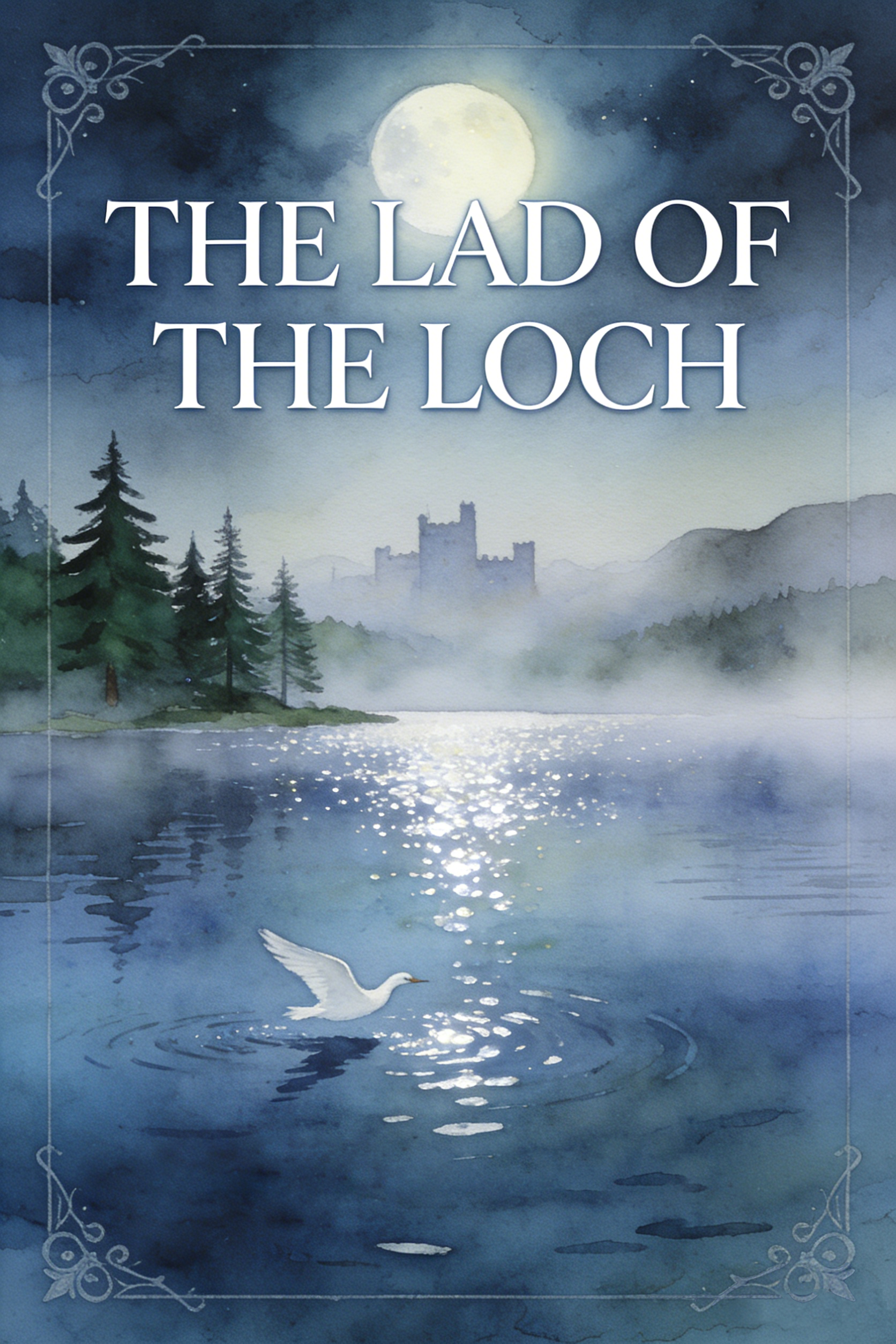
The Lad of the Loch
prev zoom next
The Lad of the Loch
  • Buyer protection: Returns accpeted. Paypal accepeted.
  • Item location: Oxford, United Kingdom
  • Posts to: Worldwide
  • Brand:Nokia
  • Weight:0gram
  • Recently sold:20
  • Market price:$2.99
    Sale price:$1.29
  • User reviews: comment rank 5
  • Total:
  • Quantity:

Goods Brief:

Attribute

The Lad of the Loch ———  ✦  ——— A Highland Tale of Chivalry and Love Part One: The Mists of Destiny Chapter I: Where the Heather Meets the Water In the days when the Highlands were younger and the veil between the mortal realm and the Otherworld hung thin as morning mist upon the braes, there lived a young scholar named Lewis MacEwan. The folk of Glenmoriston knew him as a quiet lad with ink-stained fingers and a heart too large for his slender frame, a youth who carried verses of the old bards upon his tongue and dreams of distant lands behind his grey eyes. It was the autumn of his twenty-second year when Lewis set out from his father’s humble croft, bound for the ancient seat of learning at St. Andrews. The scholarship he had earned through years of laboring over Latin texts and Greek philosophies was his passage to a world beyond the mist-shrouded mountains of his birth. With naught but a worn leather satchel containing his precious books, a claymore inherited from his grandfather, and a heart full of noble intentions, he walked the old drover’s roads that wound through the glens like silver ribbons. The morning of his third day upon the road dawned pale and uncertain. A haar had descended from the mountains overnight, wrapping the world in grey wool so thick that Lewis could scarcely see ten paces before him. The familiar landmarks of his childhood—the standing stones on Cairn Hill, the twisted rowan tree at the crossroads, the ancient broch that guarded the pass—all had vanished into the mist’s embrace. “I shall miss the ferry at Fort Augustus at this pace,” Lewis muttered to himself, his breath forming small clouds in the chill air. “And if I miss the ferry, I shall miss the coach to the lowlands, and if I miss the coach…” He did not finish the thought, for the path before him seemed to dissolve into nothingness, and he found himself standing at the edge of a body of water he did not recognize. The mist parted here, as if some ancient power had drawn back a curtain, revealing a loch of such profound blackness that it seemed not water at all but a hole cut into the very fabric of the world. Lewis had lived his entire life among the lochs of the Great Glen, had fished their waters and swum their depths, but never had he beheld such a place. The loch lay in a natural amphitheatre of stone, surrounded on three sides by cliffs that rose like the walls of a cathedral, their faces draped with hanging gardens of rowan and birch. The water itself was preternaturally still, not a breath of wind disturbing its obsidian surface, and yet Lewis felt certain that something moved in those depths—something ancient and aware and watching. Upon the eastern shore, where the cliffs gave way to a shingle beach of smooth grey stones, stood a structure that made Lewis rub his eyes in disbelief. It was a well, or what remained of one—an ancient circle of standing stones crowned with a lintel of weathered granite, carved with spirals and symbols that seemed to shift and swim before his eyes. The well itself was dry, or so it appeared, but from its depths rose a sound that made Lewis’s heart clench within his chest. It was weeping. A woman’s weeping, soft and desolate as the autumn wind through empty branches. Now, any sensible Highlander of that era, raised upon tales of the daoine sìth and the dangers of following fairy music, would have turned upon his heel and walked swiftly away. But Lewis MacEwan was not any Highlander. His mother had died giving him life, and his father had raised him on stories of the old heroes—of Cú Chulainn and his geasa, of Finn MacCumhail and his band of warriors, of the knight Gawain who had faced the Green Knight to keep his word. In Lewis’s heart, the old virtues burned bright: honor above safety, compassion above caution, duty above fear. He approached the well. “Is someone there?” he called, his voice sounding small against the vastness of stone and water. “Do you need aid?” The weeping ceased. For a long moment, nothing moved, nothing breathed. Then, from behind the standing stones, there emerged a figure that made Lewis forget every word of Latin and Greek he had ever learned. She was tall, taller than most men, with a bearing that spoke of ancient bloodlines and courts that existed beyond mortal knowing. Her hair fell in waves of copper and gold, unbound and wild as the heather on the hills, and her eyes—her eyes were the grey-green of the loch itself, deep and changeable and full of secrets. She wore a gown of some fabric that Lewis could not name, the color of mist upon water, and about her neck hung a pendant of carved crystal that seemed to hold within it the light of captured stars. But it was not her beauty that struck Lewis to the heart, though beautiful she was beyond any woman he had ever beheld. It was her sorrow. It hung about her like a mantle, visible in the slump of her proud shoulders, the trembling of her slender hands, the tracks of tears upon her pale cheeks. “You can see me,” she said, and her voice was like water running over stones, like wind in the high branches. “You are not afraid.” “I am Lewis MacEwan,” he replied, finding his tongue with an effort. “And I was raised to believe that no one weeps without cause. If you are in distress, lady, I would help you if I can.” She studied him with those strange eyes, and Lewis felt as though she looked not at him but through him, reading the pages of his soul as easily as he might read a book. “You are a scholar,” she said at last. “I can smell the ink and parchment upon you. And something more—a kindness that has not been beaten from you by this harsh world. Tell me, Lewis MacEwan, do you believe in the old stories? In the daoine sìth who dwell beneath the hills? In the water horses that emerge from the lochs? In the ancient pacts between your kind and mine?” Lewis thought of his grandmother, who had left offerings of milk for the brownies and had taught him never to cut a rowan tree. He thought of the stories his father told by the fire on winter nights, of the time before time when gods and spirits walked openly upon the earth. “I believe that the world is larger and stranger than the priests and professors would have us believe,” he said carefully. “And I believe that suffering is suffering, whether it befalls mortal or… other.” A ghost of a smile touched her lips, there and gone like sunlight through breaking clouds. “Well answered. Then know this, Lewis MacEwan: I am Eilidh, daughter of the King of the Lochs, sovereign of the waters that lie beneath these mountains. My realm is not of your world, though it touches upon it in places such as this, where the old magic runs strong.” She gestured to the loch behind her, and Lewis saw now that the water was not black at all but infinitely deep, filled with shifting lights that came not from the overcast sky above but from somewhere far below. “Three years ago,” Eilidh continued, her voice dropping to a whisper, “I was given in marriage to Torcull, a chieftain of the deeper waters—a creature of power and cruelty who had long coveted my father’s throne. It was meant to be a peace-making, a joining of two houses that had warred since before your kind walked upon these shores. But Torcull…” She broke off, her composure cracking like thin ice, and fresh tears spilled down her cheeks. Lewis, moved by an impulse he could not name, stepped forward and offered her his handkerchief—a simple square of linen, embroidered by his own hand with the thistle of his clan. “Take your time, lady,” he said gently. “I am in no hurry.” Eilidh accepted the handkerchief with fingers that trembled, and when her eyes met his again, there was something new in their depths—gratitude, perhaps, or wonder that a mortal would show such courtesy to one of the sìth. “Torcull is a monster,” she said plainly. “Not in form, for he can wear the shape of a handsome man when it suits him, but in spirit. He delights in pain, in domination, in breaking that which is beautiful and proud. These three years I have been his prisoner, beaten and humiliated, forced to serve him and his court of degenerates while my father believes—” She choked on the words, and Lewis felt a fire kindle in his chest, a righteous fury such as he had never known. “Your father believes what?” “He believes I am content!” Eilidh cried. “Torcull has forbidden me all contact with my family. His magic seals the paths between his domain and my father’s realm. I have tried, Lewis MacEwan—I have tried to send messages, to break through the barriers, but I am not strong enough. I am trapped in a cage of water and sorcery, and no one in the world above knows of my plight.” She turned away, her shoulders shaking with suppressed sobs. “Until now. Until you.” Lewis stood very still, his mind racing. Every tale he had ever heard of the daoine sìth warned of the dangers of involving oneself in their affairs. Time ran differently in their realms; a night spent in a fairy hill might be a hundred years in the mortal world. Their favors came with prices, their gratitude with obligations. And yet… “You wish me to carry a message,” he said. It was not a question. Eilidh turned back to him, hope blazing in her eyes like stars reflected on water. “You would do this? You would risk the dangers of the Otherworld roads, the wrath of Torcull if he discovers your involvement, the… the strangeness of my kind?” “I would hear the message first,” Lewis said, though in his heart he already knew his answer. “And I would know where I am to take it.” Eilidh reached into the folds of her gown and withdrew a small cylinder of carved bone, sealed at both ends with wax the color of dried blood. “This contains my words to my father, the King of the Lochs. His palace lies beneath Loch Corruisk, in the heart of the Cuillin mountains on the Isle of Skye. The journey is not short, even by mortal roads, and once you reach the loch, you must find the entrance to the underwater realm—a task that has defeated many who sought our court.” “How will I find this entrance?” Lewis asked. Eilidh reached up and unclasped the crystal pendant from about her neck. She pressed it into Lewis’s palm, and he felt a tingling warmth spread through his fingers, as though he held not cold stone but living fire. “This is a fragment of the first star that fell into the waters of the world,” she said. “It will grow warm when you near the entrance to my father’s realm, and cold if you stray from the true path. Keep it close, Lewis MacEwan, and it will guide you true.” Lewis closed his fingers around the pendant, feeling its strange warmth against his skin. “And if I succeed? If I deliver your message and your father comes to your aid?” “Then I shall be free,” Eilidh whispered. “Free to return to my father’s court, free to heal from these years of torment, free to…” She stopped, her eyes searching his face with an intensity that made Lewis’s heart stutter in his chest. “Free to what?” he asked. “Free to remember,” she said softly, “that once, in my darkest hour, a mortal man showed me kindness without price, courage without promise of reward. Such things are rare in any world, Lewis MacEwan. They are treasures beyond gold.” The mist was closing in again, Lewis realized, drawing tight around them like a shroud. Eilidh seemed to fade slightly at the edges, becoming translucent as morning fog. “I must return,” she said, her voice coming from farther away than her standing form. “Torcull will miss me soon, and his punishments are… inventive. But I will watch for you, scholar. I will watch and hope.” “Wait!” Lewis cried. “How will I know when I have reached the right place? Loch Corruisk is vast, and—” “The star will guide you,” her voice echoed. “And remember this, Lewis MacEwan: in the realm beneath the waters, nothing is as it seems. Trust your heart, not your eyes. And whatever you do, do not eat or drink anything offered to you, no matter how hungry or thirsty you become. The food of the sìth binds the eater to our realm, and you have business in the world of mortals yet.” Her form dissolved into mist, and then there was only the well and the loch and the grey silence of the Highlands. But in Lewis’s hand, the crystal pendant pulsed with warmth like a second heartbeat, and in his satchel, the bone cylinder seemed to weigh more than its size suggested. He stood for a long moment, staring at the place where the fairy woman had stood. Then, with the decisiveness that would characterize all his future actions, he tucked the pendant inside his shirt, where it lay against his skin, and turned his steps away from St. Andrews and toward the west, toward Skye and the Cuillin mountains and whatever destiny awaited him there. Behind him, the loch whispered against its shores, and if there was laughter in the sound, it was not unkind. Chapter II: The Road to Skye The journey west was a lesson in the vastness of the Highlands and the smallness of mortal concerns. Lewis walked for three days through glens where the only signs of human habitation were the ruins of crofts abandoned during the Clearances, their stone walls standing like the ribs of ancient beasts picked clean by time. He slept beneath stars so numerous and bright they seemed to press down upon him, and woke to mornings when the mist lay in the valleys like milk in a bowl. The crystal pendant guided him, though not in any way he could have explained to another. When he considered turning aside to follow a well-marked road, the stone would grow cool against his chest, and when he pressed on through difficult terrain—wading through icy burns, scrambling over rockfalls, crawling through thickets of gorse that tore at his clothes—the warmth would return, encouraging, approving. On the fourth day, he reached the Great Glen and the long expanse of Loch Ness. Here he was able to take passage on a fishing boat bound for Fort Augustus, and as the boat cut through the dark waters, Lewis found himself staring into the depths, wondering what moved in those lightless fathoms. The fishermen spoke in low voices of strange things seen on the loch—wake without source, shapes in the water, the occasional disappearance of sheep from the shoreline farms. “The Old One lives here still,” the eldest fisherman said, crossing himself. “Has done since before the hills were formed. Best not to think on it too hard, lad. The water has eyes.” Lewis thought of Eilidh, trapped in a similar realm beneath a similar loch, and his hand found the pendant beneath his shirt. Was she suffering now, at this very moment? Was Torcull inventing new cruelties to while away the hours? The thought made him grip the gunwale until his knuckles turned white. From Fort Augustus, the road grew harder. The mountains closed in, their peaks lost in perpetual cloud, and the passes between them were guarded by weather that shifted from rain to sleet to snow and back again within the span of an hour. Lewis’s boots, never meant for such travel, began to fall apart, and he wrapped his feet in strips torn from his spare shirt to keep the blisters from bleeding. He passed through villages where the folk looked at him with suspicion—an outsider, clearly mad or desperate to be traveling in such weather with such poor equipment. But when he mentioned his destination, their attitudes changed. “Skye?” an old woman at Kyle of Lochalsh asked, her eyes narrowing. “What business has a scholar on the Isle of Mist?” “I seek Loch Corruisk,” Lewis replied, which was true enough. The old woman made a sign against evil. “That place is cursed. The old people knew to stay away from the black loch in the Cuillin’s heart. Bad things walk there, they said. Things that were old when the Celts first came to these shores.” “I have business there,” Lewis said simply. “Business that cannot be avoided.” She studied him for a long moment, then reached into her apron and withdrew a small bundle wrapped in oilcloth. “Bannocks,” she said, pressing them into his hands. “And a piece of salted herring. You’ll need your strength, foolish lad that you are. And take this advice: when you reach the loch, if you see lights beneath the water, do not follow them. The sìth-folk are beautiful but deadly, and their favors always come with a price.” Lewis thanked her and pressed on, though her words echoed in his mind. He knew the price of the favor he had undertaken, or thought he did. He had delayed his scholarship, perhaps lost it entirely. He had spent his small savings on food and passage. He had walked until his feet were raw and his body ached with exhaustion. And yet, when he thought of Eilidh’s tears, of the hope that had blazed in her eyes when she realized he would help her, he knew he would pay the price again a thousand times over. The ferry to Skye was a small boat piloted by a taciturn man who spoke only Gaelic. As they crossed the narrow strait, Lewis watched the island emerge from the mist—a land of dark mountains and deeper shadows, where the clouds seemed to cling to the peaks like shrouds. The Black Cuillin rose in the distance, their jagged silhouettes like the spine of some sleeping dragon. “Corruisk?” the ferryman asked, the only word he had spoken since Lewis boarded. “Aye.” The man shook his head and said no more. The path to Loch Corruisk was not a path at all, but a suggestion of direction that Lewis followed through terrain that grew increasingly wild and unwelcoming. He climbed through passes where the wind threatened to tear him from the mountainside, descended into valleys where the silence was so complete he could hear his own heartbeat, and waded through streams that ran with water the color of peat and the temperature of ice. The crystal pendant grew warmer with each passing day, and by the morning of the seventh day since his meeting with Eilidh, it was almost hot against his skin, pulsing with a rhythm that matched his own racing heart. He knew he was close. The final approach to Loch Corruisk was through a narrow gorge that seemed to have been cleaved from the mountain by a giant’s axe. The walls rose sheer on either side, their faces streaming with waterfalls that turned the air into a perpetual mist. Lewis walked through rainbows that formed and dissolved with each step, his boots slipping on the wet stone, his hands raw from gripping the rock for support. Then, suddenly, the gorge opened, and Lewis found himself standing at the edge of the world. Loch Corruisk lay before him, a black mirror cupped in the hands of the Cuillin. The mountains rose on all sides, their peaks lost in cloud, their faces reflected in the water with such perfect clarity that Lewis could not tell where the stone ended and the reflection began. The loch was small compared to Ness or Lomond, perhaps two miles in length, but its blackness suggested depths that dwarfed those larger bodies of water. This was not a loch formed by glacial action or river valley; this was a wound in the earth, a place where something had torn through from below. And it was alive. Lewis felt it the moment he stepped onto the shingle beach. The water was aware, watching, waiting. The crystal pendant burned against his chest, and when he drew it out, it was glowing with a soft silver light that seemed to sink into the black water rather than illuminate it. “I have come,” Lewis said aloud, his voice sounding small against the vastness of stone and water. “I bear a message for the King of the Lochs, from his daughter Eilidh.” The loch did not answer, but the wind that had been howling through the gorge fell suddenly silent. The surface of the water, which had been riffled by the breeze, went smooth as glass. Lewis waited. Minutes passed, or perhaps hours—time seemed to move differently in that place. Lewis’s legs grew tired from standing, but he did not sit. He had been warned not to eat or drink in the fairy realm, and he suspected that the same prohibition applied to rest. This was a test, he realized. A test of his resolve, his patience, his worthiness to enter the Otherworld. Finally, when the sun had passed its zenith and begun its descent toward the mountain peaks, the water moved. It did not ripple or wave. Instead, a section of the surface simply… parted, like a curtain drawn back to reveal what lay behind. Where there had been black water, there was now a staircase of stone, descending into the depths. The steps were worn smooth by countless feet, and they glowed with the same silver light as Lewis’s pendant. “Well,” Lewis said to himself, “I suppose there’s nothing for it.” He stepped onto the first step. The water closed over his head, but he did not drown. Instead, he found himself walking through a tunnel of liquid crystal, the water held back by some invisible force that formed a cylinder of air around him. Fish swam past the barrier, their scales flashing in the silver light, and once Lewis thought he saw something larger moving in the depths beyond—something with many limbs and eyes that glowed like lanterns. The staircase descended farther than any natural loch could be deep. Lewis walked until his legs ached, until he lost count of the steps, until the world above seemed like a dream he had once had. And then, just when he thought he could walk no farther, the staircase ended, and Lewis MacEwan stepped into the Kingdom Beneath the Waters. Chapter III: The Kingdom Beneath If the Highlands above were wild and beautiful, the realm beneath the loch was wilder and more beautiful by far. Lewis found himself standing in a cavern so vast that its far walls were lost in shadow, its ceiling lost in darkness. But it was not dark, for the cavern was filled with light that came from everywhere and nowhere—from the water that flowed through channels carved in the stone, from the crystals that grew in clusters upon the walls, from the very air itself, which shimmered with a soft luminescence. And the city. Lewis had read of the great cities of the ancient world—Babylon with its hanging gardens, Alexandria with its library, Rome with its marble streets. He had studied the plans of medieval cathedrals and Renaissance palaces, had committed to memory the descriptions of the great courts of Europe. But nothing had prepared him for this. The city of the daoine sìth filled the cavern, rising from the water’s edge in terraces of pearl and coral and mother-of-pearl. Towers spiraled toward the unseen ceiling, their surfaces inlaid with patterns that seemed to move and shift when viewed from the corner of the eye. Bridges of woven silver spanned the water-channels, connecting islands of gardens where plants that Lewis could not name grew in profusion, their flowers glowing with soft colors that had no names in any human tongue. And the folk. They were everywhere, moving through the city with a grace that made Lewis feel clumsy and earthbound. They were tall, all of them, taller than mortal men, with features that were beautiful in a way that seemed almost painful to look upon directly. Their skin was pale as moonlight, their hair the colors of the sea—green and blue and silver and black. They wore garments that flowed like water, and their eyes… Their eyes were ancient. Older than the mountains, older than the lochs, older perhaps than the very stones of the earth. Lewis felt, looking into those eyes, that he was being measured and found wanting, that these beings had seen civilizations rise and fall, had watched the coming of the Celts and the Picts and the Scots, had witnessed the slow retreat of magic from the world above and did not expect to find it in this ragged mortal who stood before their gates. “I bear a message,” Lewis said, his voice steady despite his awe. “For the King of the Lochs, from his daughter Eilidh.” The sìth-folk stopped their movement, turning as one to regard him. Their expressions were unreadable—curiosity, perhaps, or amusement, or something else entirely. “A mortal,” one said, her voice like bells underwater. “In the heart of our realm.” “He carries the Star of the First Fall,” another observed. “The princess’s own token.” “He will be eaten,” a third said matter-of-factly. “The king’s temper has been foul since the wedding.” “I will take my chances,” Lewis said, drawing himself up to his full height, which was still a head shorter than the smallest of the sìth. “I have given my word to deliver this message, and I will not leave until it is done.” A murmur ran through the crowd, and Lewis thought he detected a note of respect in it. Or perhaps that was wishful thinking. “Come then, mortal,” the first speaker said. “I will guide you to the throne room. But know this: the King of the Lochs has not received a messenger from the surface in three hundred years, and his moods are… unpredictable.” She led him through the city, and Lewis tried not to gape like a country boy at the wonders that surrounded him. The gardens grew more elaborate as they approached the center, filled with plants that sang rather than grew, with flowers that opened to reveal tiny stars, with trees whose fruit glowed like captured moonlight. The sìth-folk watched him pass, their expressions ranging from curiosity to disdain, but none approached or spoke to him. The palace was the heart of the city, a structure of spiraling towers and cascading waterfalls that seemed to defy the laws of nature. The water flowed upward here, Lewis realized, rising from the base of the palace to feed the gardens and channels above. It was a reversal of everything he knew, a place where gravity itself seemed optional. The throne room was at the center of the palace, a vast chamber whose ceiling was lost in darkness above. The walls were covered in mosaics that depicted the history of the sìth—battles with ancient enemies, pacts with mortal kings, the slow retreat of magic from the world above. At the far end of the chamber, upon a throne carved from a single massive pearl, sat the King of the Lochs. He was ancient beyond measuring, his hair white as foam upon the sea, his face lined with the memory of ten thousand years. But his eyes were the same grey-green as his daughter’s, and they burned with an intelligence that made Lewis want to fall to his knees. “A mortal,” the king said, his voice echoing through the chamber like waves upon a distant shore. “In my court. This is… unexpected.” “Your Majesty,” Lewis said, bowing as deeply as he knew how. “I am Lewis MacEwan, a scholar of Glenmoriston. I have traveled many days to bring you a message from your daughter, the Princess Eilidh.” The king’s expression did not change, but something shifted in the air of the throne room, a tension that made Lewis’s skin prickle. “My daughter,” the king said slowly, “is married to Torcull of the Deep Waters. She has not sent word to me in three years, nor have I expected her to. The marriage was arranged to seal a peace between our houses. Such arrangements do not require… correspondence.” “With respect, Your Majesty,” Lewis said, reaching into his satchel and withdrawing the bone cylinder, “I believe you will want to hear what she has to say.” He held out the cylinder, and one of the courtiers took it and presented it to the king. The king studied it for a long moment, his fingers tracing the blood-red wax that sealed it. “This is her seal,” he murmured. “I would know it anywhere.” He broke the wax and unrolled the thin sheet of material within—not paper, Lewis saw, but something that looked like pressed moonlight, covered in symbols that shifted and changed as he watched. The king read. And as he read, the throne room grew cold. The light that suffused the city seemed to dim, and the water in the channels stopped its gentle flow. Lewis felt fear then, true fear, for the power that radiated from the ancient king was like standing at the edge of a precipice, looking down into depths that had no end. “Torcull,” the king whispered, and the name was a curse. “He dares. He dares to lay hands upon my daughter, to imprison her, to…” He rose from his throne, and his form seemed to expand, to fill the chamber, to become something that was no longer remotely human or even sìth. He was the storm upon the water, the wave that breaks the shore, the drowning dark that waits in the depths. “GUARDS!” he thundered, and the word shook the foundations of the city. “Summon the Host! We ride for the Deep Waters!” The mustering of the sìth host was a sight that Lewis would carry to his grave and beyond. Warriors emerged from every corner of the city, armed with weapons that seemed forged from the elements themselves—swords of liquid fire, spears of frozen lightning, bows that shot arrows of solid shadow. They mounted steeds that were not horses but something older and stranger, creatures with too many legs and eyes that burned with cold fire. The king himself led them, no longer the ancient figure upon the throne but a being of terrible beauty and power, his form wreathed in storm and sea-foam. He turned to Lewis as the host assembled, and his eyes were the green of deep water, fathomless and deadly. “You have done my house a great service, mortal,” he said. “Eilidh’s message speaks of your courage and your kindness. You did not need to involve yourself in our affairs. You could have walked away.” “I could not, Your Majesty,” Lewis said. “Not while she suffered.” The king studied him for a long moment. “No,” he said at last. “I do not suppose you could. There is something in you, Lewis MacEwan, that reminds me of the old heroes—the ones who kept their word even when it cost them everything. Such men are rare in these diminished days.” He reached out and touched Lewis’s forehead, and Lewis felt a surge of power flow through him, washing away his exhaustion, healing his wounds, filling him with a strength he had never known. “You will ride with us,” the king said. “Not as a warrior—for this is not your war—but as a witness. You who heard my daughter’s tears shall see her freed.” They rode through tunnels that Lewis had not seen on his descent, passages that cut through the very bones of the earth, emerging finally into a vast underwater plain that stretched to horizons lost in darkness. The Deep Waters, Lewis realized. Torcull’s domain. The battle, when it came, was not like any battle Lewis had read about in his books. There were no formations, no strategies, no moments of individual heroism. There was only chaos and terror and the terrible beauty of the sìth at war. Torcull’s forces met them on the plain, a host of creatures that defied description—things with too many limbs, things that were all mouth and teeth, things that wore the shapes of men but moved like the nightmare of a mad god. And at their head, riding a beast that was half-serpent and half-shadow, was Torcull himself. He was beautiful, Lewis saw with a shock that made his stomach turn. Beautiful in the way that a blade is beautiful, or a venomous snake. His skin was pale as alabaster, his hair black as the depths he ruled, and his eyes—his eyes were the yellow of corruption, of poison, of everything that waits in the dark to devour the unwary. “The old king comes to visit,” Torcull called out, his voice carrying across the battlefield like oil upon water. “And he brings a mortal pet. How… quaint.” “You have broken the peace, Torcull,” the king replied, his own voice like thunder. “You have abused my daughter, imprisoned her, dishonored the sacred bonds of marriage. For these crimes, there can be only one punishment.” “Your daughter is mine,” Torcull sneered. “Bought and paid for by the treaty you signed. Her body, her service, her suffering—all mine by right.” “Not anymore.” The battle began. Lewis would remember little of what followed. He remembered the clash of forces that shook the foundations of the world, the screams of creatures that had no names, the light of weapons that burned and froze and shattered. He remembered the king fighting at the head of his host, a force of nature that swept all before him. And he remembered, at the last, the moment when Torcull fell. It was not a duel, not a noble confrontation between equals. It was execution. The king’s sword, a blade of solid moonlight, took Torcull’s head from his shoulders with a single stroke, and the light went out of those yellow eyes forever. “For Eilidh,” the king said, and his voice was heavy with grief as well as triumph. They found her in the deepest part of Torcull’s fortress, a structure of black coral and bone that reeked of suffering and despair. She was chained to a wall, her gown torn, her body marked with the evidence of her husband’s cruelty, but her head was high and her eyes were dry. “Father,” she said, as the king cut her bonds with his own hands. “You came.” “I came,” the king said, and for the first time since Lewis had met him, he sounded old. “Forgive me, my daughter. Forgive me for not seeing, for not knowing…” “There is nothing to forgive,” Eilidh said, and then her eyes found Lewis, standing in the doorway of the cell. “You came. You actually came.” “I gave my word,” Lewis said, feeling suddenly awkward, out of place in this reunion of father and daughter. “I should go. Leave you to your—” “No,” Eilidh said, and there was a note of command in her voice that reminded Lewis of who and what she was. “You will not go. Not yet.” She crossed the cell, moving with the grace that all her kind possessed despite her injuries, and took Lewis’s hands in hers. Her touch was cool and slightly damp, like water from a mountain spring, and it sent a shiver through Lewis’s entire body. “You heard my tears,” she said softly. “You walked through danger and darkness to bring my message to my father. You asked for nothing, expected nothing. Why?” Lewis looked into her eyes—those grey-green eyes that were like the loch itself, deep and changeable and full of secrets—and found that he could not lie. “Because you were suffering,” he said simply. “And I could not bear it.” Eilidh’s expression shifted, something moving in her eyes that Lewis could not name. She leaned forward and kissed his forehead, her lips cool against his skin. “The world above has not forgotten honor,” she murmured. “I had feared it had.” She turned to her father. “I will return to our realm, Father, to heal and to rest. But this debt… this debt I will repay.” “The mortal has earned our gratitude,” the king agreed. “Name your reward, Lewis MacEwan. Gold? Jewels? Long life? Speak, and it shall be yours.” Lewis shook his head. “I need no reward, Your Majesty. I did what any man should do.” “Any man should,” the king agreed. “But few would. Very well. The debt remains unpaid, but it will not be forgotten. When you have need of the folk beneath the waters, call upon us, and we will answer.” He gestured, and a portal opened in the air—a shimmering doorway that showed, on the other side, the shores of Loch Corruisk, the mountains of Skye, the mortal world. “Go now,” the king said. “And remember: the ways between our worlds are never truly closed.” Lewis bowed, first to the king and then, more deeply, to Eilidh. “I am glad you are free, my lady,” he said. “I wish you every happiness.” He turned and walked through the portal, not looking back, not trusting himself to look back. The portal closed behind him, and Lewis MacEwan stood alone upon the shores of Loch Corruisk, the crystal pendant cold against his chest, his satchel empty of its burden. Above him, the stars were coming out, cold and distant and indifferent to the affairs of mortals and sìth alike. Lewis looked up at them for a long moment, then turned his face toward the east, toward the long road home. He did not look back. Part Two: The Long Years Chapter IV: The Scholar of Edinburgh The years that followed were good years, by any mortal measure. Lewis reached St. Andrews in time to salvage his scholarship, though he arrived a fortnight late and had to explain his absence with a tale of illness and misadventure that was not entirely false. He applied himself to his studies with a fervor that surprised his professors, graduating with honors and securing a position as a tutor to the sons of a noble family in Edinburgh. Edinburgh in those days was a city of contrasts—the elegant New Town with its geometric streets and classical facades, and the ancient, labyrinthine Old Town where the tenements rose ten and twelve stories high, each floor more squalid than the last. Lewis lived between these worlds, tutoring in the drawing rooms of the wealthy and walking home through wynds where the refuse ran in the gutters and the poor huddled in doorways against the Scottish cold. He was content, or so he told himself. He had work that used his mind, students who respected him, colleagues who valued his opinion. He wrote papers on classical philosophy that were published in the learned journals of London and Paris. He was invited to salons where the great minds of the age discussed the new ideas that were transforming the world—reason and progress and the rights of man. And yet. In the quiet hours of the night, when the city slept and Lewis sat alone in his modest lodgings, he found his thoughts turning always to the same place. To mist-shrouded lochs and caverns filled with silver light. To eyes the color of deep water and a voice like wind through the heather. He kept the crystal pendant, though it never warmed again. It hung on a chain about his neck, hidden beneath his shirt, a secret he shared with no one. Sometimes, in the dark of the moon, he would take it out and hold it in his palm, remembering. But the light that had pulsed within it was gone, and the stone remained cold and dark as any common crystal. “You are pining, lad,” his landlady, Mrs. MacGregor, told him one morning as she brought his breakfast. She was a Highland woman herself, from a village not far from Lewis’s own birthplace, and she had the second sight that sometimes ran in those bloodlines. “Pining for something you cannot name, something you lost before you knew you had it.” “I am well, Mrs. MacGregor,” Lewis said, though they both knew it was not true. “The sìth-folk leave marks upon the heart,” she said, not unkindly. “I have seen it before. They are beautiful, aye, but they are not for mortals. Best to forget, lad. Find yourself a nice lass from the kirk, raise a family, live a normal life.” “I know,” Lewis said. And he did know. But knowing and feeling were different things, and his heart would not listen to reason. Five years passed, then seven, then ten. Lewis’s reputation as a scholar grew. He was offered a professorship at the university, which he declined, preferring the freedom of private tutoring. He wrote a book on the philosophy of duty that was praised by reviewers and read by few. He grew a little older, a little more settled in his ways, a little more adept at hiding the emptiness that gnawed at his heart. And then, on a night in early autumn, when the wind was blowing from the north and the first leaves were beginning to turn, there came a knock at his door. Lewis was not expecting visitors. It was past nine o’clock, late for social calls, and he had been preparing for bed. He pulled on his dressing gown and made his way down the narrow stairs to the street door, wondering if one of his students had fallen ill or gotten into trouble. The woman who stood on his doorstep was cloaked and hooded, her face hidden in shadow. But Lewis knew her instantly, knew her in the way his heart leaped in his chest, knew her in the way the crystal pendant, cold for ten years, suddenly blazed with heat against his skin. “Eilidh,” he breathed. She pushed back her hood, and the lamplight fell upon her face. She was unchanged, of course—time did not touch the sìth as it touched mortals. Her hair was still the copper-gold of autumn leaves, her eyes still the grey-green of deep water. But there was something different about her, something that had not been there before. A softness, perhaps, or a vulnerability. “May I come in?” she asked. “I have traveled far, and I would speak with you.” Lewis stepped aside, his mind reeling. “Of course. Please, come up. My lodgings are humble, but…” “They are yours,” Eilidh said, mounting the stairs ahead of him. “That is what matters.” His rooms consisted of a sitting room and a bedroom, both small but neat, filled with books and papers and the accumulated possessions of a decade of scholarly life. Eilidh looked around with apparent interest, touching the spine of a book here, a piece of pottery there. “You have made a life,” she said. “A good life.” “I have tried,” Lewis said. “Please, sit. Can I offer you…” He stopped, remembering the prohibition against eating or drinking in the fairy realm. “I have nothing to offer that would be suitable.” Eilidh smiled, and it was like the sun breaking through clouds. “I am not in my realm now, Lewis MacEwan. The rules are… different. I could drink your tea, if you offered it, though I suspect it would taste strange to me. But I did not come for refreshment.” “Why did you come?” Lewis asked, perching on the edge of his chair, afraid to sit back, afraid this was all a dream from which he would wake. Eilidh was silent for a long moment, her fingers tracing the pattern of the rug beneath her feet. “Do you know what I did, in the years after my rescue?” she asked finally. “I know nothing of your world,” Lewis said. “Only that you were free, and safe, and that was enough.” “I healed,” Eilidh said. “Slowly, painfully, I healed. The physical wounds were nothing; the sìth do not scar as mortals do. But the other wounds… the wounds to my spirit, my trust, my belief in the goodness of the world… those took longer.” She looked up at him, and her eyes were bright with unshed tears. “My father wanted me to remarry. There were suitors, of course—princes of the deep waters, lords of the western seas, beings of power and lineage that made Torcull look like a minor demon. I refused them all.” “I am sorry,” Lewis said, not knowing what else to say. “Do not be sorry,” Eilidh said. “I refused them because none of them were you.” The words hung in the air between them, shimmering like heat above summer stones. Lewis felt his heart stop, then start again with a violence that made him dizzy. “I have thought of you every day for ten years,” Eilidh continued. “Every moment of my healing, every step of my journey back to wholeness, you were there. Your kindness, your courage, your refusal to ask for reward. You were the proof that the world above had not forgotten honor, that mortals could still be… good.” “Eilidh,” Lewis began, but she held up her hand. “Let me finish. I know the obstacles. I know that you are mortal and I am not, that your years are few and mine are endless, that the world would call this madness. I know that I should leave you to your life, your books, your mortal concerns. But I cannot. I have tried, Lewis MacEwan. I have tried to forget you, to accept that what passed between us was a moment, a fleeting connection that could not be sustained. But my heart will not obey.” She rose from her seat and crossed to where he sat, kneeling before him so that their eyes were level. “I love you,” she said simply. “I have loved you since the moment you offered me your handkerchief, since you looked at me with compassion rather than fear or desire. I have loved you through ten years of separation, and I will love you until the last star falls from the sky.” Lewis looked at her—at this impossible, beautiful, ancient being who knelt before him like a supplicant—and felt something break open in his chest, something that had been locked away for a decade. “I have loved you too,” he said, his voice rough with emotion. “Every day, every hour, every moment. I have walked through my life like a man in a dream, going through the motions while my heart remained in that mist-shrouded loch with you. I told myself it was foolishness, that such love was not possible between your kind and mine, that I should forget and move on. But I never could.” He reached out and took her hands in his, feeling the coolness of her skin, the strangeness of her touch. “If this is a dream,” he said, “then let me never wake.” Eilidh smiled, and this time there were tears on her cheeks, but they were tears of joy. “It is no dream, Lewis MacEwan. But there are choices to be made, and they are not simple.” “What choices?” “I can remain in your world,” Eilidh said. “For a time. The magic that sustains me will fade slowly here, but it will fade. In a hundred years, perhaps less, I will be as mortal as you, subject to age and death. Or…” “Or?” “Or you can come to mine. There are ways, ancient ways, for mortals to enter the Otherworld and remain. But they come with costs. You would leave behind everything you know—your world, your kind, your place in the flow of mortal history. You would become something other, neither fully mortal nor fully sìth, walking between worlds for all the long ages until the world itself ends.” Lewis was silent for a long moment, considering. He thought of his life in Edinburgh—the books, the students, the small satisfactions of scholarly achievement. He thought of the world that was changing around him, the age of reason giving way to the age of industry, the old ways fading, the magic retreating before the advance of steam and steel. “I have never belonged in the world above,” he said finally. “Not truly. I have always been a man out of time, more comfortable with ancient philosophies than with modern concerns. If I must choose between a long life of emptiness and a shorter life with you…” He raised her hands to his lips and kissed them. “I choose you. I will always choose you.” Eilidh’s smile was the most beautiful thing Lewis had ever seen. “Then we must be married,” she said. “In both worlds, by both laws. A union that even time cannot break.” “When?” “When the moon is full,” Eilidh said. “Three nights from now. In the place where we first met, where the veil between worlds hangs thinnest. Will you come?” “I will come,” Lewis promised. “Nothing in this world or any other could keep me away.” Chapter V: The Wedding of Two Worlds The three days that followed were the longest and shortest of Lewis’s life. He made his preparations—settling his accounts, writing letters to his students and colleagues explaining his departure (without explaining too much), packing the few possessions he could not bear to leave behind. Mrs. MacGregor watched him with knowing eyes but asked no questions. “You are going to her,” she said on the final morning, as Lewis prepared to leave. “The fairy lass. I can see it in your face. You’ve the look of a man walking into legend.” “I am,” Lewis said. “Will you think less of me?” “Less of you?” Mrs. MacGregor laughed. “Lad, I have lived my whole life in the shadow of the old stories, wishing I had the courage to walk into them myself. You are braver than I ever was.” She pressed a small packet into his hands—bannocks and cheese, a flask of whisky, a sprig of rowan for protection. “For the road. Though I suspect you will not need them.” Lewis thanked her and set out, walking westward through the awakening city, past the castle on its rock, through the Grassmarket and beyond the city walls. He did not look back. The crystal pendant burned against his chest, guiding him, pulling him toward his destiny. The journey was easier this time, or perhaps he was simply more willing to accept the strange paths the magic showed him. He walked roads that seemed to exist only when he stepped upon them, crossed bridges that spanned not water but something else entirely, passed through villages that were not on any map. Time moved strangely; a day might pass in what felt like an hour, or an hour stretch into what seemed like days. On the third day, he reached the loch. It was unchanged from his memory—the black water cupped in stone hands, the ancient well upon the shore, the mist that hung perpetually about the cliffs. But now there were lights upon the water, silver and gold and blue, and music drifting on the wind—harps and pipes and voices raised in songs that had no words in any mortal tongue. Eilidh waited for him on the shore, dressed in a gown of mist and moonlight, her hair crowned with stars. Beside her stood her father, the King of the Lochs, no longer terrible in his power but smiling with genuine warmth. “You have kept your word, Lewis MacEwan,” the king said. “You came when my daughter needed you, and you come again now, willing to leave your world for hers. Such faithfulness is rare in any realm.” “I love her,” Lewis said simply. “That is all.” “That is everything,” the king replied. “Come. The rites must be performed, the vows spoken, the union sealed. Tonight, in the sight of both worlds, you shall become husband and wife.” The ceremony was unlike anything Lewis had witnessed in mortal churches. There were no priests, no prayers to distant gods, only the ancient rituals of the sìth—circles drawn in the air with light, vows spoken in languages that predated human speech, the exchange of tokens that bound not just two hearts but two souls across the boundaries of time and mortality. Eilidh gave Lewis a ring of woven silver and moonlight, which slipped onto his finger and adjusted itself to fit as if it had always been meant to be there. Lewis gave her the only thing he had of value—his grandfather’s claymore, which she accepted with tears in her eyes, understanding the sacrifice it represented. “With this blade,” she said, “I vow to protect you, to stand beside you, to face whatever dangers may come.” “And with this ring,” Lewis replied, “I vow to love you, to honor you, to remain faithful until the last star falls from the sky.” The king joined their hands, and Lewis felt something shift in the fabric of reality, a binding that went deeper than law or custom, deeper even than the vows they had spoken. They were joined now, in a way that could not be broken by death or time or the changing of worlds. “It is done,” the king said. “You are wed, in the sight of the old powers and the new. May your union be blessed, and may your love endure.” The celebration that followed lasted for what might have been days or weeks—time had little meaning in that place. The sìth-folk feasted and danced and sang, welcoming Lewis into their midst not as a mortal interloper but as one of their own, the husband of their princess, the hero who had saved her from torment. And when the celebration finally ended, when the last song had been sung and the last cup drained, Lewis and Eilidh retreated to a chamber prepared for them in the palace beneath the waters—a room of silver and pearl, looking out upon the glowing gardens of the underwater realm. “We are married,” Eilidh said, wonder in her voice. “Truly married. I can scarcely believe it.” “Believe it,” Lewis said, drawing her into his arms. “For I intend to spend the rest of my days proving it to you.” She laughed, a sound like water over stones, and kissed him. And in that kiss was every promise ever made, every hope ever cherished, every dream ever dreamed by lovers in every world that ever was or would be. Part Three: The Years of Joy Chapter VI: Life Beneath the Waters The life that Lewis and Eilidh built together was not without its challenges. The realm of the sìth was strange to mortal senses, full of customs and conventions that Lewis had to learn through trial and error. The food, though he could eat it now without fear of binding, tasted of things that had no names in human language. The light came from everywhere and nowhere, making it difficult to judge the passage of time. The social structures of the fairy court were complex, full of protocols and hierarchies that Lewis struggled to navigate. But he had Eilidh, and that was enough. She guided him through the intricacies of her world with patience and love, teaching him the languages of water and stone, introducing him to the ancient histories of her people, showing him wonders that no mortal eye had ever seen. They traveled together through the hidden places of the world—the underwater cities of the Mediterranean, where the ruins of Atlantis still stood; the ice palaces of the Arctic sìth, carved from glaciers that had existed since the last age of the world; the gardens of the Pacific deeps, where creatures of impossible beauty drifted through currents of liquid light. And they talked. Oh, how they talked, through the long hours that passed like moments and the moments that stretched like years. Lewis told Eilidh of the world above—of books and philosophy, of mortal love and loss, of the brief, burning lives of men and women who knew their time was short and therefore lived with an intensity that the long-lived sìth could scarcely comprehend. “You are teaching me to see my own world through new eyes,” Eilidh said one evening, as they sat upon a balcony overlooking the gardens of her father’s palace. “I had forgotten how beautiful mortality is, how precious. We sìth have so much time that we often waste it, putting off joys for centuries because we believe there will always be tomorrow. But you… you seize every moment, wring every drop of meaning from every experience.” “I learned that from you,” Lewis said. “From the way you refused to surrender to despair, even in your darkest hour. You taught me that life is not measured in years but in the courage with which we face whatever comes.” They had children, as the years passed—three of them, two daughters and a son, who combined the best of both their natures. The girls, Mòrag and Sìne, had their mother’s grace and their father’s curiosity, spending their days exploring the boundaries between the mortal world and the sìth realm. The boy, Ewan, was more serious, more like his father in temperament, spending long hours in the palace library learning the histories of both worlds. The king doted on his grandchildren, finding in them a joy that had been missing from his long existence. “They are the future,” he told Lewis one day, as they watched the children playing in the gardens. “The bridge between your world and mine. Through them, the old magic will endure, even as the mortal world forgets.” “Is it truly forgetting?” Lewis asked. “Or simply changing?” “Both,” the king said. “The age of reason has no room for magic, Lewis. Your kind are building a world of steam and steel, of machines that think and devices that see across distances. It is not bad, this progress—merely different. But it leaves less and less space for the likes of us.” “What will happen?” Lewis asked. “We will retreat,” the king said. “Deeper into the hidden places, the secret valleys, the mist-shrouded lochs. We will become legend, then myth, then nothing more than stories told to children at bedtime. And perhaps that is as it should be. The world belongs to mortals now. We had our time.” Lewis thought of the Edinburgh he had left behind, the world of books and salons and philosophical debates. He did not regret his choice—how could he, with Eilidh beside him and children laughing in the gardens?—but he felt a pang of sorrow for what was being lost, the magic fading from the world like morning mist before the sun. “We will remember,” he said. “You, me, our children. We will keep the old stories alive.” “Aye,” the king agreed. “We will. For as long as we can.” Chapter VII: The Test of Years The first century of their marriage passed in what seemed like the blink of an eye. Lewis did not age as other mortals did—the magic of the sìth realm sustained him, keeping him hale and strong even as his contemporaries in the mortal world grew old and died. His hair remained dark, his back straight, his eyes clear. Only his wisdom showed the passage of time, the accumulation of knowledge and experience that came from living through ages of human history. He watched from afar as the world changed. The age of steam gave way to the age of electricity, then to the age of information. Wars came and went, empires rose and fell, and through it all, the sìth remained hidden, watching, waiting. But time, even slowed time, has its effects. By the second century of their marriage, Lewis began to notice changes in himself. His memory, once perfect, began to falter—small things at first, names and dates, then larger things, whole years that seemed to blur together. His joints ached when the seasons changed. His sleep grew troubled by dreams he could not remember. “The magic is fading,” Eilidh told him one night, as they lay together in their chamber. “You have lived longer than any mortal should, my love, but you are still mortal. The sìth realm can sustain you only so far.” “I know,” Lewis said. He had known for years, if he was honest with himself. The crystal pendant, which had burned with warmth for so long, had grown cold again. The ring on his finger, once bright as starlight, had dulled to mere silver. “There is a choice to be made,” Eilidh said, her voice heavy with sorrow. “You can return to the mortal world, spend your final years among your own kind, die as a man should die. Or…” “Or?” “Or you can accept the final transformation. Become fully sìth, bound to this realm for all eternity. But it would mean leaving behind your mortality entirely, becoming something other than human. You would live forever, but you would change. The man you are would… evolve.” Lewis was silent for a long time, staring at the ceiling of their chamber, where luminescent fish swam in channels of crystal, casting shifting patterns of light upon the walls. “What would I become?” “I do not know,” Eilidh admitted. “None have made this choice in living memory. The sìth who were once mortal are… different. Some say they become more powerful than those born to the realm. Others say they lose something essential, some connection to the world above that can never be regained.” “And if I choose to remain mortal?” “Then you will die,” Eilidh said, and her voice broke on the word. “In a few years, perhaps a decade. And I will be left alone, widowed, mourning you for the rest of my endless days.” Lewis turned to her, taking her face in his hands. “I will not leave you,” he said. “I promised you forever, and I meant it. If the price of forever is transformation, then I will pay it.” “You are certain?” Eilidh asked. “There is no going back, once the choice is made.” “I have never been more certain of anything,” Lewis said. “I love you, Eilidh. I love our life together, our children, our world. If I must become something other to keep that love, then so be it.” The transformation, when it came, was not painful, but it was strange. Lewis felt himself… expanding, his consciousness reaching out to touch things he had never been aware of before—the thoughts of fish in the deep waters, the slow dreams of mountains, the ancient memories of stone. He felt his connection to the mortal world fading, not with sorrow but with acceptance, like a dream upon waking. When it was over, he was changed. His eyes, once grey, were now the same grey-green as Eilidh’s, the color of deep water. His skin had taken on a faint luminescence, and when he moved, he moved with a grace that was not quite human. “How do you feel?” Eilidh asked, searching his face for any sign of regret. “I feel… alive,” Lewis said, and laughed with the joy of it. “More alive than I have ever been. The world is so much larger than I knew, Eilidh. So much more connected, more aware. I can feel the water flowing through the veins of the earth, the life pulsing in every stone and plant. It is… magnificent.” Eilidh embraced him, and in that embrace was all the relief and love and gratitude that words could not express. “Welcome,” she whispered, “to the true realm of the sìth. Welcome home, my love.” Part Four: The Legend Endures Chapter VIII: The Storyteller’s Gift The centuries that followed were golden years, not just for Lewis and Eilidh but for all the realm of the sìth. Their union had created something new, a bridge between worlds that allowed for a flowering of magic and creativity that had not been seen since the earliest days of the world. Lewis, with his mortal perspective and his sìth powers, became a storyteller without equal. He traveled the hidden places of the world, collecting tales from every corner of the earth—stories of mortal courage and sìth wisdom, of love that transcended boundaries and sacrifice that redeemed even the darkest deeds. He wove these tales into epics that were sung in the halls of every underwater palace, that were whispered by the winds in the secret valleys, that were remembered by the stones in the oldest mountains. “You have given us a gift beyond price,” the King of the Lochs told him, on the five hundredth anniversary of his transformation. “Before you came, we sìth were forgetting. Forgetting our history, our connection to the world above, our reasons for being. You have reminded us that we are not merely survivors of a bygone age but participants in a story that continues to unfold.” “The story belongs to all of us,” Lewis said. “Mortal and sìth alike. We are all part of the great pattern, the weaving of existence that stretches from the first moment of creation to the last.” Their children grew to adulthood and had children of their own, and those children had children, until Lewis and Eilidh were the ancestors of a vast clan that spanned the hidden world. They were respected not just as royalty but as elders, sources of wisdom and guidance in times of trouble. But the world above continued to change, and not always for the better. The age of machines gave way to an age of destruction, when mortal hands wielded powers that could unmake the world. Lewis watched in horror as the skies burned and the seas rose, as civilizations that had stood for millennia crumbled to dust. “Can we not intervene?” he asked the king. “Can we not use our powers to guide them, to prevent this destruction?” “We cannot,” the king said sadly. “The pact between our worlds was made long ago, Lewis. We do not interfere in mortal affairs, no matter how much we might wish to. Their destiny is their own to forge, for good or ill.” “But they will destroy themselves,” Lewis said. “And perhaps us with them.” “Perhaps,” the king agreed. “But that is the nature of free will. The mortals must be allowed to choose their own path, even if that path leads to ruin. We can only watch, and hope, and prepare for whatever comes.” Lewis accepted this, as he had accepted so many things, but it weighed heavily upon him. He had been mortal once, had walked among those who were now destroying their world, and he felt a responsibility that the purely sìth could not understand. It was Eilidh who comforted him, Eilidh who reminded him that even in the darkest times, there was light. “You saved me,” she told him. “When I was trapped in darkness, you brought me hope. That is what we can do, Lewis. We can be beacons in the dark, reminders that love and courage endure even when all else fails.” “Is it enough?” he asked. “It must be,” she said. “For it is all we have.” Chapter IX: The Return to the Loch On the thousandth anniversary of their wedding, Lewis and Eilidh made a pilgrimage to the place where it had all begun—the mist-shrouded loch in the Highlands, where a young scholar had once stopped to help a weeping woman. The world had changed almost beyond recognition. The Highlands were still wild, still beautiful, but they were empty now. The mortal population had fled south, driven by climate change and economic collapse, and the old places had been reclaimed by nature. The loch remained, though its waters were higher than they had been, its shores eaten away by rising seas

Goods Tag

User Comment(This product has 2 customer reviews)

  • No comment
Total 02 records, divided into15 pages. First Prev Next
Username: Anonymous user
E-mail:
Rank:
Content:
Verification code: captcha

KMALL360 Quick Order: Register and make your 1st order together

Fast & Easy! Registration will be done at the same time, and a confirmation will be sent by email.

  • Product:
  • Remark:
    Typically your order will ship within 24 hours.
  • Quantity:
  • Total Price:   (Returns Accepted within 30 Days; Dispatch from the UK)
  • Your name: *
  • Tel:*
  • Country: *
  • Province/State:
  • City:
  • Address: *
  • Your Email: *
  • Set Your Password: *
  • 备注信息:
  • Shipping:
  • Payment: Credit/Debit Cards, and PaypalPapipagoBoleto.DotpayQIWIWebMoneyMOLPayIndonesia BanksDragonpayPaytmCash on Delivery
  •