
Currency:

USD
HKD
GBP
EUR
CAD
AUD
CHF
INR
USD
sign in · join Free · My account
Home | Sale | Customer Service | Info Tech | Delivery and Payment | Buyer Protection | Policy Information | PC Niche
Your Position: Home > Book > eBooks > The Fox Woman of the Glen

View History

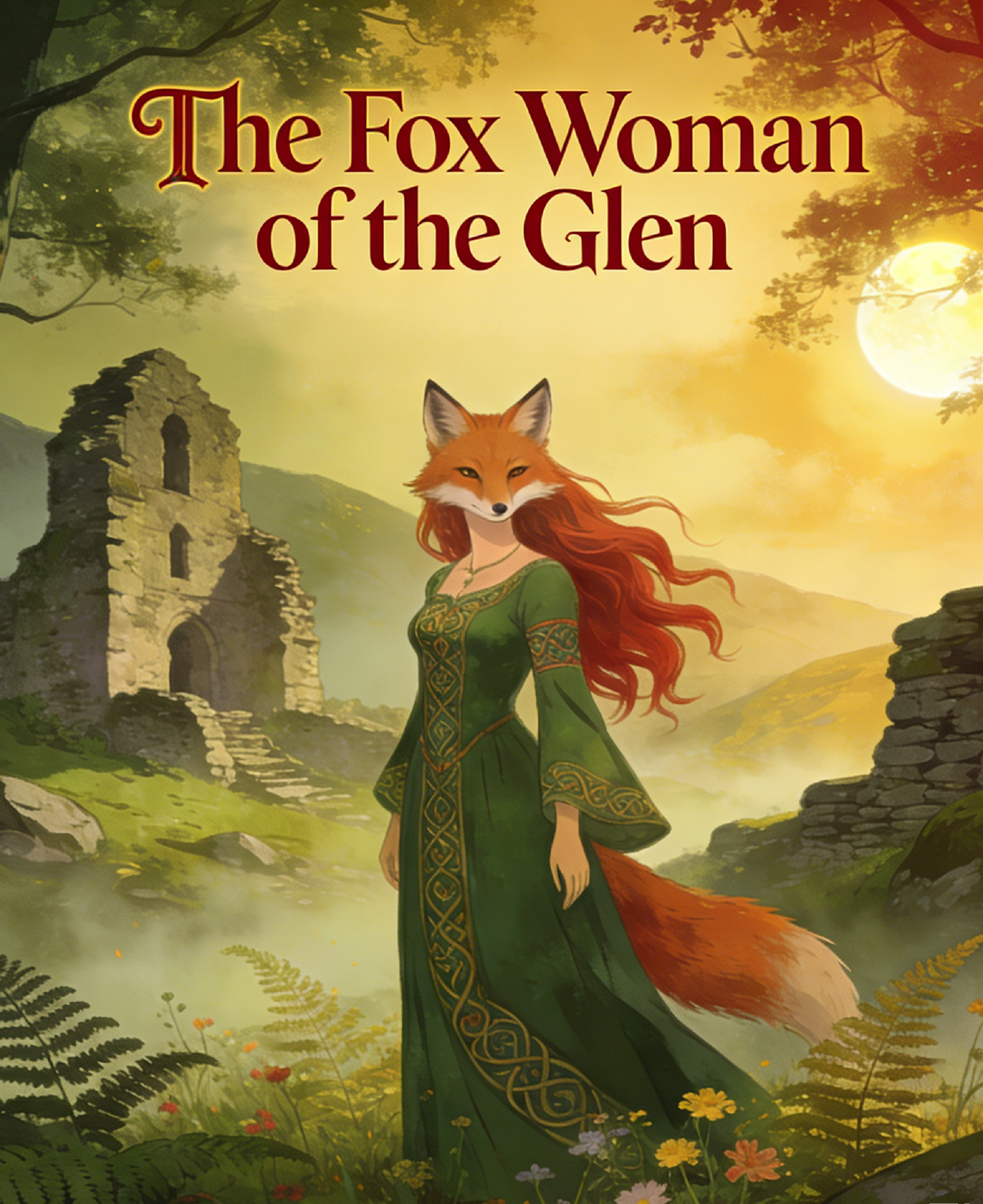
The Fox Woman of the Glen
prev zoom next
The Fox Woman of the Glen
  • Buyer protection: Returns accpeted. Paypal accepeted.
  • Item location: Oxford, United Kingdom
  • Posts to: Worldwide
  • Brand:Nokia
  • Weight:0gram
  • Recently sold:22
  • Market price:$2.99
    Sale price:$1.29
  • User reviews: comment rank 5
  • Total:
  • Quantity:

Goods Brief:

Attribute

The Fox Woman of the Glen ———  ✦  ——— An Irish Folk Tale The Fox Woman of the Glen "In the days when the High King still held court at Tara, and the old gods had not yet withdrawn entirely from the hills and hollows of Erin..." BOOK ONE: THE MEETING Chapter I: Of Cormac the Poor Scholar In the days when the High King still held court at Tara, and the old gods had not yet withdrawn entirely from the hills and hollows of Erin, there lived in the county of Galway a young man named Cormac O'Donnell. He was the son of a small farmer who had died of the fever when Cormac was but a boy, leaving him nothing but a thatched cabin, three acres of stony ground, and a name that had once been proud but was now as threadbare as an old cloak. Cormac was what the Irish call a poor scholar—a young man who had learned his letters at the hedge school and who spent his days in the fields with a book of poetry in his pocket. He was tall and thin, with the black hair and grey eyes of his ancestors, and there was about him an air of dreaming that made the practical folk of his village shake their heads. Cormac was poor—poorer than most. His three acres yielded barely enough potatoes to keep him from hunger, and his only cow had died the winter before. He lived on porridge and wild greens, and sometimes, when the fishing was good, on trout from the river. But Cormac did not mind his poverty overmuch. He had his books, and he had the hills, and he had the company of the wild creatures that came to his door in the evening—the hares that played in the meadow, the foxes that barked in the twilight, and the owls that called from the ancient oak. It was on a night in late autumn, when the leaves were falling and the mist was rising from the boglands, that Cormac first saw her. He had been walking home from the village, and he had taken the path through the Glen of the Two Lakes—a wild place where few people went, for it was said to be haunted by the sidhe, the fairy folk who dwell in the hollow hills. The sun had set, and the twilight was deepening into night. The mist was rising from the lakes, turning the world into a place of grey shadows and half-seen shapes. And then he saw her. She was standing by the edge of the lower lake, her back to him, gazing out over the water. She was dressed in white, and her hair was the colour of ripe wheat, falling down her back in a cascade of gold. Good evening to you, lady, he said, and his voice sounded strange in his own ears. She turned, and Cormac felt his breath catch in his throat. Her eyes were the colour of the hazel nuts that grow in the hedgerows—green and gold and brown all at once—and they seemed to look into his very soul. Good evening, Cormac O'Donnell, she said, and her voice was like music, like the sound of water running over stones. You know my name? I know many things, she said, and smiled. I know that you are a poor scholar who dreams of ancient heroes. I know that you have a kind heart and a gentle spirit. I know that you have been lonely, and that you long for someone to share your dreams. Who are you? he asked. What is your name? I am called Niamh, she said. Niamh of the Golden Hair. And I have been waiting for you, Cormac O'Donnell. I have been waiting a very long time. Chapter II: The Woman from the Other World They walked together through the misty glen, and Niamh told Cormac her story. Or at least, she told him part of it—for there were things she kept hidden, things that no mortal man was meant to know. She told him that she was an orphan, that her parents had died when she was young, and that she had been raised by an old woman who lived in a cottage on the other side of the glen. She told him that she spent her days walking in the hills, listening to the voices of the wind and the water, and that she had seen him many times from afar. I have watched you, she said, and her eyes were soft. I have watched you, and I have wondered what it would be like to know you. To speak with you. To be your friend. They came to Cormac's cabin as the moon was rising over the hills. It was a poor place—a single room with a dirt floor, a peat fire, and a bed of straw in the corner. But Niamh did not seem to mind. You need not trouble yourself, she said. I am content. But you must be hungry, Cormac said. I have only porridge to offer you. I am not a lady, Niamh said, and there was something sad in her voice. I am only a girl who lives in the hills. And your porridge will be the finest feast I have ever tasted. So Cormac made the porridge, and they ate together by the fire, and talked until the stars were high in the sky. Niamh asked him about his books, about the old stories he loved, about his dreams for the future. And Cormac found himself telling her things he had never told anyone. I want to be a poet, he said. I want to write verses that will be remembered after I am gone. But how can I, when I must spend my days digging potatoes? You will be a poet, Niamh said, and her voice was certain. I have seen it. I have seen your name written in the stars, Cormac O'Donnell. You will be famous. You will be loved. How can you know such things? She smiled, and her eyes seemed to glow in the firelight. I know many things. Things that other people do not know. Things that are hidden from mortal eyes. And then she leaned forward and kissed him, and Cormac felt as if the world had stopped turning. I must go, she whispered. But I will come again. Tomorrow, and the day after, and every day until the end of time. Will you? Cormac asked. Will you truly come again? I will, she said. I promise. And then she was gone, slipping out into the night like a shadow, leaving Cormac alone by the fire with his heart full of wonder. Chapter III: The First Gift Niamh came to Cormac's cabin every evening after that, always at twilight, always appearing as if from nowhere. She would sit by the fire and talk with him, or walk with him through the glen, or simply sit in silence while he read his books aloud. And strange things began to happen. One morning, Cormac woke to find a gold coin on his doorstep—a bright, shining sovereign that had not been there the night before. He showed it to Niamh when she came that evening, and she smiled. It is a gift, she said. From the sidhe. The sidhe? Cormac asked. The fairy folk? They are real, Cormac, she said, and her eyes were serious. They are real, and they have taken an interest in you. They know that you are a good man, a kind man. They wish to help you. But why? Why would the sidhe care about a poor scholar like me? Because I asked them to, Niamh said, and took his hand. Because I love you, Cormac O'Donnell. And I want you to be happy. Cormac stared at her, his heart pounding. You love me? I do, she said. With all my heart. With all my soul. I love you more than life itself. And I love you, Cormac said, and it was the truest thing he had ever spoken. I love you, Niamh of the Golden Hair. I love you more than poetry, more than dreams, more than anything in this world or the next. They embraced then, there in the little cabin, while the fire crackled and the wind sighed in the thatch above. And outside, in the darkness, the foxes barked their approval, and the owls hooted their blessing, and the ancient hills of Erin seemed to lean in closer to listen. For love had come to Cormac O'Donnell, poor scholar of Galway. Love had come to him in the form of a woman with golden hair and hazel eyes, a woman who was not quite of this world, a woman who would change his life forever. And who would, in the end, give her life for him. BOOK TWO: THE MAGIC Chapter IV: The Gold from the Earth After that night, Niamh became a part of Cormac's life as essential as the air he breathed. She came to him each evening, and sometimes she stayed until dawn, slipping away before the neighbours could see her. And with her coming, Cormac's fortunes began to change. It started with small things. A gold coin found on the doorstep. A silver brooch discovered in the thatch. A handful of pearls that Niamh claimed to have found in the river. Cormac sold these treasures in the market town, and for the first time in his life, he had money in his pocket. Where do these things come from? he asked Niamh one evening, as they sat by the fire counting a pile of gold coins. They are gifts, she said. From the sidhe. But how? How do they make gold appear from nowhere? Niamh was silent for a moment, staring into the fire. Then she turned to him, and her eyes were sad. There are things I have not told you, Cormac, she said. Things about myself. Things that you may find hard to believe. I would believe anything you told me, Cormac said. Anything. Very well, she said. I will tell you the truth. But you must promise not to be afraid. I promise. She took a deep breath. I am not what I seem, Cormac. I am not an orphan girl who lives in the hills. I am... I am of the sidhe. Cormac stared at her, his heart pounding. The sidhe? The fairy folk? Yes, she said. I am one of the Daoine Sidhe, the People of the Mounds. I come from the Otherworld, the land that lies beneath the hills, where time moves differently and magic is as common as breathing. But you look human, Cormac said. You feel human. I can take this form, Niamh said. I can appear as a human woman, when I choose. But it is not my true form. My true form is... different. What is your true form? She hesitated. I will show you. But not now. Not yet. When the time is right. She took his hands in hers. Do you believe me, Cormac? Cormac looked into her eyes and he knew that she was telling the truth. I believe you, he said. And I do not care. You are Niamh, the woman I love. That is all that matters to me. Chapter V: The Powers of the Sidhe As the weeks passed, Niamh revealed more of her powers to Cormac. She showed him how she could make flowers bloom in winter, how she could call the birds to her hand, how she could see the future in the patterns of the clouds. The sidhe have many gifts, she told him. We can change our shape, we can travel between worlds, we can make the impossible possible. But these gifts come with a price. What price? We are bound by ancient laws, she said. Laws that forbid us from interfering too much in the affairs of mortals. If I use my powers too openly, if I draw too much attention to myself, I will be called back to the Otherworld. And I will never be allowed to return. Then you must be careful, Cormac said. I will be careful, she said. For your sake. For our sake. But despite her caution, Niamh continued to help Cormac. She showed him where to dig in his stony field to find a vein of silver ore. She taught him which herbs to gather and sell. She whispered to him the names of the horses that would win at the race meeting. Within a year, Cormac O'Donnell was no longer a poor scholar. He had bought more land, built a new cabin with a stone floor and a proper chimney, and acquired a flock of sheep and a herd of cattle. And all the while, Niamh was at his side, guiding him, protecting him, loving him. But she never stayed the night. Always, before dawn, she would slip away. And always, when Cormac asked her to marry him, to stay with him forever, she would shake her head and say: Not yet. Not until the time is right. When will the time be right? Cormac would ask. Soon, she would say. Very soon. Chapter VI: The Life They Built Two years passed, and Cormac became a wealthy man. He bought the land that surrounded his original three acres, until he owned a farm of fifty acres. He built a fine stone house with a slate roof and glass windows, and furnished it with the best that money could buy. And still Niamh came to him, every evening, every night. They would walk together through his fields, or sit by the fire in his new house, or ride together on horseback through the hills. They were happy—happier than Cormac had ever thought possible. But there were shadows, too. Whispers in the village. Questions that no one dared to ask aloud. Who is she, this Niamh? Where does she come from? Why does she never stay the night? The old women would cross themselves when Cormac passed, and mutter about the sidhe, about changelings, about the dangers of consorting with the Other Crowd. And Cormac's friends would shake their heads and warn him. She is too beautiful to be mortal, Cormac, they would say. She is too perfect. Mark my words, there is something uncanny about that woman. But Cormac would not listen. He loved Niamh, and he trusted her, and he would not hear a word against her. She is my heart, he would say. She is my soul. Without her, I am nothing. And so the years passed, and Cormac and Niamh were together, and for a time, it seemed that their happiness would last forever. But the sidhe are not mortal, and mortals are not sidhe, and there are ancient laws that govern the boundaries between their worlds. Laws that cannot be broken, not even for love. BOOK THREE: THE TEMPTATION Chapter VII: Diarmuid the Fair Among Cormac's new friends was a young man named Diarmuid O'Sullivan, who was known throughout the county as Diarmuid the Fair. He was the son of a wealthy merchant from Limerick, and he had come to Galway to seek his fortune in the cattle trade. He was tall and strong, with yellow hair and blue eyes, and he had a smile that could charm the birds from the trees. Diarmuid had befriended Cormac soon after his arrival, attracted by the young farmer's sudden wealth and his beautiful companion. He would visit Cormac's house often, bringing gifts of wine and fine cloth. But it was not Cormac's company that Diarmuid sought. It was Niamh. From the first moment he saw her, Diarmuid desired her. He desired her beauty, her grace, her mysterious air. He desired her as a man desires a rare jewel, or a fine horse, or any other thing that another man possesses and he does not. Who is she? Diarmuid asked Cormac one evening, when Niamh had slipped away to the kitchen. Where does she come from? She is an orphan, Cormac said. From the hills. I found her wandering in the glen. And she has stayed with you ever since? She has. But you are not married? Not yet, Cormac said. But we will be. When the time is right. Diarmuid smiled, but his eyes were cold. She is very beautiful, he said. The most beautiful woman I have ever seen. You are a lucky man, Cormac. I know, Cormac said. I thank God for her every day. But Diarmuid did not thank God. He cursed Him, for creating such a woman and giving her to a poor farmer instead of to him. Chapter VIII: The Trap Diarmuid began to plot. He watched Niamh, studied her, tried to find some weakness that he could exploit. He noticed that she never ate meat, only bread and fruit. He noticed that she never touched iron, but used only tools of wood or bone. He noticed that she would not enter a house where a horseshoe hung above the door. She is sidhe, he whispered to himself. She is one of the fairy folk. And with that knowledge, his desire grew even stronger. For to possess a sidhe woman—to break her will and make her his own—would be the greatest triumph a mortal man could achieve. He began to lay his trap. He invited Cormac to his house for a feast, and he made sure that Niamh came too. He plied them with wine, and he watched as Niamh drank only a little, while Cormac drank too much. Stay the night, Diarmuid said, when the feast was ended. Both of you. I have rooms prepared. We cannot, Niamh said. We must return home. But Cormac is in no condition to travel, Diarmuid said. And the night is dark. There are wolves in the hills. We will be safe, Niamh said. At least let Cormac stay, Diarmuid said. You can go if you must, but let him rest here. Niamh looked at Cormac, who was slumped in his chair. She knew that he could not travel in his condition. And she knew, too, that Diarmuid was planning something. Very well, she said. Cormac will stay. But I will stay too. I will not leave him. Diarmuid smiled. As you wish. Chapter IX: The Wisdom of the Sidhe That night, as Cormac slept in a room at the end of the corridor, Diarmuid came to Niamh's chamber. He was dressed in his finest clothes, and he carried a bottle of wine and two cups. I could not sleep, he said. I thought we might talk. There is nothing to talk about, Niamh said. She was sitting by the window, fully dressed. There is much to talk about, Diarmuid said. You, for instance. And what you are. Niamh turned to look at him. What do you mean? I know what you are, Diarmuid said. I know that you are sidhe. I have seen the signs. And if I am? Then you are bound by certain laws, Diarmuid said. Laws that say you cannot lie to a mortal who knows your true nature. Niamh was silent. So tell me, Diarmuid said. Are you sidhe? I am, Niamh said, and her voice was steady. And do you love Cormac O'Donnell? I do. But you are not bound to him, Diarmuid said. You are not married. You are free to choose another. I have chosen, Niamh said. I have chosen Cormac. But he is nothing, Diarmuid said. A farmer. A peasant. Choose me, and I will give you everything. Jewels, fine clothes, a house in the city. I want for nothing now, Niamh said. I have Cormac. I have his love. That is all I need. Love? Diarmuid laughed. What is love? It is a word that men use to get what they want. It is everything, Niamh said. It is the only thing that matters. Diarmuid's face darkened. You refuse me? I do. Then you will regret it, he said. I know how to hurt you. Iron. Salt. The sound of bells. Niamh stood up, and her eyes were glowing with a strange light. You are a fool, Diarmuid O'Sullivan, she said. A fool and a villain. She raised her hand, and suddenly the room was filled with a blinding light. Diarmuid cried out and covered his eyes, and when he looked again, Niamh was gone. He searched the house, but he could not find her. She had vanished, as if she had never been. And in the morning, when Cormac woke, Niamh was there, sitting by his bed, smiling as if nothing had happened. Cormac never saw Diarmuid again. The young merchant left Galway and never returned. He asked her, once, what had happened that night. And she smiled, and kissed him, and said: I used the wisdom of the sidhe. That is all you need to know. BOOK FOUR: THE JOURNEY Chapter X: The Invitation Five years had passed since Cormac first met Niamh in the Glen of the Two Lakes. Five years of happiness, of love, of prosperity beyond his wildest dreams. He was now one of the wealthiest men in the county, with a farm of two hundred acres and a reputation for wisdom and generosity. And he was still unmarried. One day in early autumn, a message came from the High Sheriff of the county. He was hosting a great hunt, he wrote, and he invited Cormac to attend. You must go, Niamh said. It is a great honour. I do not want to go without you, Cormac said. Come with me. Niamh was silent for a long moment. I cannot, she said at last. The hunt... the hounds... What about them? They are dangerous to my kind, she said. The sidhe fear the hounds of mortals, especially when they are many and they are hunting. The sound of the horn, the cry of the pack... it calls to something in us. Something we cannot control. Then we will not go, Cormac said. No, Niamh said. You must go. The High Sheriff is a powerful man. If you refuse his invitation, he will take offence. But I cannot leave you. You will not leave me, Niamh said. I will come with you. But you must promise me something. Anything. When the hunt begins, you must keep me close. You must not let the hounds come near me. And if... if something should happen, if I should change... you must not be afraid. Change? Cormac asked. What do you mean? But Niamh would not answer. She only kissed him, and held him close, and whispered: Promise me, Cormac. Promise me that you will not be afraid. I promise, he said. I promise. Chapter XI: The Hunt The day of the hunt dawned bright and clear. Cormac and Niamh rode together to the High Sheriff's estate, where a great company had gathered. There were lords and ladies, gentlemen and their wives, all dressed in their finest hunting clothes. Niamh wore a dress of green velvet, and her golden hair was braided with ribbons. She looked like a queen, Cormac thought, like a goddess from the old stories. The hunt began at noon. The hounds were released, and they bounded away across the fields, their voices rising in a chorus of excitement. Cormac and Niamh rode at the back of the company, keeping to the slower pace that Niamh preferred. They were happy, laughing, enjoying the beauty of the autumn day. But then, suddenly, everything changed. A fox broke from a thicket of gorse, running for its life before the pack. It was a vixen, red and sleek, and it ran with a speed that seemed almost supernatural. The hounds saw it, and their cries rose to a frenzy. They turned from their original quarry and gave chase. And Niamh—dear God, Niamh—suddenly stiffened in her saddle. Her face went pale, and her eyes grew wide with terror. Cormac, she whispered. Cormac, help me. What is it? What is wrong? The hounds, she said. The fox. I cannot... I cannot control it. The call... it is too strong. Niamh, he said, reaching for her. Niamh, come away. Let us go home. I cannot, she said, and her voice was strange, thick. I cannot, Cormac. The call... it is too strong. I must... I must... And then she screamed. It was not a human scream. It was the scream of an animal, a wild, desperate cry. The horses reared in terror, and the riders cried out in alarm. And Niamh... Niamh began to change. Her body twisted, her limbs contorting into shapes that were not possible. Her beautiful face elongated, her nose becoming a snout, her teeth becoming fangs. Her golden hair turned to red fur, and her green velvet dress fell away as her body shrank and shifted and became something else. Something that was not a woman. Something that was a fox. Chapter XII: The Chase The hounds saw her. They saw the fox that had been a woman, and their cries rose to a frenzy of bloodlust. They turned from the vixen they had been chasing and streamed toward Niamh. No! Cormac cried, leaping from his horse. No! Leave her! She is mine! She is my love! But the hounds did not listen. They were beyond reason, beyond control, driven by an ancient instinct that told them to hunt, to kill, to tear apart the creature that ran before them. And Niamh ran. She ran across the field, her red coat gleaming in the sunlight, her brush streaming behind her. She ran with a speed that seemed impossible. But the hounds were faster, stronger, and there were so many of them. Cormac ran after them, his heart pounding, his lungs burning. He called Niamh's name, over and over, but she did not turn. They came to a wood, a dark tangle of oak and ash and thorn. Niamh darted into the undergrowth, and the hounds followed. Cormac plunged in after them, pushing through the brambles, stumbling over roots. He could hear the hounds ahead of him, their cries growing more excited, more frenzied. And then he heard something else. A scream. A terrible, agonized scream. It was Niamh. He ran toward the sound and came to a clearing. The hounds were there, a writhing mass of brown and white. And in the centre of them, barely visible beneath the seething bodies, was a patch of red fur. No, Cormac whispered. No. No. No. He ran forward, beating at the hounds with his fists, his riding crop, anything he could lay his hands on. He kicked them, pulled them, screamed at them to stop. But they would not stop. And then, suddenly, the huntsman's horn sounded. A long, clear note. The hounds hesitated. Their heads came up. The horn sounded again, and slowly, reluctantly, they began to back away. Cormac fell to his knees in the centre of the clearing, and he looked down at what the hounds had left behind. It was Niamh. Or what had been Niamh. She was a fox again, or almost a fox. Her body was torn and bleeding, her fur matted with blood. Her eyes were open, staring up at the sky, and they were hazel still. Niamh, Cormac whispered, gathering her in his arms. Oh, my love. My love. She looked at him, and in her eyes he saw recognition, and love, and pain beyond bearing. Cormac, she whispered. I am sorry. I am so sorry. Do not speak, he said, tears streaming down his face. Save your strength. No, she said. There is no help. I am dying, Cormac. I am dying. No. You are sidhe. You are immortal. Even the sidhe can die, she said. When we take mortal form, we become mortal. And I... I took this form for you. I became mortal for you. And now... now I must pay the price. I love you, she whispered. I have loved you since the first moment I saw you. And I will love you... until the end of time. And I love you, he said. I will always love you. She smiled, and her eyes closed, and she was still. Cormac held her for a long time, weeping as he had never wept before. And then, slowly, something strange began to happen. Niamh's body began to glow. A soft, silver light that seemed to come from within her, growing brighter and brighter. And when the light faded, she was gone. In his arms, where the torn and bleeding fox had been, there was nothing but a handful of silver dust, glittering in the sunlight like stars. Cormac stared at the dust, his mind refusing to understand. He tried to gather it, to hold it, but it slipped through his fingers like water, like mist, like a dream upon waking. And then it was gone, scattered by the wind, and Cormac was alone. BOOK FIVE: THE TRANSFORMATION Chapter XIII: The Grief of Cormac Cormac O'Donnell never married. After Niamh's death, he lived alone in his fine stone house, tending his farm, reading his books, and waiting for the end of his days. The people of the village said that he had gone mad with grief. They said that he talked to himself, that he walked the hills at night calling Niamh's name, that he left food on his doorstep for the foxes that came to his door. And they were right. Cormac was mad—with grief, with love, with the knowledge that he had lost the only thing that had ever mattered to him. He tried to find her. He went to the Glen of the Two Lakes, where they had first met, and he called her name until his voice was hoarse. He went to the ancient standing stones, and the fairy forts, and the hollow hills where the sidhe were said to dwell. But the sidhe did not answer. They were silent, as they had always been silent, hidden in their mounds and their hollows, beyond the reach of mortal sorrow. And Cormac was left alone. He wrote poetry, in those years. Verses of such beauty and sorrow that they are still remembered today. He wrote of his love for Niamh, of her beauty, her grace, her sacrifice. And he wrote of the fox. For after Niamh's death, a fox began to visit Cormac's house. A vixen, red and sleek, with eyes the colour of hazel nuts. She would come to his door each evening, and she would sit there, watching him, as if she were waiting for something. Cormac would feed her, and talk to her, and sometimes he would imagine that he saw something in her eyes—something familiar, something that reminded him of Niamh. Are you her? he would ask. Are you Niamh, come back to me? But the fox would only tilt her head, and twitch her brush, and vanish into the night. Chapter XIV: The Vision Ten years passed. Cormac grew old before his time, his black hair turning grey, his strong frame becoming thin and stooped. He was still a wealthy man, but he cared nothing for his wealth. He gave his money to the poor, built a school for the village children, endowed a hospital for the sick. And he waited. He did not know what he was waiting for. Death, perhaps. The end of his sorrow. The chance to be with Niamh again. And then, one night, he had a vision. He was sitting by his fire, reading the old stories that he and Niamh had loved. The wind was howling outside, and the rain was beating against the windows. And suddenly, the room was filled with light. Cormac looked up, and he saw her. Niamh. Standing in the centre of the room, more beautiful than he had ever seen her, her golden hair gleaming, her hazel eyes shining with love. Niamh, he whispered. Is it you? Is it really you? It is me, my love, she said, and her voice was like music. I have come to say goodbye. Goodbye? Cormac asked. But I do not want to say goodbye. I want to be with you. Forever. And we will be together, she said. But not yet. Not for a little while longer. I am old, Cormac said. I am tired. Take me with you, Niamh. Please. I cannot, she said. Not yet. Your time has not come. But it will come, my love. Soon. Very soon. She came to him then, and knelt beside his chair, and took his hands in hers. Her touch was warm, so warm, and he felt the years falling away from him. I love you, she said. I have always loved you. And I will love you until the end of time. And I love you, he said, tears streaming down his face. I will always love you. She kissed him then, and her lips were soft and sweet. Wait for me, she whispered. Wait for me, Cormac. And when the time comes, I will be there. I will be waiting for you. And then she was gone, and the room was dark again, and Cormac was alone. But he was not sad. For the first time in ten years, he was not sad. He knew now that she was waiting for him. He closed his eyes, and he smiled, and he slept. Chapter XV: The End of the Story Cormac O'Donnell died three days later, in his sleep, with a smile on his face and Niamh's name on his lips. He was buried in the churchyard, beneath a stone that bore his name and the words he had written himself: Here lies Cormac O'Donnell, who loved a woman of the sidhe. May they be together now, in the Otherworld, where love is eternal and sorrow is unknown. And on his grave, every evening, a fox would come. A vixen, red and sleek, with eyes the colour of hazel nuts. She would sit there, watching the sunset, and the people who saw her said that she seemed to be waiting for something. Waiting for someone. And sometimes, in the twilight, when the mist was rising from the boglands and the world seemed to blur between the seen and the unseen, people claimed to see two figures walking together through the Glen of the Two Lakes. A man, tall and thin, with grey eyes and a gentle smile. And a woman, beautiful beyond words, with golden hair and eyes that held all the colours of the forest. They would walk hand in hand, talking and laughing as lovers do, and then they would fade away into the mist, leaving nothing behind but the sound of their laughter and the memory of their love. And the fox would bark in the twilight, and the owls would hoot their blessing, and the ancient hills of Erin would seem to lean in closer to listen. For love had conquered death. Love had bridged the gap between the mortal world and the Otherworld. Love had proven stronger than iron, stronger than time, stronger than all the laws of heaven and earth. And in the Glen of the Two Lakes, where Cormac and Niamh had first met, the flowers bloomed more beautifully than anywhere else in Ireland. For it was a place of magic. A place where the sidhe walked. A place where love had triumphed over all. And if you go there, on a night in late autumn, when the leaves are falling and the mist is rising from the lakes, you may see them still. The poor scholar and the sidhe woman. Walking together. Forever. Epilogue: The Legend The story of Cormac and Niamh has been told in Ireland for a hundred years and more. It has been sung by the bards, written by the poets, whispered by the fireside on winter nights. Some say it is a true story. Some say it is only a legend, a fairy tale, a myth. But those who have loved, who have lost, who have known the pain of separation and the joy of reunion—they know the truth. They know that love is the most powerful magic in all the world. That it can bridge the gap between mortal and immortal, between earth and heaven, between life and death. They know that the sidhe are real, that they walk among us still, hidden in the mist and the twilight, watching, waiting, loving. And they know that somewhere, in the Glen of the Two Lakes, two lovers walk together still. A man and a woman, bound by a love that death could not destroy. Waiting. Watching. Forever. And if you are very lucky, if your heart is pure and your love is true, you may see them. On a night in late autumn. When the mist is rising from the lakes. And the foxes bark in the twilight. And the ancient hills of Erin lean in close to listen.

Goods Tag

User Comment(This product has 2 customer reviews)

  • No comment
Total 02 records, divided into15 pages. First Prev Next
Username: Anonymous user
E-mail:
Rank:
Content:
Verification code: captcha

KMALL360 Quick Order: Register and make your 1st order together

Fast & Easy! Registration will be done at the same time, and a confirmation will be sent by email.

  • Product:
  • Remark:
    Typically your order will ship within 24 hours.
  • Quantity:
  • Total Price:   (Returns Accepted within 30 Days; Dispatch from the UK)
  • Your name: *
  • Tel:*
  • Country: *
  • Province/State:
  • City:
  • Address: *
  • Your Email: *
  • Set Your Password: *
  • 备注信息:
  • Shipping:
  • Payment: Credit/Debit Cards, and PaypalPapipagoBoleto.DotpayQIWIWebMoneyMOLPayIndonesia BanksDragonpayPaytmCash on Delivery
  •