


Currency:

USD
HKD
GBP
EUR
CAD
AUD
CHF
INR
USD
sign in · join Free · My account
Home | Sale | Customer Service | Info Tech | Delivery and Payment | Buyer Protection | Policy Information | PC Niche
Your Position: Home > Book > eBooks > The Curse of Cecily

View History

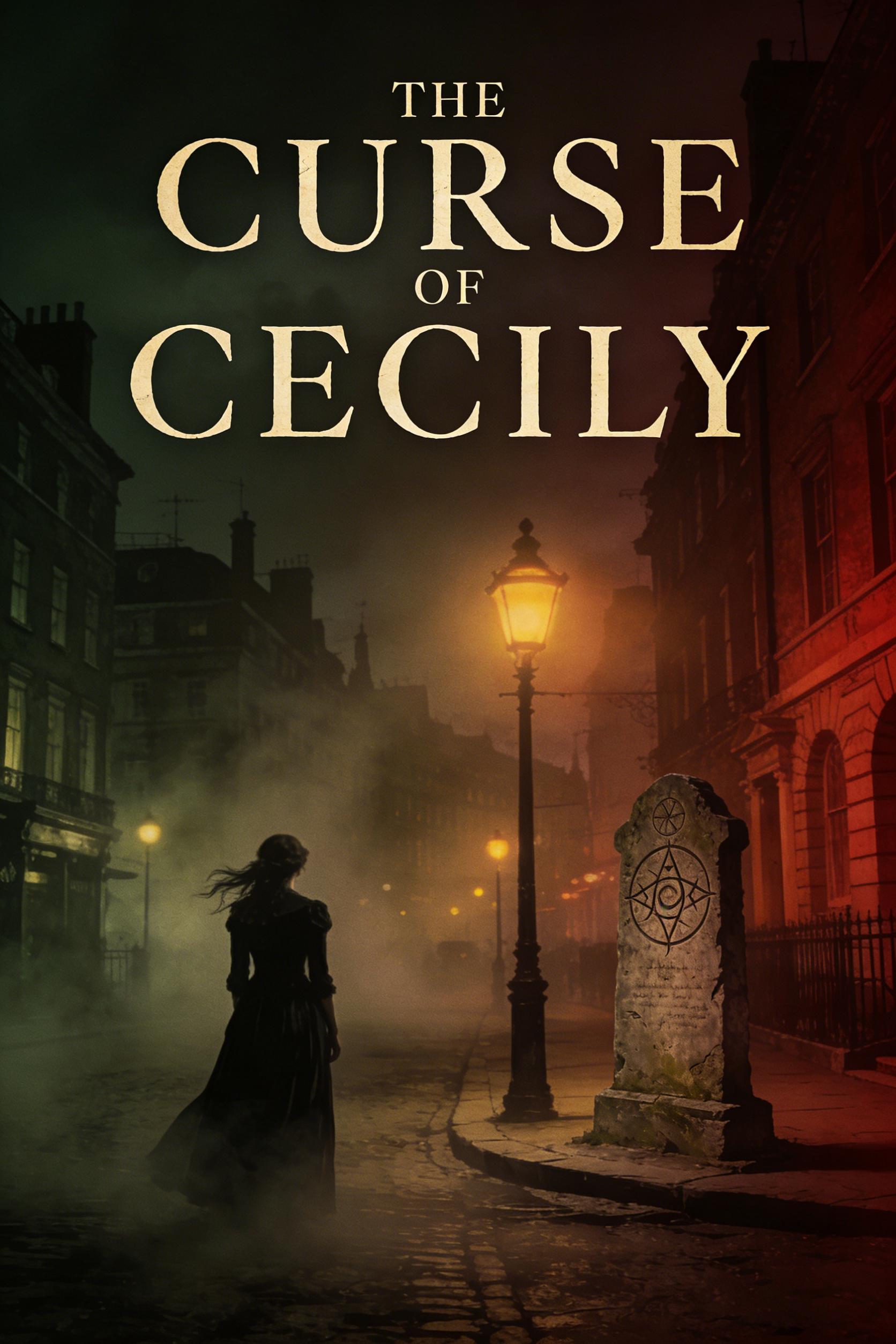
The Curse of Cecily
prev zoom next
The Curse of Cecily
  • Buyer protection: Returns accpeted. Paypal accepeted.
  • Item location: Oxford, United Kingdom
  • Posts to: Worldwide
  • Brand:Nokia
  • Weight:0gram
  • Recently sold:20
  • Market price:$2.99
    Sale price:$1.29
  • User reviews: comment rank 5
  • Total:
  • Quantity:

Goods Brief:

Attribute

The Curse of Cecily ———  ✦  ——— A Tragedy of the Regency BOOK ONE: THE FALL Chapter I: In Which a Lady Becomes a Courtesan In that season of 1814, when Napoleon was safely confined to Elba and the English aristocracy had returned to their customary pursuits of pleasure and matrimonial speculation, there lived in London a young woman whose circumstances were as melancholy as her birth had been illustrious. Lady Cecily Hartley was the only daughter of the Earl of Westmorland, a nobleman whose loyalty to the Crown had not prevented his conviction for treasonable practices. The Earl died in the Tower, his estates were confiscated, and his widow and daughter were cast upon the world with nothing but their beauty and their debts. The Countess, being a woman of delicate constitution, succumbed to a fever within a twelvemonth, leaving Cecily to make her way in a society that had once courted her favour and now regarded her with cold indifference. It is a curious fact that a woman of birth and beauty, however reduced in circumstances, may always find a market for her charms in the great metropolis. The demimonde of Regency London was, in many respects, more exclusive than the society it aped. Its denizens were required to possess not merely physical attractions, but accomplishments, wit, and that indefinable quality of breeding which separates the courtesan from the common prostitute. Cecily Hartley possessed all these qualifications. She had been educated at a fashionable seminary in Bath, where she had learned to play the pianoforte, to sing Italian airs, to converse in French, and to move through a ballroom with grace. Her beauty was of the sort that does not fade with youth—a classical regularity of feature, a complexion of milk and roses, and eyes of that particular shade of grey which seems to look through the world and find it wanting. It was thus, with some reluctance but more necessity, that she accepted the protection of Mr. Aldridge, a wealthy City merchant who desired nothing more than to be seen with a woman whose lineage was superior to his own. Mr. Aldridge settled her debts, installed her in a handsome set of rooms in Half Moon Street, and presented her with a wardrobe that would have been the envy of any duchess. And so she smiled when she wished to weep, she danced when she wished to pray, and she accepted the compliments of men whose touch she loathed with a grace that made them believe she was grateful. She became, in short, a very successful courtesan—celebrated for her beauty, her wit, and her air of melancholy distinction. But at night, when Mr. Aldridge had departed and she was alone in her splendid rooms, Cecily would sit by the window and look out at the moon over St. James's Park, and remember the girl she had once been. That girl was dead now, killed by necessity and by the cruelty of a world that punished the innocent for the sins of the guilty. Or so she believed, until the night of the Cyprian's Ball, when she met a young man who would change her life forever. Chapter II: The Cyprian's Ball The Cyprian's Ball was an annual event of dubious respectability, held at the Argyle Rooms for the benefit of that curious class of women who occupied the shadowy realm between respectability and disgrace. It was attended by courtesans of every degree, all hoping to attract the attention of the gentlemen who came to observe, to flirt, and occasionally to contract more permanent arrangements. Cecily had attended these balls before, always as the guest of Mr. Aldridge. But on this particular evening, Mr. Aldridge was detained by business, and Cecily had come alone. She was dressed in white, as was her custom, for she had discovered that the contrast between her innocent appearance and her fallen state produced a peculiar effect upon the masculine imagination. Her gown was of the finest India muslin, embroidered with silver thread, and her only ornament was a single pearl at her throat—the last remaining jewel from her mother's collection. She stood near the entrance, observing the crowd with that air of detached superiority which was her natural defence, when a young man approached her. He was tall and slender, with the fair complexion and regular features that were then considered the mark of aristocratic birth. His eyes were blue, his hair was golden, and his smile was of that particular sort which suggests both innocence and experience. I beg your pardon, he said, bowing with easy grace. I am Henry Ashworth, Lord Wrexham. I do not believe we have been introduced. We have not been introduced, my lord, she replied. And under ordinary circumstances, I should say that we ought to remain unacquainted. But this is the Cyprian's Ball, where the ordinary rules of society do not apply. You are Lady Cecily Hartley, are you not? I have heard of you. I am sure you have, my lord. All of London has heard of me. I am the daughter of a traitor, the mistress of a merchant, and the ornament of the demimonde. You are, he said, and his voice was low and earnest, the most beautiful woman I have ever seen. Cecily laughed—a light, musical sound that concealed the sudden pounding of her heart. That is a very pretty speech, my lord. I am sure you have made it to many women. Never. I have never spoken those words to any woman before. And I swear to you, upon my honour, that I shall never speak them to any woman again. It was a foolish speech, and Cecily knew it was foolish. But looking into his blue eyes, she found herself wanting to believe him. You are very young, my lord. You know nothing of me, nothing of my circumstances. You see a pretty face, and you imagine that the woman who wears it must be as innocent as she appears. But I am not innocent. I do not care, he said. I do not care about your past, or your circumstances. I care only for you, for the woman who stands before me, for the soul that looks out from those grey eyes. They talked for hours there in the crowded ballroom. They talked of poetry and music, of philosophy and art. Lord Wrexham spoke of his travels on the Continent, and Cecily found herself remembering the education she had received before her fall. And she spoke, too, of her past—the memories of her childhood, of her father's house, of her mother who had died of a broken heart. She spoke of the person she had been before necessity had forced her to become someone else. Lord Wrexham listened with an attention that was almost reverent. And in his listening, Cecily felt something she had not felt in years: the sense of being understood, of being valued for herself. When the ball ended, Lord Wrexham took her hand and raised it to his lips. May I call upon you? Tomorrow, or whenever you will permit me? I am at Number Twelve, Half Moon Street, she said. You may call upon me tomorrow, if you wish. But I warn you, my lord, that you will be disappointed. The woman you imagine me to be does not exist. I do not believe that, he said. And I intend to prove you wrong. Chapter III: The Seduction Lord Wrexham came to Half Moon Street the following afternoon, bearing a bouquet of hothouse flowers and a look of such earnest devotion that Cecily almost laughed. She had expected him to come, but she had not expected him to come with such obvious sincerity. My lord, you are very punctual. I had not thought to see you before the fashionable hour. I could not wait, he said, and his eyes were fixed upon her face with an intensity that made her blush. I have thought of nothing but you since we parted last night. You have bewitched yourself, my lord. You have created an image of me in your mind, and you have fallen in love with that image. Then show me your faults, he said. Show me the woman you believe yourself to be, and let me be the judge of whether she is worthy of love. It was a dangerous game they were playing, and Cecily knew it. She knew that young men of Lord Wrexham's class did not marry courtesans. She knew that his family would never permit such a mesalliance. She knew she was setting herself up for a fall. But she was lonely. She was tired, and she was hungry for the kind of love that she had read about in books and had never experienced in life. And so, against her better judgment, she allowed herself to be drawn into an intimacy with this young man. They met almost every day after that. Lord Wrexham would come to Half Moon Street in the afternoon, and they would talk, or read poetry, or play at cards. Sometimes they would go driving in the Park, where Cecily would sit beside him in his curricle, conscious of the stares of the fashionable world. And then, one evening, when the candles were burning low and the fire was dying in the grate, Lord Wrexham took her in his arms and kissed her. I love you, he whispered, when they finally drew apart. I love you, Cecily. I want to be with you always. I want to marry you. Cecily pulled away from him, her heart pounding. You cannot marry me. You know you cannot. Your family would never permit it. My father is dead, Lord Wrexham said. And my mother has no say in whom I choose to marry. I am of age, Cecily. I am my own master. And I choose you. But your position in society? I care nothing for society. I care only for you. It was madness, Cecily knew. But she wanted to believe him. And so, with tears streaming down her face, she allowed him to take her in his arms again, and she whispered the words she had sworn never to speak to any man: I love you too. BOOK TWO: THE PASSION Chapter IV: The Golden Summer The summer of 1814 was, for Cecily, a season of such happiness as she had never known. Lord Wrexham—Henry, as she now called him—had become the centre of her existence. He came to her every day, and they would walk in the Park, or drive in the country, or sit together in her drawing-room, lost in the blissful illusion that they were the only two people in the world. Henry had spoken of marriage, and Cecily had allowed herself to believe that he meant it. He had spoken of a cottage in the country, where they could live together away from the prying eyes of society. He had spoken of children, of a family, of a future that seemed to promise everything she had ever dreamed of. And she had given herself to him—fully, completely, without reservation. She had surrendered the last remnant of her pride and had allowed herself to love him with a passion that consumed her entirely. You are my life, she would whisper to him, when they lay together in her bed. You are my heart, my soul, my everything. And you are mine, he would reply. We are one, Cecily. We shall always be one. Nothing can part us. But even in the midst of her happiness, Cecily knew that it could not last. She knew that Henry was young, and idealistic, and ignorant of the world. She knew that his family, his friends, his entire social circle would rise up against him if he attempted to marry a woman of her reputation. And yet, she could not bring herself to warn him. She wanted to believe, if only for a little while, that love was possible, that happiness was possible, that the world was not as cruel as she knew it to be. So she lived in the moment, savouring each day as if it were her last. She memorised his face, his voice, the way he looked at her when he thought she was not watching. But the summer could not last forever. And as the leaves began to turn, Cecily sensed a change in Henry's manner that filled her with dread. Chapter V: The First Shadows It began with small things. A missed appointment, for which he offered elaborate excuses. A distracted air, when she spoke of their future. A reluctance to meet her eyes, when she asked him if anything was wrong. Nothing is wrong, he would say, with a smile that did not reach his eyes. I am merely tired. But Cecily knew better. She had been trained from childhood to read the emotions of men, to detect the subtle signs of displeasure or disinterest that preceded abandonment. And then, one evening in October, Henry came to her with a face so grave that her heart stopped in her chest. Cecily, he said, taking her hands in his, I must speak with you. You are going to marry someone else, she said, and her voice was steady, though her hands were trembling. He stared at her, his face pale. How did you know? I have known for weeks. You have been negotiating a marriage, have you not? With some heiress who can restore your fortunes. It is not what you think, he said, and his voice was anguished. It is not that I do not love you. But my situation— Your situation requires you to marry for money, she said. I understand. My mother has arranged it, he said at last. Miss Emily Cartwright. Her father is a nabob, with a fortune of fifty thousand pounds. I have no choice, Cecily. I have no choice. You have a choice, she said. You could choose me. You could choose love over money, happiness over position. I cannot, he said, and there were tears in his eyes. I am sorry, Cecily. I am so sorry. But I cannot. He left her then, without another word. And Cecily stood in the middle of her drawing-room, surrounded by the luxury that his predecessor had provided, and felt the world collapse around her. Chapter VI: The Letters For three days, Cecily did not leave her room. She lay in her bed, staring at the ceiling, unable to eat, unable to sleep, unable to think of anything but the man who had abandoned her. On the fourth day, a letter arrived. It was in Henry's hand, and Cecily tore it open with trembling fingers. My Dearest Cecily, he wrote. I cannot bear the thought that you believe I have ceased to love you. I love you now more than ever. But I am trapped, my darling, trapped by circumstances that I cannot control. But I swear to you, upon my honour, that my marriage to Miss Cartwright will be in name only. I shall never love her. I shall never touch her. She will be my wife in the eyes of the world, but you will be my wife in my heart. Cecily read the letter through her tears, and for a moment, she allowed herself to hope. Perhaps he was sincere. Perhaps he truly intended to continue their relationship. And so she wrote back to him, pouring out her heart. She told him that she loved him, that she would wait for him, that she would be patient and faithful and true. She sent the letter, and she waited. And after a week, another letter arrived, full of protestations of love and promises of future meetings. He was busy with the marriage settlements, he wrote, but as soon as the wedding was over, he would come to her. And so Cecily waited. She waited through the autumn, as the leaves fell and the days grew shorter. She waited through the winter, as the snow fell and the Thames froze. But he did not come. His letters grew fewer, and shorter, and more full of excuses. He was occupied with his new wife, with his estates, with his duties in Parliament. And Cecily waited, growing thinner and paler with each passing day. She stopped going out. She stopped receiving visitors. She stopped eating. Mr. Aldridge, when he learned of her condition, was furious. You are a fool, he said. A fool and a wanton. I have kept you in luxury, and you repay me by pining for a man who has cast you off like a soiled glove. I love him, Cecily whispered. You love a man who has married an heiress and forgotten you? You are mad, woman. Mad. He left her then, and she did not see him again. And still she waited, because she had given her heart to Henry Ashworth and she did not know how to take it back. BOOK THREE: THE BETRAYAL Chapter VII: The Wedding The marriage of Lord Wrexham to Miss Emily Cartwright took place in February of 1815, at St. George's, Hanover Square. It was the wedding of the Season, attended by all the great families of England, by diplomats and dignitaries, by the Prince Regent himself. The bride wore white satin and Brussels lace, and her dowry was said to be the largest that had been seen in London for a generation. Cecily read of it in the newspapers, which her maid brought to her each morning. She read the descriptions of the ceremony, the list of guests, the account of the wedding breakfast. She read that the happy couple were to spend their honeymoon in Italy. And she wept. She wept until she had no more tears to shed, until her eyes were swollen and her throat was raw and her heart felt as though it had been torn from her chest. But even in her grief, she did not entirely abandon hope. Henry had written to her, just before the wedding, with one last promise. I shall come to you when I return, he had written. I shall explain everything. I love you, Cecily. I shall always love you. And so she waited. She waited through the winter, as the snow fell and the winds howled. She waited through the spring, as the flowers bloomed. She waited, growing thinner and weaker with each passing day, until her maid began to fear for her life. You must eat, my lady. You will make yourself ill. I am already ill, Cecily would reply. I am ill with love, with grief, with the knowledge that I have been betrayed. But still she waited. She waited, because she had nothing else to do, because she had nowhere else to go, because she had given her heart to Henry Ashworth and she did not know how to take it back. Chapter VIII: The Explanation And then, in May, he came. He came to her in the evening, when the light was fading. He came quietly, by the servants' entrance, as if he were ashamed to be seen. Henry, she whispered, and her voice was trembling. You came. I came, he said, and he took her in his arms. I am sorry, my darling. I could not come sooner. My wife— Your wife, Cecily said, and the word was like a knife in her heart. In name only, he said quickly. I have never touched her. I have never loved her. Then why did you marry her? I had no choice, he said, and his voice was anguished. My mother, my creditors, my position—I was trapped. And now? Now I am married. The thing is done. But I can be with you, Cecily. I can come to you, as often as I am able. As what? Cecily asked, and her voice was cold. As lovers? As adulterers? You know I do not think of you that way. How do you think of me, then? As your friend? The woman you love but cannot marry? I think of you as the woman I love, he said. The only woman I have ever loved. And your wife? He was silent for a moment. She is expecting a child, he said at last. In the autumn. Cecily stared at him, her face white as death. A child. You have got a child upon your wife. It was only once, he said. I was drunk, I did not know what I was doing— You did not know what you were doing, she said. And now she is expecting a child. And I am—what am I, Henry? You are the woman I love. I am your mistress, she said. Your paramour. That is what I am to you now. She turned away from him, her face buried in her hands. And after a moment, she heard the door close, and she knew that he was gone. Chapter IX: The Final Meeting He came to her once more, in June, before the Season ended. He came with gifts—jewels, flowers, a book of poems inscribed with words of love. She received him with a composure that surprised even herself. She had grown so thin that her bones showed through her skin, so pale that she looked like a ghost. Her doctor had warned her that she was consumptive, that she must take care of herself. You are ill, Henry said, when he saw her. My God, Cecily, you are ill. I am dying, she said, and her voice was calm. I am dying of love for you, Henry. Do not speak so. You are merely tired. You will recover. I will not recover. I have seen the doctor. He tells me that I have the consumption, that I have perhaps six months to live. I will never forget you, he said, and there were tears in his eyes. I love you. Then stay with me, she said. Stay with me now, for as long as I have left. Do not go back to her. I cannot, he said, and his voice was anguished. I cannot, my darling. My wife—she is expecting the child. She needs me. And I do not? You have your maid, your friends— I have no one, she said. I have no one but you. And you are abandoning me. I am not abandoning you. I will come again. I promise. Your promises are worth nothing, Henry. They are air, they are smoke. I will come again, he said. I swear on my life. Then go, she said. Go to your wife, your child, your life. And do not come back. For if you come back, Henry, I will curse you. I will curse you with my dying breath, and you will never know peace again. You do not mean that. I do mean it, she said. Go now, Henry Ashworth. Go, and never come back. He left her then, without another word. And Cecily lay back upon her pillows, her eyes closed. She had done it. She had driven him away. She had ensured that she would die alone. But it was better this way. Better to die alone than to die knowing that the man she loved was false. She was tired. So tired. She closed her eyes, and let the darkness take her. BOOK FOUR: THE DECLINE Chapter X: The Sick Room The summer of 1815 passed, and Cecily did not die. She lingered, suspended between life and death, her body growing weaker with each passing day but her spirit refusing to surrender. She did not know what she was waiting for. She knew that Henry would not come—she had driven him away. She knew that he was with his wife, with his child, with his life. And yet, she waited. She waited, because hope was the only thing that kept her alive. She waited, because some foolish, romantic part of her still believed that he would come. Her friends came to see her, those few women of the demimonde who had not abandoned her. They came with gifts, with gossip, with words of comfort that rang hollow. You must not give way to melancholy, they would say. There are other men, other lovers, other chances for happiness. But Cecily did not want other men, other lovers, other chances. She wanted Henry. And so she waited. She waited, and she grew thinner, and paler, and weaker. Her doctor came every day, and shook his head, and prescribed remedies that she would not take. But Cecily would not eat. She would not take her medicine. She had no wish to live. She had lost everything—her family, her position, her reputation, her love. And then, one evening in September, a letter arrived. It was from Henry. My Dearest Cecily, he wrote. I have thought of nothing but you since we parted. I cannot bear the thought that you are ill. But I cannot come to you. My wife has been delivered of a son, and she is ill. The doctors say she may not recover. But I think of you constantly. I dream of you. I pray for you. And I hope—oh, how I hope—that you will recover. Wait for me, my darling. Wait for me. I will come to you as soon as I am able. Cecily read the letter through her tears. He had not forgotten her. He still loved her. He would come. But then she remembered. She remembered the promises he had made, the promises he had broken. She remembered the wife, the child, the life that he had chosen over her. She tore the letter into pieces. And then she closed her eyes, and waited for death to take her. Chapter XI: The Vigil But death did not come. Cecily lingered, day after day, week after week, suspended in a state of living death. Her friends came less frequently now. The demimonde is a fickle world, and Cecily's illness had lasted too long. She was no longer interesting, no longer amusing. Only her maid remained faithful, sitting by her bed day and night, reading to her, talking to her, trying to comfort her. He will come, my lady, the girl would say. His lordship will come. He will not come, Cecily would reply. He has forgotten me. He has a wife, a child, a life. I am nothing to him now. But he loves you. He loved me once, she said. But that was long ago. Before he married. Before he had a child. And what man is that, my lady? A man without honour, Cecily said. A man without conscience. A man who would promise love and give betrayal. But I will have my revenge, she said, and her voice was rising. I will curse him, Mary. I will curse Henry Ashworth with my dying breath. May he know no peace. May he find no happiness. May his wife despise him, his son grow up to hate him, his friends abandon him. And may he die, she said, and her voice was like ice. May he die as I am dying—alone, abandoned, forgotten. May he die by violence. May he know the fear that I have known. She fell back upon her pillows, her breath coming in gasps. And her maid, terrified, called for the doctor. But Cecily could not rest. She lay awake, night after night, whispering her curse to the empty air. She had nothing left but her hatred, her bitterness, her desire for revenge. She would see him again, she vowed. She would see him one last time, before she died. She would curse him to his face. And then, at last, she would be at peace. BOOK FIVE: THE CURSE Chapter XII: The Banquet The news reached Cecily on a cold November evening. Lord Wrexham was giving a banquet, a great entertainment to celebrate the first birthday of his son and heir. The whole of fashionable London would be there. Cecily listened to the news with a strange calm. She had been waiting for this. Waiting for the moment when she would have her revenge. I must go, she said. My lady, you cannot, her maid said, horrified. You are too ill. I must go, Cecily repeated. Help me dress, Mary. I must see him one last time. It took them an hour to make her presentable. She was so thin that her gowns hung upon her like shrouds, so pale that she had to be painted with rouge. But when they were finished, she looked almost as she had in her prime. She went in a chair, carried by two strong footmen, wrapped in furs against the cold. She went to the house in Grosvenor Square, where the lights blazed and the carriages lined the street. She had not been invited. But she knew that the door would be opened to her. And she was right. The door opened, and she was admitted. She walked through the crowd, leaning on her maid's arm, her eyes fixed upon the doorway that led to the great dining-room. And then she saw him. He was standing at the head of the table, his wife beside him, his son in her arms. He was smiling, laughing, raising his glass in a toast. He looked happy, content, at peace. And Cecily felt a rage such as she had never known. Chapter XIII: The Confrontation She walked into the dining-room, and the conversation faltered, and died. The guests turned to stare at her, this ghost from the past. Cecily ignored them. She walked straight to the head of the table, to where Henry stood, his face pale, his eyes wide with shock and fear. Henry, she said, and her voice was clear. Henry Ashworth. Do you know me? Cecily, he whispered. My God, Cecily. What are you doing here? I have come to see you, she said. I have come to see the man who promised to love me forever, who swore to marry me, who made me believe that happiness was possible. Cecily, please— I have come to see the man who abandoned me, she continued, and her voice was rising. The man who married an heiress for her fortune. The man who got a child upon his wife while he swore he loved me. The man who let me lie in my sickbed, waiting for him, while he danced and feasted. Be silent, Henry said, desperate. For God's sake, be silent. I will not be silent, she said. I have been silent too long. She turned to the assembled guests. You see before you a woman who was once like you. A woman of birth, of breeding, of fortune. My father was an earl, my mother a lady. But my father was convicted of treason, and he died in the Tower. My mother died of a broken heart. And I was cast upon the world with nothing but my beauty and my debts. I became a courtesan, she said. I sold my body to the highest bidder. But I loved. I loved this man with all my heart, with all my soul. I gave him everything. And he promised to marry me. He swore it, upon his honour. But he lied. He married another woman, an heiress, for her fortune. He abandoned me to die alone. And now, she said, turning back to Henry, he stands here, in his fine house, with his fine wife, his fine child, and he pretends that I do not exist. But I exist. I am here. And I will not be forgotten. Chapter XIV: The Curse She stepped closer to him, close enough that she could see the fear in his eyes. You have wronged me, Henry Ashworth, she said, and her voice was low, intense, filled with a power that seemed to come from beyond the grave. You have wronged me as no woman was ever wronged. You have killed me, she said. Not with a knife, not with poison, but with your betrayal. I am dying, Henry. I have the consumption. I have perhaps days to live. And you have killed me. I am sorry, he whispered. Cecily, I am so sorry. Sorry? she laughed. Your sorrow is worth nothing, Henry. But I will have my revenge, she said. I will curse you, Henry Ashworth. I will curse you with my dying breath. She raised her hand, and the room fell silent. I curse you, she said, and her voice was like thunder. I curse you, Henry Ashworth, Lord Wrexham. I curse you with all the power of my broken heart, my ruined life, my dying breath. May you know no peace. May you find no happiness. May every joy turn to ashes in your mouth. May your wife despise you. May your son grow up to hate you. May your friends abandon you, your fortune desert you, your position crumble to dust. And may you die, she said, and her voice was like ice. May you die as I am dying—alone, abandoned, forgotten. May you die by violence, by accident, by the hand of an enemy. May you know the fear that I have known, the despair that I have known. She paused, and the room was silent. You shall die a violent death, Henry Ashworth, she said, and her voice was barely a whisper. You shall die before the year is out. And when you die, you will think of me. You will know that you have been justly punished for your crimes. She fell back, her strength exhausted. Her maid caught her, and supported her, and led her from the room. And behind her, the silence was absolute. Chapter XV: The Death They carried her back to Half Moon Street, and put her to bed. But there was nothing the doctor could do. She was dying. She had perhaps hours to live. Cecily lay in her bed, her eyes closed, her breath coming in shallow gasps. She was at peace, now. She had said what she needed to say. She had cursed the man who had destroyed her. Her friends came, those few who remained faithful. They sat by her bed, and held her hand, and whispered words of comfort. And then, just before dawn, she opened her eyes one last time. Mary, she whispered. I am here, my lady. Did I do right? she asked. Did I do right to curse him? You did what you had to do, my lady. I loved him, Cecily said, and there were tears in her eyes. I loved him so much. And he destroyed me. I know, my lady. Tell him, Cecily said, and her voice was barely audible. Tell him that I loved him. Tell him that I forgive him. Tell him— She paused, and her breath caught in her throat. Tell him that the curse is lifted. Tell him that I take it back. Tell him— But she could say no more. Her eyes closed, and her head fell back upon the pillow, and she was still. She died at dawn, on the first of December, 1815. She was twenty years old. Epilogue: The Prophecy Fulfilled Henry Ashworth, Lord Wrexham, did not die a violent death. He lived to be an old man, respected, prosperous, surrounded by his children and grandchildren. But he never forgot Cecily Hartley. He never forgot the night she came to his banquet, the curse she laid upon him, the look in her eyes as she condemned him to misery. He lived his life in fear, always looking over his shoulder, always waiting for the blow to fall. He became suspicious, paranoid, convinced that everyone was plotting against him. He drove away his friends, alienated his family, made himself miserable with his own imaginings. And in the end, he died alone. His wife had left him years before. His fortune had been squandered. His health had failed, and he had no one to care for him. He died in his bed, in the great house in Grosvenor Square, with no one by his side but a servant who had stayed with him out of pity. And as he lay there, gasping his last breath, he thought of Cecily. I am sorry, he whispered. I am so sorry. And then he died. Some say that Cecily's curse was fulfilled, that Henry died the death she had prophesied—a death of loneliness, of despair, of a heart that had been broken by guilt and regret. Others say that the curse was lifted, that Cecily's final words of forgiveness had saved him. But no one knows for certain. The only thing that is certain is that Cecily Hartley loved, and suffered, and died. And that Henry Ashworth lived to regret the day he betrayed her. And that, perhaps, is the greatest curse of all.

Goods Tag

User Comment(This product has 2 customer reviews)

  • No comment
Total 02 records, divided into15 pages. First Prev Next
Username: Anonymous user
E-mail:
Rank:
Content:
Verification code: captcha

KMALL360 Quick Order: Register and make your 1st order together

Fast & Easy! Registration will be done at the same time, and a confirmation will be sent by email.

  • Product:
  • Remark:
    Typically your order will ship within 24 hours.
  • Quantity:
  • Total Price:   (Returns Accepted within 30 Days; Dispatch from the UK)
  • Your name: *
  • Tel:*
  • Country: *
  • Province/State:
  • City:
  • Address: *
  • Your Email: *
  • Set Your Password: *
  • 备注信息:
  • Shipping:
  • Payment: Credit/Debit Cards, and PaypalPapipagoBoleto.DotpayQIWIWebMoneyMOLPayIndonesia BanksDragonpayPaytmCash on Delivery
  •