


Currency:

USD
HKD
GBP
EUR
CAD
AUD
CHF
INR
USD
sign in · join Free · My account
Home | Sale | Customer Service | Info Tech | Delivery and Payment | Buyer Protection | Policy Information | PC Niche
Your Position: Home > Book > eBooks > The Courtesan's Redemption

View History

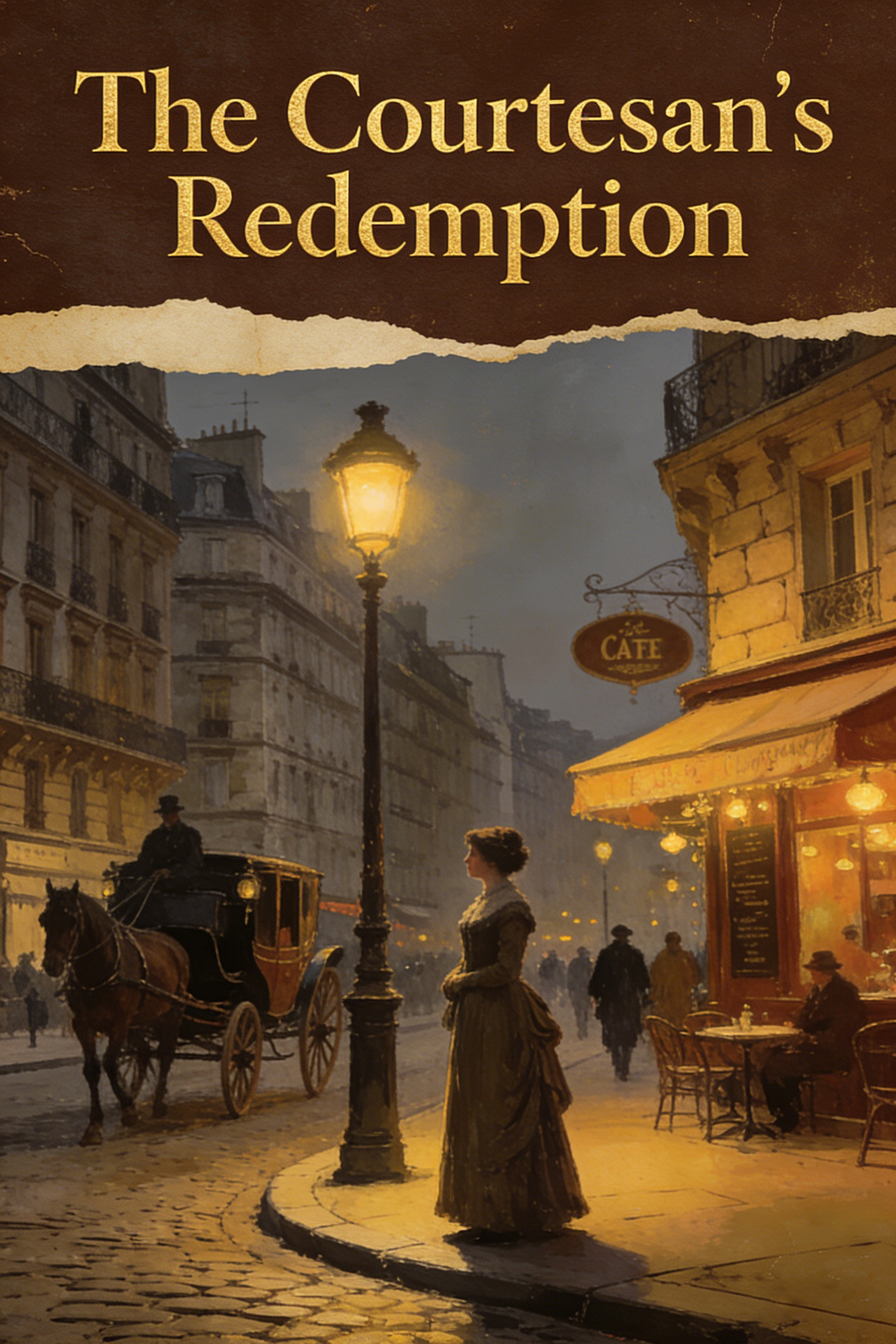
The Courtesan's Redemption
prev zoom next
The Courtesan's Redemption
  • Buyer protection: Returns accpeted. Paypal accepeted.
  • Item location: Oxford, United Kingdom
  • Posts to: Worldwide
  • Brand:Nokia
  • Weight:0gram
  • Recently sold:21
  • Market price:$2.99
    Sale price:$1.29
  • User reviews: comment rank 5
  • Total:
  • Quantity:

Goods Brief:

Attribute

The Courtesan's Redemption A Parisian Tale of the Second Empire BOOK ONE: THE SNARE Chapter I: In Which the Rue de la Paix Reveals Its Secrets In that year of 1847, when the July Monarchy was drawing its final breaths and the scent of revolution hung heavy in the Parisian air like the perfume of overripe fruit, there existed on the Rue de la Paix a certain establishment that shall remain nameless, for its reputation was known to all who mattered and its secrets guarded more jealously than those of the Confessional. It was here that Liwa Duvalier held court. She was twenty-three years old, though she admitted to no more than nineteen, and possessed that particular species of beauty which the French had begun to classify as the grandes horizontales. Her hair was the color of midnight ink, her eyes the deep brown of Turkish coffee. But it was not her beauty alone that had elevated her; it was her mind, sharp as a diamond cutter's tool, and her heart which she had long ago encased in ice more impenetrable than the walls of the Conciergerie. Liwa had arrived in Paris at sixteen, a penniless orphan from the provinces. She had begun as a grisette in the Latin Quarter, then progressed to lorette status. But she possessed ambitions that soared higher. She studied the great courtesans of her time and determined to surpass them all. By twenty-two, she had achieved her goal. She maintained an apartment on the Rue de la Paix that cost more per month than a skilled artisan earned in a year. Her wardrobe was the envy of duchesses. And yet, Liwa Duvalier was not content. She had discovered that the life she led was built upon sand. Her beauty would fade. Her admirers would grow tired. She needed to secure her future. And so she developed a system she called cultivation. Each man was assessed like a vintner evaluating a vineyard. It was a game she played with the skill of a master. Until, that is, the evening of October fifteenth, when a young painter named Antoine Moreau stumbled into her life. Chapter II: The Young Painter Enters the Labyrinth Antoine Moreau was twenty years old, the only son of a prosperous notary from Lyon who had sent him to Paris to study law, but who had instead fallen under the spell of art. He was tall and thin, with the awkward grace of a young colt, and possessed eyes that burned with a fervor almost religious in its intensity. He had been in Paris for eighteen months, making remarkable progress. His master had spoken of him to influential critics. But success required more than talent. It required connections, patronage, and money. His father, enraged by his abandonment of law, had cut off his allowance. It was his friend Charles Fournier who introduced him to Liwa. Charles had discovered that the fastest route to the favors of grandes horizontales was to bring them fresh victims. My dear Antoine, Charles said as they walked along the Boulevard des Capucines, you work too hard and play too little. Come, I shall introduce you to a friend of mine. Antoine resisted at first. But Charles was persistent, and Antoine was young. And so he allowed himself to be led to the door of the establishment on the Rue de la Paix. Liwa received them in her private salon. When she rose to greet them, Antoine was struck by the grace of her movements. A painter? she said, and there was a note of delight in her voice. How wonderful. Please, Monsieur Moreau, sit beside me and tell me about your work. Antoine left in a state of euphoria. He did not notice that she had extracted every detail of his life. He did not know he had become the latest victim of Liwa Duvalier's cultivation. Chapter III: The Cultivation Begins In the weeks that followed, Liwa pursued her strategy with the precision of a general planning a campaign. She had assessed Antoine's potential value. Not because he possessed wealth, but because of his connections, his potential, and most importantly, his innocence. For Antoine Moreau was innocent in a way that few men of Liwa's acquaintance were. He believed in art, in beauty, in the possibility of human connection untainted by calculation. He was a romantic, and romantics were the easiest to manipulate. She began by establishing herself as his indispensable companion. She visited his garret with baskets of food and wine. She introduced him to her circle of acquaintances. And she listened. Oh, how she listened. You must not worry about money, she told him. Genius will always find its reward. And until then, you have friends who believe in you. Liwa, he said, taking her hand. You are an angel sent to guide me through the darkness. I am no angel, she replied, her smile sweet as honey and cold as winter wind. I am merely a woman who recognizes greatness when she sees it. Antoine fell deeper under her spell with each passing day. He spent money on her that he did not have, borrowing from friends and moneylenders. And he continued to believe that she was the one pure thing in his life. It was one of her most successful campaigns. In three months, she had extracted more from Antoine than from some men in three years. And she was planning the final stage, for she had learned that Antoine's father was seriously ill, and that Antoine would soon inherit a substantial fortune. BOOK TWO: THE FALL Chapter IV: The Death of the Father The journey from Paris to Lyon in the winter of 1847 was not pleasant. But Antoine noticed none of the discomforts. His mind was occupied with thoughts of his father. He arrived to find his father still alive, though barely. The old notary lay in his bed, his face gray and shrunken. Antoine approached the bed. Father, he said, taking the old man's cold hand. It is I, Antoine. The notary's eyes opened. Antoine, he croaked. My son. The painter. I was wrong about your painting, the old man whispered. The sketches you sent were good, Antoine. Very good. I am proud of you. And I am sorry for cutting you off. I have made provision for you in my will. But you must be careful. There are people who will try to take advantage of you. Women especially. Beautiful women who pretend to love you for your talent, when all they want is your money. Antoine thought of Liwa. Father, he said, there is someone— No! The old notary's voice rose. Do not speak her name! Whatever she has promised you, she is false. Promise me you will be careful. I promise, Father. The old man died three days later. And as Antoine wept, he also felt relief that he could now offer Liwa everything she deserved. He dismissed his father's warning. His father did not know Liwa. Never to Liwa. He returned to Paris in January, his inheritance secured. And the first thing he did was go to the Rue de la Paix, to ask Liwa to be his wife. Chapter V: The Trap Closes Liwa received him dressed in mourning. She embraced him with tears in her eyes as he told her of his father's final words. He warned me about women, Antoine said. That beautiful women would try to take advantage of me. And what did you tell him? I told him he did not know you. That you were different. Oh, Antoine. You do me too much honor. You are worthy of everything. Liwa, will you marry me? Not legally, I know. But in the eyes of our friends. Will you be my wife? For a moment, Liwa felt doubt. He was so young, so earnest. Could she really destroy him? But the moment passed. She was a courtesan, not a saint. If she did not take his money, someone else would. Yes, she whispered. I will marry you. The wedding took place three weeks later. For the first few months, Liwa played her role perfectly. And she managed his money. That was the key. You must concentrate on your art, she told him. Leave the mundane details to me. It was a gradual process. A bad investment here, an unexpected expense there. By summer 1848, she had transferred nearly half his inheritance. And she was planning the final stage. Chapter VI: The Ruin The revolution of 1848 changed everything. For Antoine, it was merely a distraction. He continued to believe his marriage was the happiest event of his life. He did not notice his money disappearing faster than ever. The final blow came in October. Liwa came to him, her face pale, her eyes red with weeping. She had invested his fortune in a railway speculation. The speculators were frauds. The money was gone. All of it? All of it. Oh, Antoine, can you ever forgive me? We shall manage, he said. I can paint. You do not understand. The creditors are demanding payment. And if we do not pay, they will have you arrested. Arrested? But I have done nothing wrong! You signed the papers. You gave me your power of attorney. In the eyes of the law, you are responsible. Antoine remembered signing dozens of papers. He had trusted her completely. And now that trust had destroyed him. There is only one thing, Liwa said. I must leave you. If I go, they will have no one to pursue but me. She rose, gathered her belongings, and was gone. Antoine never saw her again. Or rather, he saw her once more, though he did not know it. Chapter VII: The Streets of Paris The months that followed were the darkest of Antoine's life. The creditors stripped him of everything. He was left with nothing but his talent and a debt that would take lifetimes to repay. He tried to work, to find pupils, to sell his paintings. But no one would employ him. No one was buying. And so Antoine Moreau, who had dined with duchesses, found himself reduced to begging. At first from friends, then from strangers on the Boulevard Saint-Michel. He slept in doorways, under bridges, in the crypt of Saint-Sulpice. He ate scraps from garbage. And he continued to paint when he could find materials. He painted the faces around him with brutal honesty and almost religious compassion. But no one wanted these paintings. They were too ugly, too real, too disturbing. Antoine sank deeper into despair, until he wondered if death might be preferable. It was in this state, in the winter of 1849, that he had his final encounter with his father. BOOK THREE: THE AWAKENING Chapter VIII: The Father's Wrath Monsieur Moreau, the uncle, had come to Paris in search of his nephew. He found Antoine on a February morning, huddled in a doorway on the Rue de Rivoli. The young man was barely recognizable. Antoine, he said coldly. So this is what you have become. I have come to take you home. Your mother is worried sick. The family is disgraced. I have no home. Your work! Begging in the streets? Living like a dog? I am a painter. You are a fool! Your father warned you about that courtesan. And did you listen? No! Look what you have become! He struck Antoine across the face. You have shamed your father's memory! Your family! Yourself! For a woman who used you like a soiled handkerchief! He struck Antoine again and again. Antoine made no move to defend himself. But then a voice rang out. Stop! A woman ran toward them, dressed in plain clothes, her eyes blazing with fury. How dare you strike a man who cannot defend himself! Stand aside, woman. This man is known to me. I will not watch him be beaten like a dog. Who are you? Her name is Marie, Antoine said. She has been kind to me. It was a lie. Antoine had recognized her. The voice, the eyes, the way she moved. It was Liwa. Chapter IX: The Revelation Liwa had been watching Antoine for weeks. She told herself she was merely curious. But the truth was she had been unable to forget him. She had betrayed his love. Used him, exploited him, destroyed him. And for what? Money she did not need, already spent on things that gave no pleasure. Seeing him beaten, something within her broke. The wall of ice around her heart shattered. You must leave him alone, she said. He has suffered enough. He deserves everything! No. He is a good man. He deserves better than what I gave him. Who are you? Liwa took a deep breath. My name is Liwa Duvalier. I was the woman who ruined your nephew. I took his money, deceived him, abandoned him. And I have come to make amends. You! The courtesan! He raised his hand, but Antoine intervened. No, Uncle. You will not touch her. She has confessed! Perhaps she deserves punishment. But not by you. Antoine turned to Liwa. Why? Why did you come back? I thought I was being clever. Taking what I deserved. But I was wrong. I cannot undo what I have done. But I can try to help you. Will you let me? Why should I trust you? You should not. I do not deserve your trust. But I am asking for the chance to prove I can be different. Worthy of the love you once gave me. Please, Antoine. Let me help you. Antoine turned to his uncle. I will remain in Paris. And I will accept this woman's assistance. You are a fool, his uncle said, and walked away. Chapter X: The Decision They walked to the Pont Neuf, looking down at the dark water. I have money, Liwa said. Enough to rent a room, buy food, purchase paints. Enough to give you the chance to work again. And what do you want in return? Nothing. Only to help you. To see you paint again. Why? Because I realized I destroyed something precious. Your art, Antoine. Your vision. That is a gift that should not be wasted. And I am the one who wasted it. I cannot give back the years I stole. But I can try to help you start again. Will you let me? Antoine thought of the pain she had caused. And of the love he had felt, never truly dead. I do not know if I can trust you. But I will accept your help. Because I want to paint again. They went to a small room on the Rue de Seine. For the first days, they lived like strangers. But slowly, walls crumbled. They talked, really talked, for the first time. Liwa told him about her childhood, her poverty, her choices. She told the truth for the first time in her life. Antoine told her of his fears, his need for approval, his blindness to warning signs. These are not masterpieces, he said of his new paintings. They are sketches. You are wrong, Liwa said. These are your most honest work. When you painted me before, you painted what people wanted to see. But these are what you see. Truth. That is what great art is, Antoine. Antoine felt something shift in his heart. The anger dissolved, replaced by something gentler. Forgiveness. Thank you, Liwa. Now, she smiled, let us see what we can build together. BOOK FOUR: THE SACRIFICE Chapter XI: The Selling of the Jewels Winter 1849 gave way to spring 1850. Liwa's savings were diminishing. She faced a choice she had hoped to avoid. She still had her jewels. Diamonds, emeralds, rubies. Her security, her insurance against the future. She had told herself she would not make this sacrifice. But watching Antoine work with such dedication, her resolve weakened. She saw paintings of such power they took her breath away. She wanted to be part of it. Not as patron, but as partner. So she sold her jewels in the Palais-Royal, one by one. She did not tell Antoine. She said she had found work as a seamstress. But he noticed. Her dresses of plain wool. Her rough hands. The lines of fatigue. What is happening? he asked. She told him the truth. I have sold my jewels. All of them. To buy your paints, your canvas, your food. Your jewels? Your security? I have changed, Antoine. I find I do not care about the future. I care only about you, your work, seeing you succeed. But if I fail— You will not fail. Your talent is too great. When the world recognizes it, I want to be there. Antoine raised her hands to his lips. I do not know what to say. There is nothing to thank me for. I want to be worthy of your forgiveness. If selling my jewels, working my fingers to the bone, living in this garret is the price—then I will pay it gladly. They held each other. For the first time, they were truly together. Not as courtesan and victim, but as two people who had found something worth more than anything the world could offer. Chapter XII: Life in the Attic They moved to cheaper accommodations, finally to a tiny attic on the Rue du Faubourg Saint-Antoine. A single room, ten feet square, with sloping ceiling and a window overlooking a garbage-strewn courtyard. But here, Antoine did his best work. He painted with ferocious intensity—the poverty, the suffering, small moments of beauty. And he painted Liwa. Not the glamorous courtesan, but the woman worn by work and worry. Her beauty faded but not destroyed. These were his best work. Honest, stripped of pretension. Not beautiful in the conventional sense, but true. Liwa threw herself into survival. Sewing, washing, mending. She learned to haggle, to stretch meals, to make dresses last through patching. She learned to do without. Without meat, without wine, without luxuries. She learned to be hungry, cold, tired, and keep going. It was hard life, harder than anything since childhood. But it was also good. For the first time, she lived honestly, earning bread through honest labor. She was not exactly happy. But she was content. She had found something to believe in, to work for, to love. And she found something else—a sense of worth that did not depend on men's admiration. She was strong, capable, resilient. They were poor, hungry, cold. But together, working toward something that mattered. And that was enough. Chapter XIII: The World Outside But the world outside did not stand still. In 1852, Louis-Napoleon declared himself Emperor, establishing the Second Empire. Paris was transforming. Haussmann was demolishing old quarters, displacing thousands of poor to make room for the new Paris of the bourgeoisie. For Antoine and Liwa, this was threat and opportunity. Their neighborhood was scheduled for demolition. But the new Paris needed artists. Antoine's paintings began attracting attention. A critic praised his compassionate realism. A dealer expressed interest. A manufacturer commissioned a portrait. Liwa watched with pride and anxiety. She knew success changed people. She had seen artists begin as idealists and end as cynics. And she knew she was part of Antoine's past. A reminder of a time he might prefer to forget. She began to form a plan. She would leave him, eventually. Slip away, disappear, let him forget her. It was the right thing to do. She had caused him enough pain. But she could not bring herself to do it, not yet. She loved him too much. And so they continued, bound by love and shared hardship. Not speaking of the future. Simply living, day by day. But the future was coming. And Liwa knew their time together was drawing to a close. BOOK FIVE: THE FAREWELL Chapter XIV: The Salon of 1855 The year 1855 was a turning point. The Exposition Universelle included a retrospective of French painting. Antoine was invited to contribute to the Pavillon du Realisme. He submitted three paintings: a portrait of Liwa, workers leaving a factory, children playing in the street. The critics found his work. They praised his uncompromising honesty, his deep humanity, his ability to find beauty in unpromising subjects. They compared him to the Dutch masters, to Courbet. Success came at last. He was invited to salons, dinners, houses of the wealthy. Interviewed by journalists, photographed, written about in journals across Europe. He was famous. And Liwa watched from the shadows. She felt pride, almost painful in intensity. But also the distance growing between them. Antoine was changing, adapting to his new status. And she was changing too, more conscious of her inadequacy. She was a former courtesan, poorly equipped for the role of artist's wife. What is wrong? Antoine asked. Why are you unhappy? I do not belong in this world. I am a creature of shadows. You are my wife. The only wife I have ever wanted. But it is not enough. I am a burden. If people knew who I was— I do not care what people think. I love you. I will not let you go. You say that now. But success will change you. One day you will wish you had let me go. Never. You saved me. How could I forget that? They held each other. But Liwa knew the gap was too wide. She had made her decision. Chapter XV: The Letter The exhibition closed in November. Antoine was awarded a medal by the Emperor, invited to the Legion of Honor, offered a teaching position. And Liwa prepared to leave. She saved a small sum, identified a city where she might start anew. She wrote a letter, rewriting it a dozen times. On December first, she left while Antoine slept, the letter on his pillow. The letter read: My Dearest Antoine, By the time you read this, I will be gone. I know this will cause you pain, and I am truly sorry. But I believe it is the right thing to do. You are a great man now. The world recognizes your worth. And I am proud to have played a small part. But I am also part of your past. A reminder of a time you might prefer to forget. I am the woman who deceived you, exploited you, brought you to ruin. The world will not forgive me. Eventually, neither will you. The demands of your new life will make you see me as an obstacle to your happiness. I do not want to be that obstacle. I want to be remembered as I was in our attic room—the woman who loved you, believed in you, would have done anything to see you succeed. Do not try to find me. Let me go, as I am letting you go. I ask your forgiveness. Not for leaving—that is right. But for what I did before. For deceiving you, using you, destroying your trust. You will be great. Your paintings will hang in museums. And I will be watching, with pride and joy and love. Goodbye, my dearest. May you find happiness. May you find someone worthy of your love. I will love you always, Liwa Chapter XVI: The Empty Chair Antoine woke to find the letter. He raced through the apartment, but she was gone. He read the letter again and again, searching for clues. But she had been too careful. He went to police, detectives. But Paris had two million souls. One woman, determined to disappear, could be lost among them. He tried to continue his life. He painted, taught, attended receptions. But his heart was not in it. He moved like a sleepwalker. Years passed. Antoine's fame grew. He was recognized as a leading painter, a master of realism. His paintings exhibited in London, Berlin, New York. And still he searched for Liwa. Detectives in every city, advertisements, rewards. But no one came forward. Some friends wondered if she had ever existed. But Antoine had the letter, the memories, the painting. The portrait of Liwa from their attic room. His best work. Truth, honesty, capturing the essence of her soul. He never sold it, never exhibited it after that first Salon. His private treasure, his reminder of what he had lost. Chapter XVII: The Final Exhibition In spring 1870, Antoine organized a retrospective. More than a hundred paintings, arranged chronologically. The critics were effusive. They declared him the greatest French painter of his generation. And Antoine felt only emptiness. For Liwa was not there. He had never remarried. Devoted himself entirely to work, using art as substitute for lost love. But it was not enough. The one person who would truly understand was gone. On the final day, Antoine stopped before the portrait of Liwa. And as he stood there, a woman approached. Elderly, dressed in plain clothes, her face lined with age. But her eyes—the same deep brown. Antoine, she whispered. He turned. My God. Liwa. I have been following your career. From a distance. I am proud of you, Antoine. So proud. Why did you leave? Because I loved you. I wanted you to be happy, free. And I knew you could not do that with me. You were wrong. I have never been happy since you left. I am sorry. I thought I was doing the right thing. You were wrong about me, about us, about what mattered. He took her in his arms. Will you stay? Now, at the end? She looked at him. Yes. I will stay. Epilogue: The Portrait They lived together for another five years. They did not marry—Liwa refused, saying their love needed no sanction. But they were together. Antoine painted her one last time. He called it The Courtesan's Redemption. It hung in the Louvre after his death. Liwa survived him by one year. She died with his last letter in her hand: My Dearest Liwa, You asked if I could forgive you. I have. But I am grateful. Grateful for your deception, your betrayal, your pain. Because without that pain, I would never have known your love. Without that suffering, never experienced your sacrifice. Without that darkness, never found the light you brought. You were my ruin. And my salvation. The worst and best thing that ever happened to me. I would not trade a single moment for all the success, fame, honors the world could offer. I love you. Always. Forever. Your Antoine They were buried together in Pere Lachaise. On the stone were carved Liwa's words: I am merely a woman who recognizes greatness when she sees it. But those who knew their story knew the words were incomplete. For Liwa Duvalier had been more than that. She was a woman who created greatness, sacrificed for it, gave everything to ensure it would flourish. And in the end, that was her greatest achievement. Not wealth or conquests. But the love she gave, the redemption she found, and the artist she helped to create.

Goods Tag

User Comment(This product has 2 customer reviews)

  • No comment
Total 02 records, divided into15 pages. First Prev Next
Username: Anonymous user
E-mail:
Rank:
Content:
Verification code: captcha

KMALL360 Quick Order: Register and make your 1st order together

Fast & Easy! Registration will be done at the same time, and a confirmation will be sent by email.

  • Product:
  • Remark:
    Typically your order will ship within 24 hours.
  • Quantity:
  • Total Price:   (Returns Accepted within 30 Days; Dispatch from the UK)
  • Your name: *
  • Tel:*
  • Country: *
  • Province/State:
  • City:
  • Address: *
  • Your Email: *
  • Set Your Password: *
  • 备注信息:
  • Shipping:
  • Payment: Credit/Debit Cards, and PaypalPapipagoBoleto.DotpayQIWIWebMoneyMOLPayIndonesia BanksDragonpayPaytmCash on Delivery
  •